

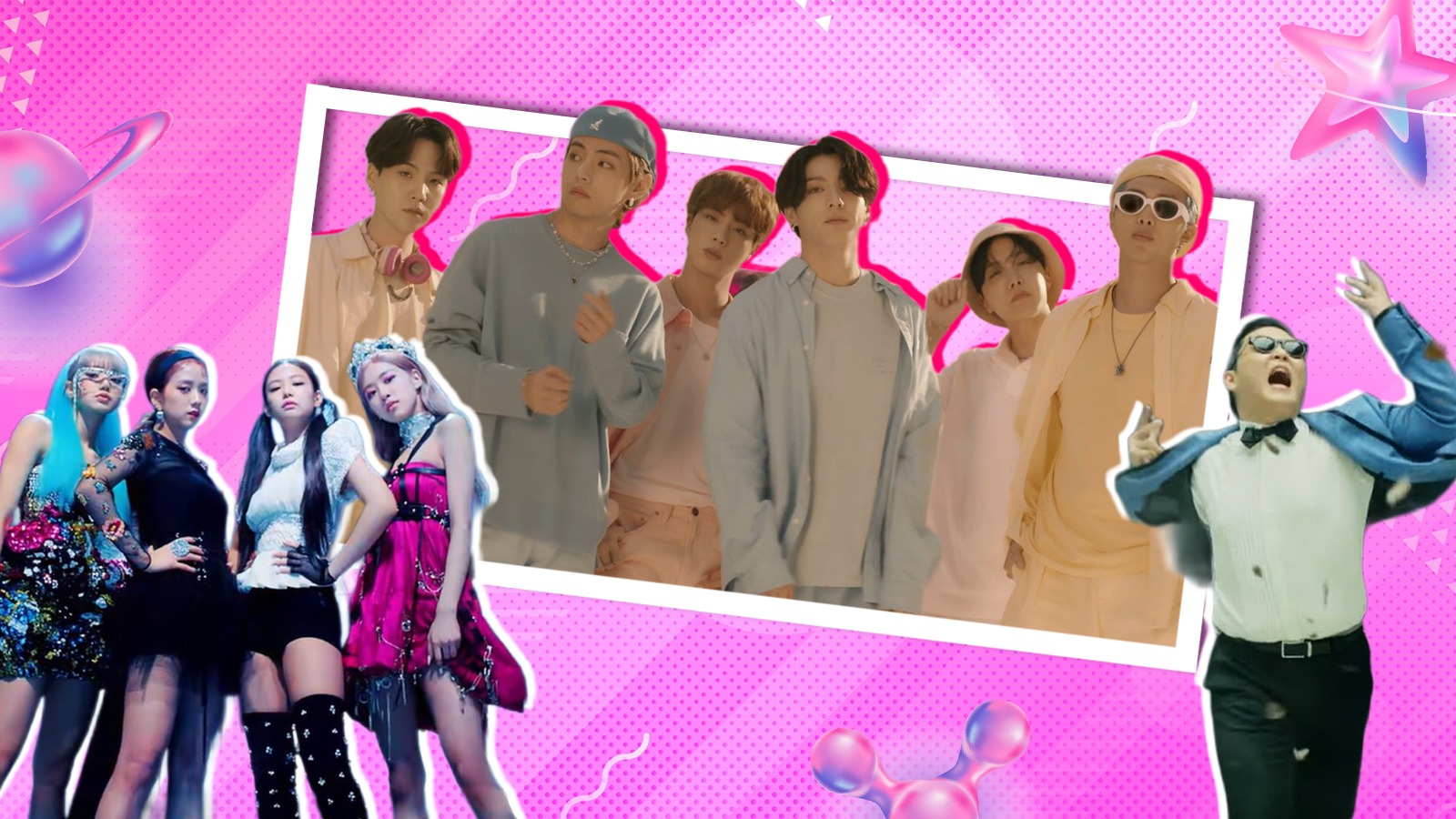


Remember ‘Gangnam Style’?
Before BTS turned K-pop into a global industry, a Korean man in sunglasses made the world dance as if it had just discovered horses.
Even though you don’t understand a word, you knew exactly what to do when PSY began to ride its invisible horse…!
Also Read:
There had been stars before PSY. There had been supergroups before BTS. There had been fans screaming outside airports long before ARMY.
And that’s it, this edition of ‘Weekend Vines’ is about the K-pop that existed even before the ‘purple group’!
‘Alexa, play Gangnam Style…’
PSY's Gangnam Style arrived in 2012 and suddenly became a global sensation. The song and the dance were everywhere. People worldwide literally fell in love with the Korean rhythm. And the man, Park Jae-sang, also became an icon in no time.
They sang along with no idea what the guy was singing about. The invisible horse-riding moves were seen everywhere, from weddings to subways.
According to YouTube's official blog, it was the first video in YouTube history to cross one billion views. Fourteen years later, it has crossed six billion.
For millions around the world, PSY was the introduction to K-pop. But PSY wasn't the beginning.
Seo Taiji and Boys from the 90s
Modern-day K-pop didn’t just appear out of nowhere; it has a story that can be traced back to the 90s - to a time when there was no BTS, no ARMY, and certainly no purple heart emoji waiting to identify the fandom.
In 1992, three young men from South Korea - Seo Taiji and Boys -walked onto the country's pop-music scene and changed the game.
Korean broadcaster KBS describes their debut as a major turning point in Korean popular music. They brought together beats of hip-hop, rap, rock and dance music at a time when mainstream Korean pop looked very different.
Seo Taiji and Boys officially debuted on March 23, 1992, with the release of their self-titled studio album, and later became a landmark in television performance of their hit song I Know (Nan Arayo) on April 11, 1992.
But that was quite different from the K-pop we see these days. The idol system had not yet taken the shape we know today. Seo Taiji, Yang Hyun-suk and Lee Juno were simply three hugely popular musicians- the OGs before the OGs had a name. They were just three beloved popular musicians.
But they were also different from what people saw those days.
Their influence went beyond songs. Their clothes, hairstyles, and choreography became trends, while their music challenged conventional Korean mainstream. KBS describes their 1992 debut as a turning point in Korean popular music and credits them with bringing youth culture into the mainstream.
But the glory lasted only for four years; by 1996, they disbanded. Yeah, but there is no retirement for a fan, right? Their sleeper cells are still out there.
The idols everyone loved
By 1996, idols were on their way. The five colourful young men, perfectly fit for the teenage fantasy, took over K-pop, still remembered for their ‘Candy '.
H.O.T., High-five Of Teenagers, were among the first generation of K-pop as we see it these days.
SM Entertainment brought them to the limelight. They hunted for teenage talent. Trained them. Then built the group around singing, dancing, styling, choreography, image, and fandom.
H.O.T. built their identity around aggressive hip-hop beats and fierce social critique. Their debut track ‘Warrior's Descent’ attacked school bullying, while their iconic hit ‘I Yah!’ was a direct criticism of adult negligence following a tragic kindergarten fire.
Their 2001 disbandment disappointed fans, leading to fans protesting in front of SM Entertainment. But in 2018, they united again.
Seo Taiji and Boys changed what Korean pop could sound like. H.O.T. helped change what a Korean pop star could be. The generations that followed turned that model into an industry.
K-pop kept popping up
For a real K-pop fan, ‘BTS’ will be just one of them. The list is actually long. For every age group, they kept appearing: new faces, new chants, new colours, new idols.
Second-Generation K-pop catalyst TVXQ, the boy band, helped bring the industry to Japan. Some groups aimed for a television audience, like Super Junior. BIGBANG brought a different attitude: hip-hop, fashion, self-produced music, and a less manufactured image.
Then girls also came into the limelight. Girls’ Generation turned girl-group popularity into a massive cultural phenomenon, especially with ‘Gee’ and ‘Genie '. 2NE1 pushed a louder, edgier image for girl groups.
Now, you know about Black Pink. Artists like Rosé have made her image extend beyond Korea, collaborating with artists like Bruno Mars.
That seven boys called BTS
And then, K-pop got another shape shift. This time, a seven-member boy group. They came to everyone’s feed.
They walked into a room that Seo Taiji and Boys had helped reshape, H.O.T. had helped build, and generations of idols had spent years expanding.
They took everything from K-pop, from music to choreography, to the chants and the symbols. But they did something else too; they pushed their songs beyond Korea. They accessed the global stage. And the purple army was following…
BTS wasn’t just limited to the songs they sang. Each of the seven was special. They posed; the ARMY posed. Their style, the ARMY copied. Their food, the ARMY tasted too. From the apparel to the accessories, the ARMY stocked up on everything.
The band was becoming a collectable.
And somewhere, there is probably an old H.O.T. fan looking at ARMY and thinking:
We told you this would happen.
Borahae.