

London:For travellers wandering through London's Natural History Museum, there is now a new reason to linger a little longer.
A gallery that has been closed to the public for 80 years has reopened, carrying with it a story that stretches from Victorian London and the Second World War to prehistoric humans and the way we understand nature today.
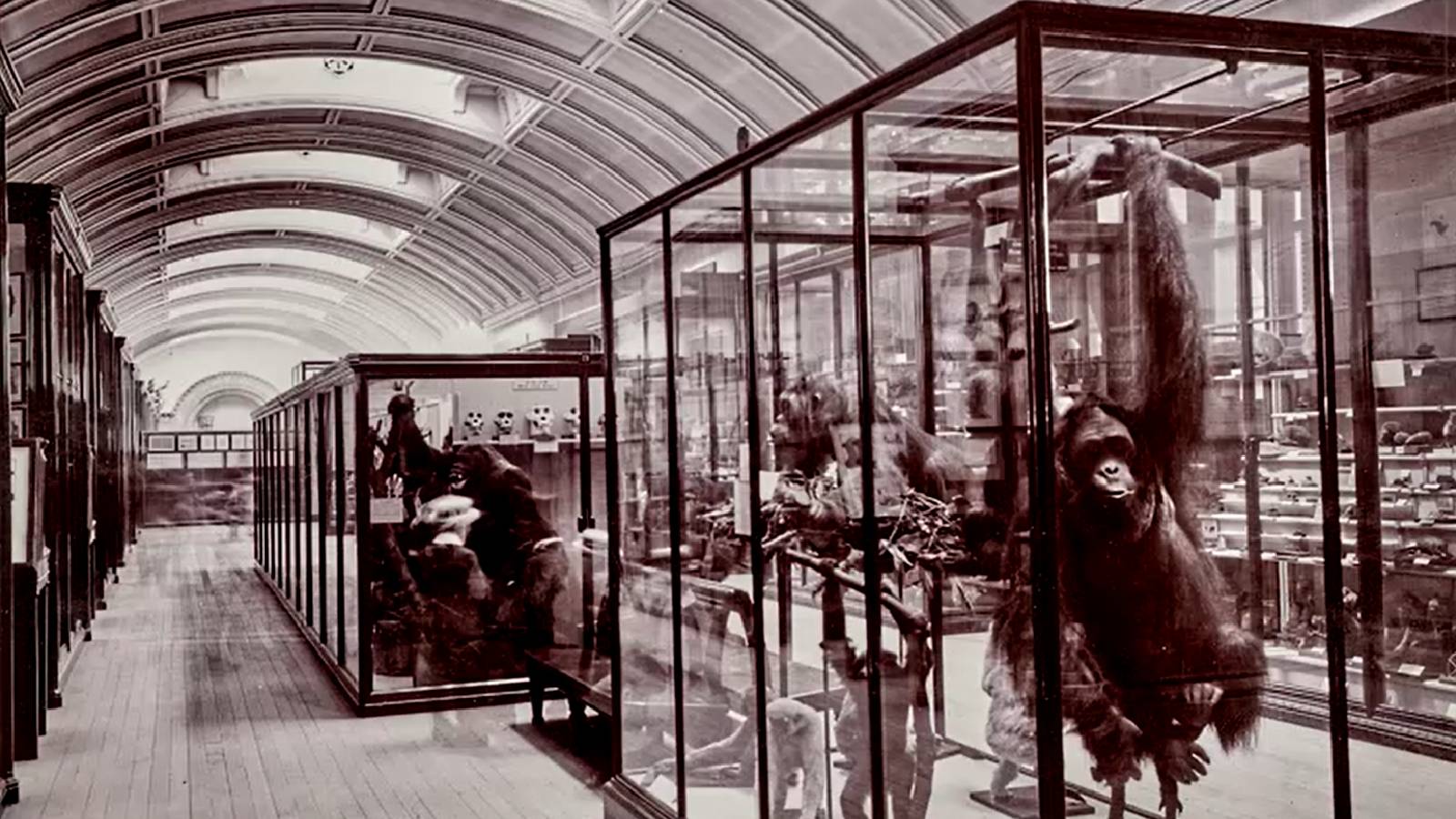
Called ‘Nature and Us,’ the new gallery occupies a space that has lived several different lives since the museum opened in 1881. It began as an osteology gallery, where specimens including elk, hippopotamuses, and rhinoceroses filled the space. It later became the Upper Mammals Gallery, displaying taxidermy and other specimens.
Then came the war.
A bomb struck the museum during World War Two, and the gallery closed to visitors in 1943. For eight decades, the space remained largely beyond the public gaze.
Now it has been given another life.
Rather than simply recreating the gallery's Victorian past, the museum has chosen around 50 objects that invite visitors to think about the complicated relationship between humans and the natural world.
Some are spectacular. Others are wonderfully strange.
A Palaeolithic hand axe found in 1859 is estimated to be around 400,000 years old. A replica of the Lion Man, a roughly 40,000-year-old figurative carving, offers a glimpse into the imagination of prehistoric humans.
There is a massive block of jade from Siberia, collected in the 19th century and bearing the name 'Alibert' carved into its surface. The object becomes more than a piece of mineral: it tells a story about mining, collecting, ownership, and the value humans attach to the natural world.
Then there is Jenny.
Her bones belong to a monk seal that was trained to produce sounds described as speech in 1859 and became known as ‘Jenny the Talking Fish.’ It is the kind of curious historical detail that makes museum visits unexpectedly memorable.
For visitors accustomed to seeing dogs as household companions, another display may be particularly striking. Rows of 19th- and 20th-century taxidermy dog heads recall an era when animals could be presented as hunting trophies, while a replica of the jaw of an early domestic dog, dating back around 14,300 years, points to the much longer history of the human-dog relationship.
The contrast is intentional.
Research leader Isabel Davis says the objects have been chosen because they tell surprising and sometimes complicated stories. Together, they encourage visitors to look at familiar things differently.
That is perhaps the most interesting aspect of ‘Nature and Us '. It is not simply a room full of old things. It is a gallery about perspective, about how humans have collected, studied, hunted, domesticated, admired, and sometimes exploited the natural world.
For travellers, there is also something appealing about the gallery's own history. Walking through it means stepping into a space that has been repeatedly reinvented over more than a century, from Victorian specimen hall to wartime casualty and now to a contemporary museum experience.
The new gallery is initially scheduled to remain open for 18 months. Visitors will be able to leave comments and ideas that will help shape a permanent gallery planned for 2029.
So, if your next London itinerary already includes the Natural History Museum, leave some time for a detour into its newest-oldest space.
Behind the grand architecture and familiar dinosaur displays, a gallery once silenced by war is telling a new story, one that begins with the past but asks visitors to think about the world outside the museum doors.