


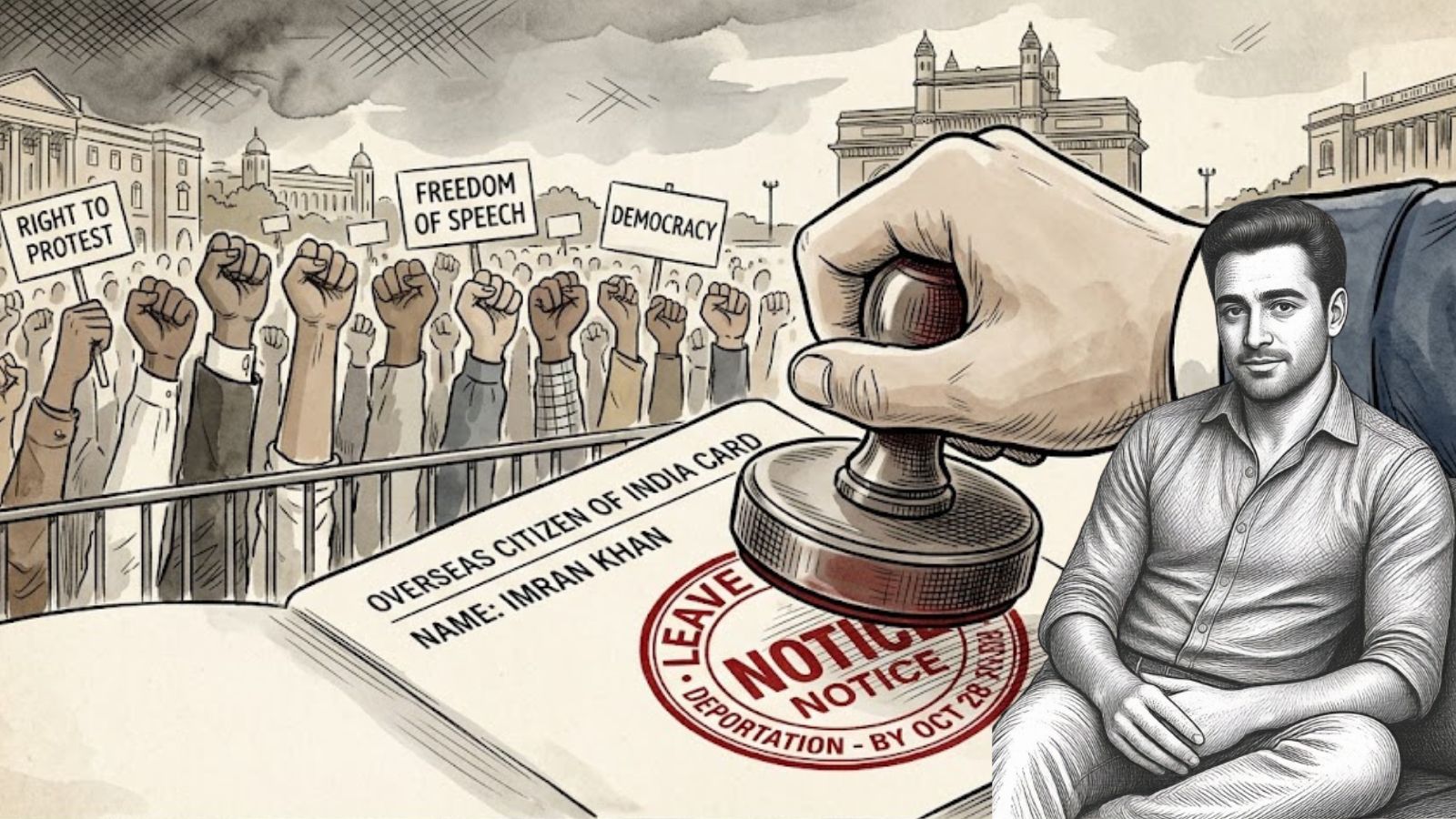


Mumbai: Bollywood actor Imran Khan being told to leave India by October 28 for allegedly violating provisions of the Immigration and Foreigners Act was one of the top headlines of the day.
Imran Khan, nephew of star actor Aamir Khan, is an American citizen who possesses an Overseas Citizen of India (OCI) card. He participated in a protest against Chief Election Commissioner (CEC) Gyanesh Kumar’s controversial electoral reforms at Mumbai’s August Kranti Maidan on October 10. He was detained during the protest and later released. Now, the Mumbai Police has served him a notice to leave the country.
India has specific codes and laws regarding the rights of OCIs and foreign nationals during their stay in the country, including who can protest and how. Let’s go beyond the headlines.
Who can protest as per Indian laws?
This is not the first time that India has asked protesters who are foreign nationals to leave the country. During the CAA (Citizenship (Amendment) Act) protests in 2019, three foreigners who came to study were asked to leave India for participating in the demonstrations.
Jakob Lindenthal, a German student enrolled at IIT Madras, was one of those protesters, asked to leave India in December 2019. Afsara Anuka Meem was the next. Meem, a Bangladeshi student pursuing a Bachelor's in Design at Visva-Bharati University in West Bengal, received a notice from the Foreigners’ Regional Registration Office (FRRO) to leave India in February 2020. A Polish student named Kamil Siedcynski was the third person on the list. Siedcynski, a student at Jadavpur University in Kolkata at that time, raised a dispute regarding this in the Calcutta High Court.
Not to forget that there are people like Jean Dreze, a Belgian-born development economist who moved to India in 1979 and acquired Indian citizenship in 2002, choosing to work in the country. Dreze is a key intellectual contributor to the Rural Employment Act that led to the MGNREGA project. He played a pivotal role in the revival of the meal programme in schools. Dreze was among those detained at Jantar Mantar in Delhi as part of the CEC protests on October 10, 2026.
Coming back to the question: who can protest? According to Indian law, all citizens have the right to protest. Article 19(1)(a) of the Constitution of India guarantees citizens the right to freedom of speech and expression. Article 19(1)(b) guarantees all citizens the right to assemble peacefully and without arms.
As per the law, one should not block public roads or highways.
To protest in India, one needs to get a No Objection Certificate (NOC) from a nearby police station within one's jurisdiction. Keep in mind that the police can accept or deny the request.
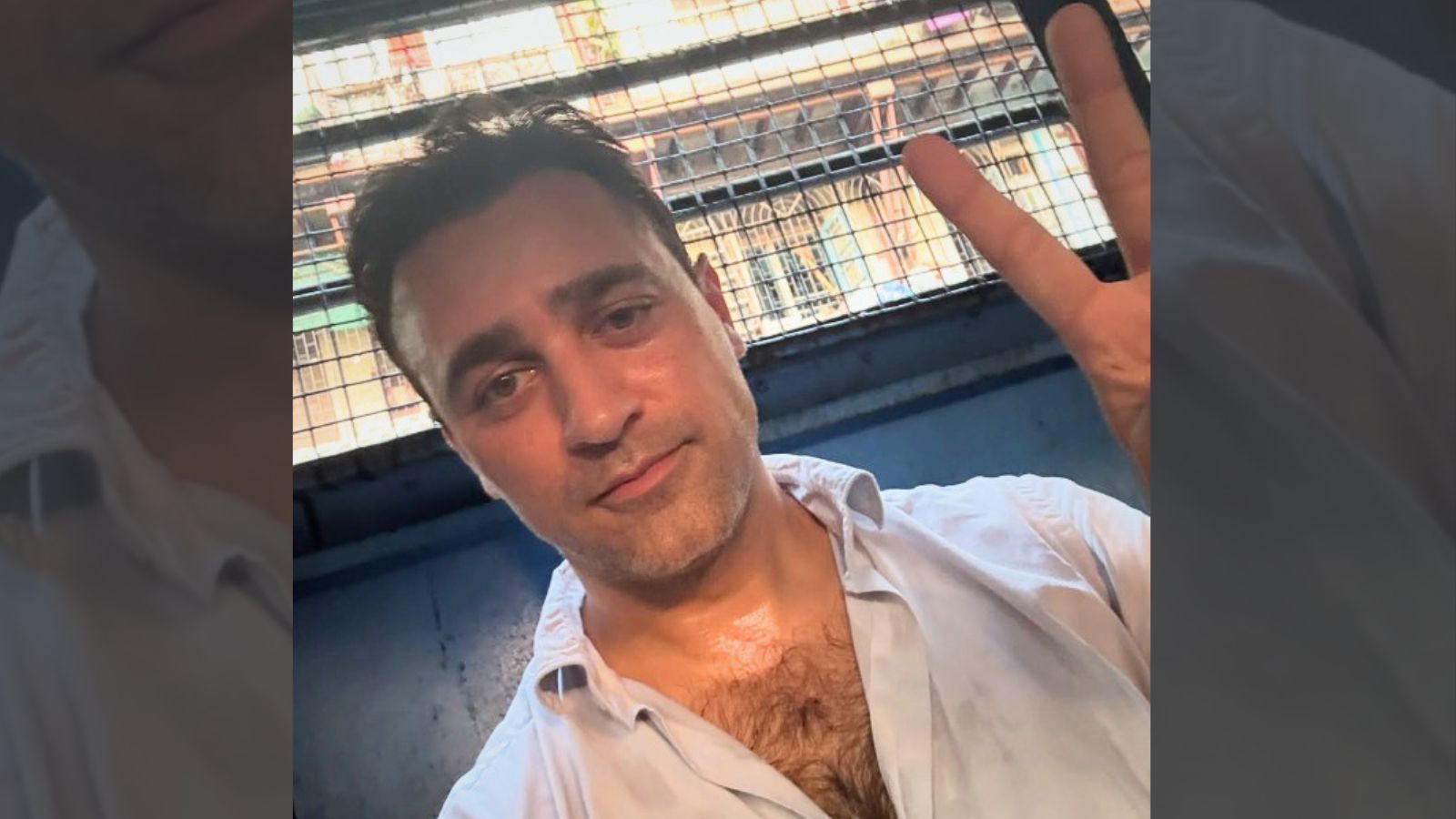
What was the objection against Khan?
Kirit Somaiya, a BJP leader and former Member of Parliament, sought action against Imran Khan for participating in the CEC protest.
The OCI card “gives a lifelong multiple-entry visa and parity with NRIs in travel, work, and property,” Amitraj Kaushal, an advocate at the Supreme Court of India, told Live Mint. “But the Citizenship Act 1955 keeps political rights like voting and contesting elections out of its reach,” he said. As per that, an OCI card isn’t equivalent to Indian citizenship.
The notice was issued to Khan under Sections 7 and 29 of the Immigration and Foreigners Act. Section 7 grants the Union Government the authority to restrict, regulate or prohibit the entry, movement, presence or departure of foreigners in India.
Section 29 permits the government to order the removal of a foreigner for violating the Act or if there are unfavourable security considerations, empowering officials to remove the individual and recover costs from them.
According to a report in The Times of India, the Mumbai FRRO office subsequently issued a ‘LEAVE INDIA NOTICE’. Khan’s legal team, comprising Zulfiquar Memon, is set to challenge the police’s action. The plea by Khan’s advocate claims that no provision of the law or any rule prohibits an OCI cardholder from participating in protests.
(This story is complied by Shyama)