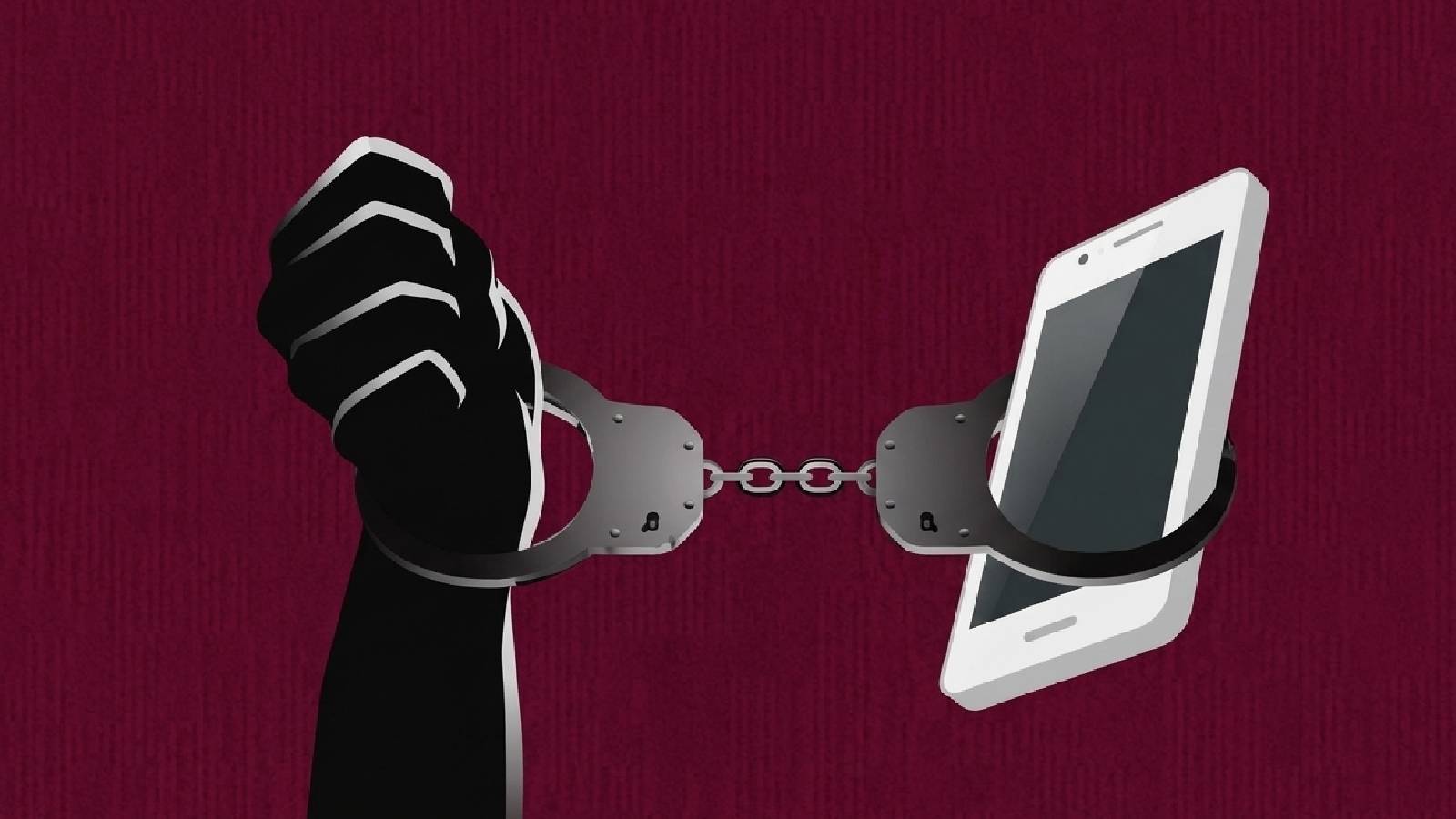


Digital arrest scams have emerged as a major form of cybercrime, targeting people across age groups and professions, including the elderly, working professionals, and young people.
The growing threat has also drawn the attention of the Supreme Court, which has allowed the Central Bureau of Investigation (CBI) to investigate bankers accused of helping scammers operate mule accounts under the Prevention of Corruption Act.
As the name suggests, the premise of the entire scam is that fraudsters will impersonate law enforcement agencies/financial institutions/government officials such as the police, CBI, Enforcement Directorate, RBI etc and put unsuspecting people under a so-called digital arrest in order to extort money.
But before we go any further, it is imperative to remember that, legally, there is no such thing as a digital arrest. Law enforcement agencies are forbidden from arresting anyone digitally.
In India, a legal arrest cannot be carried out through a video or phone call. Any such claim is a scam.
Here is how digital arrest scams operate, how to protect yourself, and what to do if you are targeted.
How digital arrest operates
Digital arrest scams often begin with a phone call, SMS or email, but the groundwork is usually laid much earlier. Scammers profile targets using digital monitoring and leaked databases, while obtaining personal information from exposed datasets.
They then prepare fake SIM cards, mule accounts and AI tools to create convincing digital settings. The first contact is usually a phone call designed to create urgency. Scammers may pose as police officers, complete with fake uniforms, and stage entire online court proceedings involving fake judges and prosecutors.
The victim is then accused of a crime, along with forged evidence. Money laundering,
drug trafficking, gambling, pornography - the range of crimes imposed is varied. Fraudsters also usually create fake arrest warrants and FIRs to boost the credibility of their digital arrest attempt.
And there lies the kicker. Scammers often use fake documents to convince victims that their Aadhaar or other government ID has been linked to a crime, or that their bank accounts were used for suspicious transactions.
They then isolate victims by gaining remote access to their devices, often through malicious apps. Threats involving children, personal information and financial loss add to the pressure, making it harder for victims to distinguish fact from fiction.
And then comes the demand for money. UPI and bank transfers are the most common routes they use to take money. Some scammers also direct victims to fake government sites with payment gateways. It is important to remember that official government sites almost always use @gov.in or @nic.in domains.
Once the money is transferred, the fake arrest ends and the scammers disappear.
How to protect yourself from a digital arrest?
- First and foremost, the most important thing to remember is that a digital arrest is completely illegal. The Indian legal system does not recognise a digital arrest at all and it is not an alternative to an in-person arrest. If the authorities want to arrest you, they will be doing it the traditional, foolproof way.
- Now, if someone does in fact try to scam you, straight away block their number. Do not engage further and do not, under any circumstances, share your bank account details/OTP/PAN Card details etc., with strangers. Banks never ask for your OTP through a phone call/SMS/E-Mail.
- The third and most important step is to report the digital arrest attempt to the authorities.
- Keep a record of everything - from screenshots of numbers that contacted you to SMS and
- E-mails. Digital arrest is a cybercrime and therefore must be reported to the National Cyber Crime Portal. The Portal comes under the Indian Cyber Crime Coordination Centre (I4C) under the Ministry of Home Affairs.
- If money has been lost, immediately contact the Cybercrime Helpline Number at 1930. Victims must call the helpline at least within one hour to initiate quick action, freeze funds, and involve law enforcement agencies to recover lost money. That one hour after the extortion of money is referred to as the Golden Hour period. It is the small window of time before scammers move your funds through multiple mule accounts or withdraw them as cash. The earlier the fraud is reported, the higher the chances of recovering lost money.
- In cases of financial emergencies, reporting the fraud to 1930 ensures the quickest response. The Helpline is part of the Citizen Financial Cyber Fraud Reporting and Management System (CFCFRMS). This should be done as the primary step, even before reporting it in detail to the Cyber Crime Portal.
- Another point to be noted is that official government sites almost always use @gov.in or @nic.in domains. Sites with other domains posing as government websites, especially ones with payment gateways, need to be approached with caution.
- Practice digital sanitation - regularly scan your devices and check the extent of permission access for various apps.
How India deals with digital arrests
In a written reply to the Rajya Sabha in the year 2025 on the steps taken to address the issue of digital arrest scams, Minister of State for Home Affairs Bandi Sanjay Kumar stated that the Indian Cyber Crime Coordination Centre has identified and blocked more than 3,962 Skype IDs and 83,668 WhatsApp accounts used for digital arrest.
The reply also elaborated that the Government of India has blocked 7.81 lakh SIM cards and 2,08,469 IMEIs involved in various frauds, as reported by police authorities.
The Citizen Financial Cyber Fraud Reporting and Management System, under I4C, helps in immediate reporting of financial frauds and to thereby stops siphoning off funds by the fraudsters. So far, more than Rs 4,386 crore has been saved as a result of more than 13.36 lakh complaints.
I4C also operates Cyberdost, the official cyber security and awareness initiative of the Government of India.
Digital arrest is a cybercrime, not a legal procedure. As scammers increasingly use sophisticated technology and AI to impersonate officials, digital awareness is crucial to staying safe.
Victims should not hesitate to report such frauds out of embarrassment. Prompt reporting can improve the chances of recovering lost money and help authorities trace the perpetrators.