


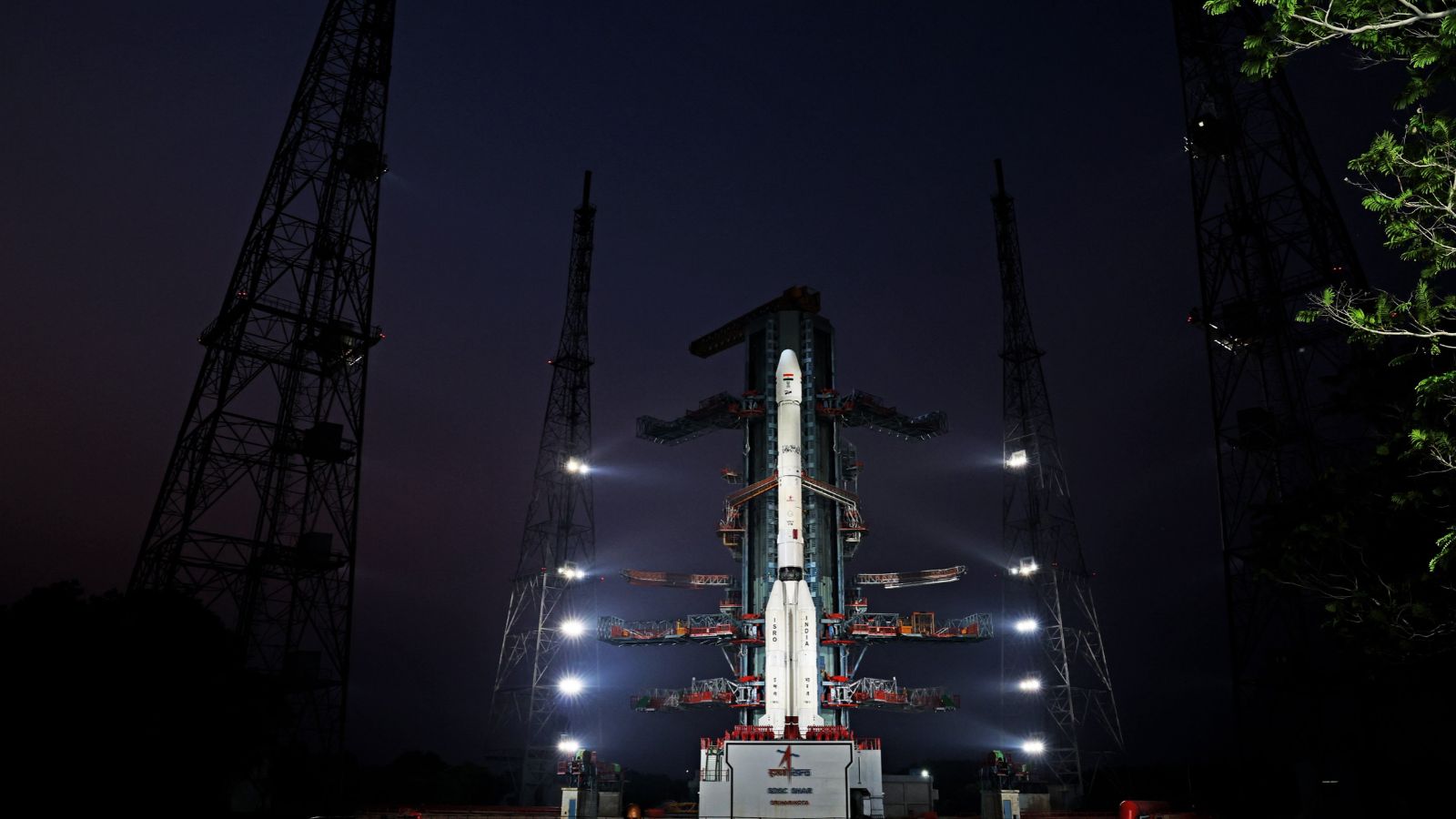


Sriharikota: India's independent regional navigation satellite system NavIC was restored to its minimum operational configuration of four satellites on Friday as ISRO successfully launched its navigation satellite NVS-03, which was placed into the designated injection orbit by a GSLV rocket.
The second-generation navigation satellite NVS-03 with indigenous and procured atomic clocks has a wide array of applications including civilian use like real time tracking of trains, vehicles, and shipping vessels.
Further, the NavIC constellation is an important component of the 'one nation, one time' project, ISRO chief V Narayanan said after the successful mission launch.
On Friday, the 50-metre-tall GSLV rocket carrying NVS-03 lifted off at the scheduled time of 11.51 pm from the second launch pad at Satish Dhawan Space Centre, following a 24-hour countdown.
After a flight of about 18 minutes, which saw the successful performance of all three stages including the complex cryogenic upper stage, the primary payload got separated from the launch vehicle and was injected into a Geosynchronous Transfer Orbit (GTO).
NVS-03 to strengthen India's navigation services
According to ISRO, NVS-03 is the third satellite in the next-generation navigation satellite system, designed to ensure continuity of services provided by the Indian Regional Navigation Satellite System (IRNSS).
The satellite carries an indigenous atomic clock alongside procured atomic clocks. It also includes an L1 signal in addition to the existing L5 and S signals.
The system will provide coverage across India's landmass and a region extending 1,500 km beyond the country's geopolitical boundary, ISRO said.
Prime Minister Narendra Modi congratulated the team on his X handle, stating that the dedication and ingenuity of space scientists makes the nation proud.
Congratulations to our scientists and engineers at ISRO on the successful launch of GSLV-F18 carrying NVS-03.This mission marks an important step in strengthening NavIC, our indigenous satellite navigation system. Equipped with enhanced capabilities, NVS-03 will further our pursuit of self-reliance in critical technologies and support navigation services that benefit our people.The dedication and ingenuity of our space scientists continue to make our nation proud.@isro
— Narendra Modi (@narendramodi) October 31, 2026