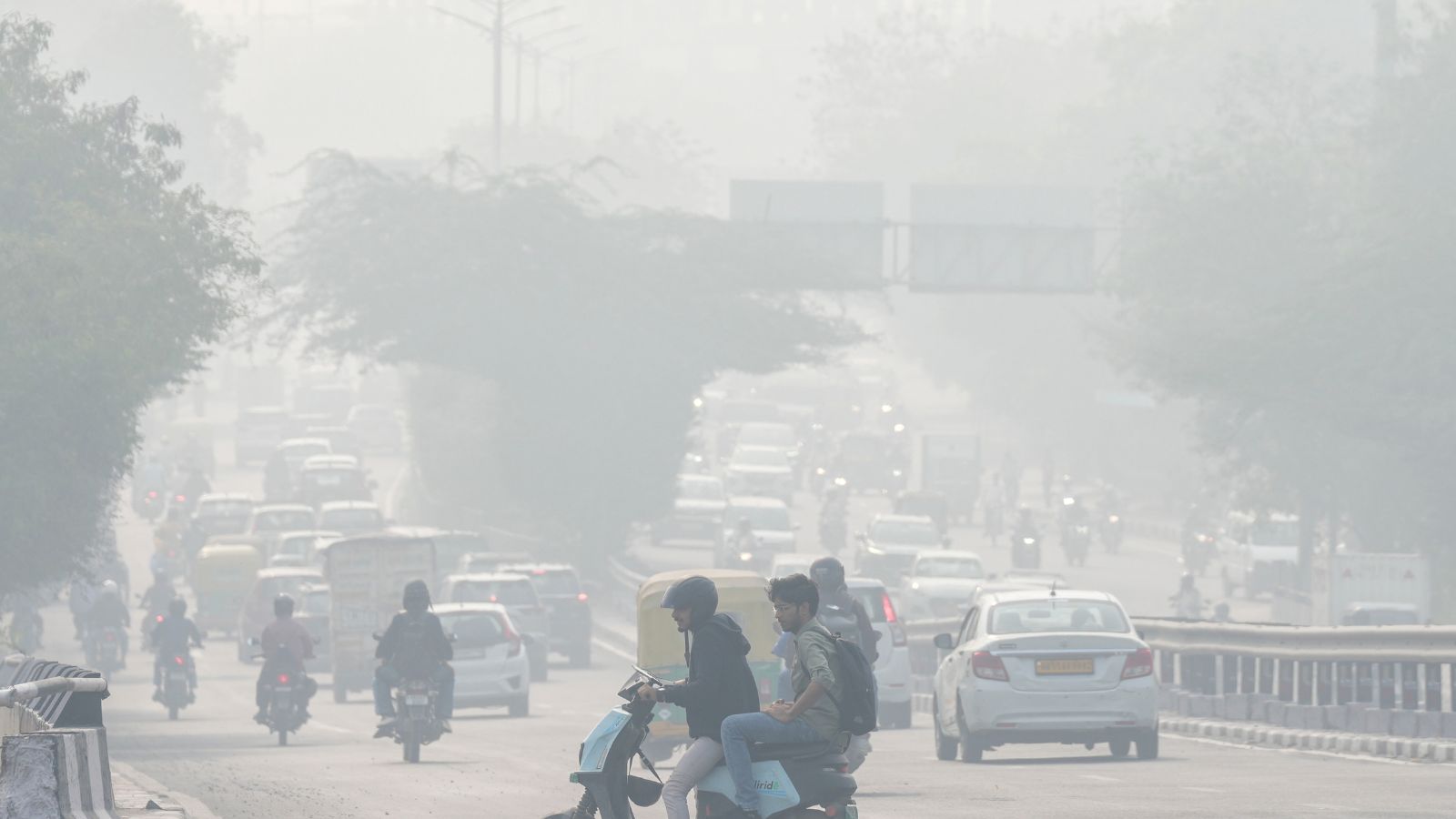


New Delhi: A thick layer of smog hung over India's national capital on Friday as air quality deteriorated sharply, pushing Delhi closer to the 'severe' category two days ahead of Diwali.
The overall Air Quality Index (AQI) stood at 391 at 9 am, up from 389 at 8 am, according to data from the Central Pollution Control Board (CPCB). While the city's overall air quality remained in the 'very poor' category, 30 of its 59 monitoring stations recorded severe pollution at 9 am, with the remaining stations in the very poor category.
Rohini recorded the worst AQI at 475, followed by IIT Delhi at 472. Other areas also reported severe air quality, with IIT Delhi and Rohini recording 474 each at 8 am, followed by Punjabi Bagh at 465, RK Puram at 443, ITO at 422, Firoz Shah Road at 420, and India Gate at 403.

The AQI around Anand Vihar and Akshardham stood at 359, while IGI Airport Terminal 3 recorded 385. Aya Nagar registered 393 and Chandni Chowk 391.
The Air Quality Early Warning System has forecast that Delhi could record its first severe air quality day of the season on Friday, with the situation likely to persist until November 8, the day of Diwali.
The deterioration comes during the peak stubble-burning period in the National Capital Region. Emissions from firecrackers during Diwali celebrations could further add to the pollution load. Weather experts have warned that several pollution hotspots in the city could record AQI levels above 450.
GRAP Stage-II measures in force
Stage-II of the Graded Response Action Plan (GRAP) has been enforced across Delhi. Municipal authorities have deployed truck-mounted water sprinklers to carry out dust-suppression operations, including around India Gate.
Under the CPCB's classification, an AQI between zero and 50 is considered 'good', 51 and 100 'satisfactory', 101 and 200 'moderate', 201 and 300 'poor', 301 and 400 'very poor', and 401 and 500 'severe'.
A thick layer of smog blanketed Delhi as air quality deteriorated sharply, just two days ahead of Diwali.#DelhiPollution #DelhiSmog #DelhiAQI #AirPollution #Diwali2026 https://t.co/ZjMpgkTIJ8
— Reporter World (@Reporterworld_) November 6, 2026
Residents report breathing difficulties
Residents have described the impact of the pollution, with one local, Sarvesh, saying the smog has made it difficult to breathe and caused irritation in his eyes.
"It's causing a lot of problems. As you can see, it's morning, and there isn't much traffic, but because of the pollution, it's hard to breathe, and I'm feeling anxious. There's a lot of smog, making it feel like the middle of January. So, there are a lot of issues, like a burning sensation in the eyes," he said.
Another resident, 71-year-old Nemichand Sharma, blamed unchecked urbanisation and what he described as administrative apathy for the worsening situation.
"I am seventy-one years old now. And ever since Delhi has developed, the progress and development in the name of development has brought about a huge increase in pollution. They have been given a free pass: wherever dirt is going to spread, just let it spread. Do whatever you want. And every day, instead of showing the pollution from Akshardham and solving the problem, governments are doing nothing with all their machinery except making money in the name of pollution. There is no ground-level work to end pollution," he said.
Delhi minister accuses Punjab government over stubble burning
The worsening air quality has also triggered a political exchange over stubble burning. On Thursday, Delhi Environment Minister Manjinder Singh Sirsa contested Punjab Chief Minister Bhagwant Mann's claims about paddy harvesting and stubble burning, alleging that Mann had misrepresented the situation.
Addressing the media at the Integrated Command and Control Centre (ICCC) in Shastri Park, Sirsa claimed that 77 per cent of the stubble had already been burnt, citing data from the Punjab government.
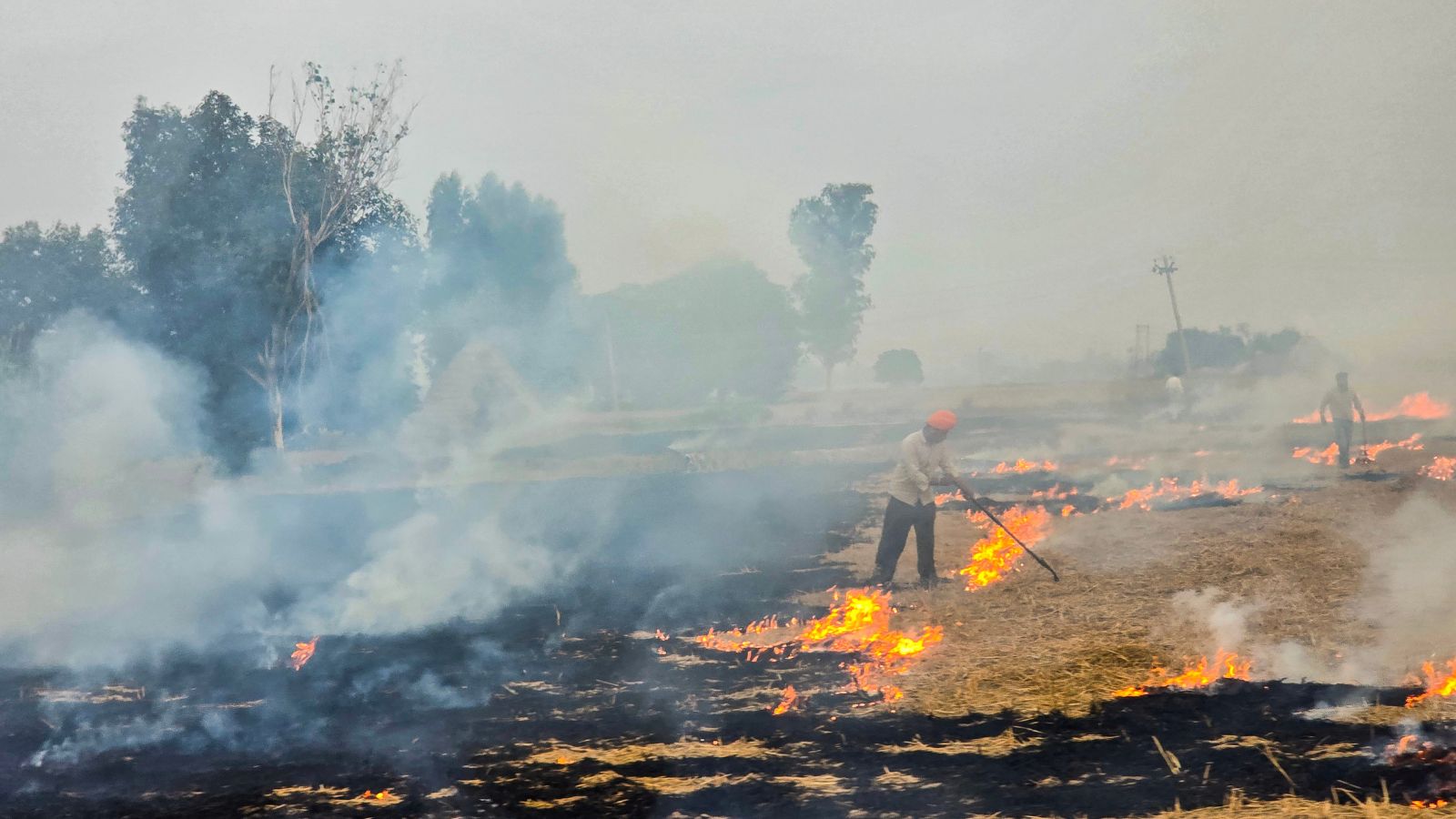
"Yesterday, Bhagwant Mann held a press conference and falsely claimed that the harvesting of paddy has not yet begun; however, according to the data provided by his own government, 77 per cent of the stubble (parali) has already been burnt," he said.
Weather forecast
The minimum temperature at Safdarjung, Delhi's base weather observatory, settled at 17.2 degrees Celsius, 1.9 degrees above the seasonal normal. The India Meteorological Department (IMD) forecast a maximum temperature of around 30 degrees Celsius for Friday, with shallow fog likely during the morning.
The IMD has forecast shallow fog over the capital until November 9. Its subsequent forecast indicates early morning fog or mist on November 10 and 11. Skies remained mainly clear on Friday morning, with the reported morning temperature at 17.8 degrees Celsius.