



Madurai: The disputed Deepathoon stone pillar atop Thiruparankundram hill remained unlit on Tuesday, despite the Supreme Court's one-time permission for the Karthigai Deepam ritual at the site and a subsequent direction from the Madras High Court to implement the order.
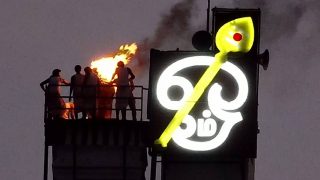
The ceremonial flame was instead lit at the customary mandapam near the Uchipillaiyar temple at around 6 pm. Tamil Nadu Law Minister R Nirmal Kumar said the ritual had been conducted at the traditional location, situated above the shrine of Lord Subramania Swamy.
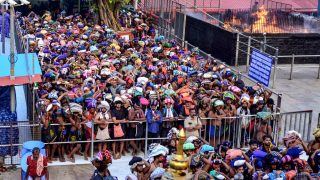
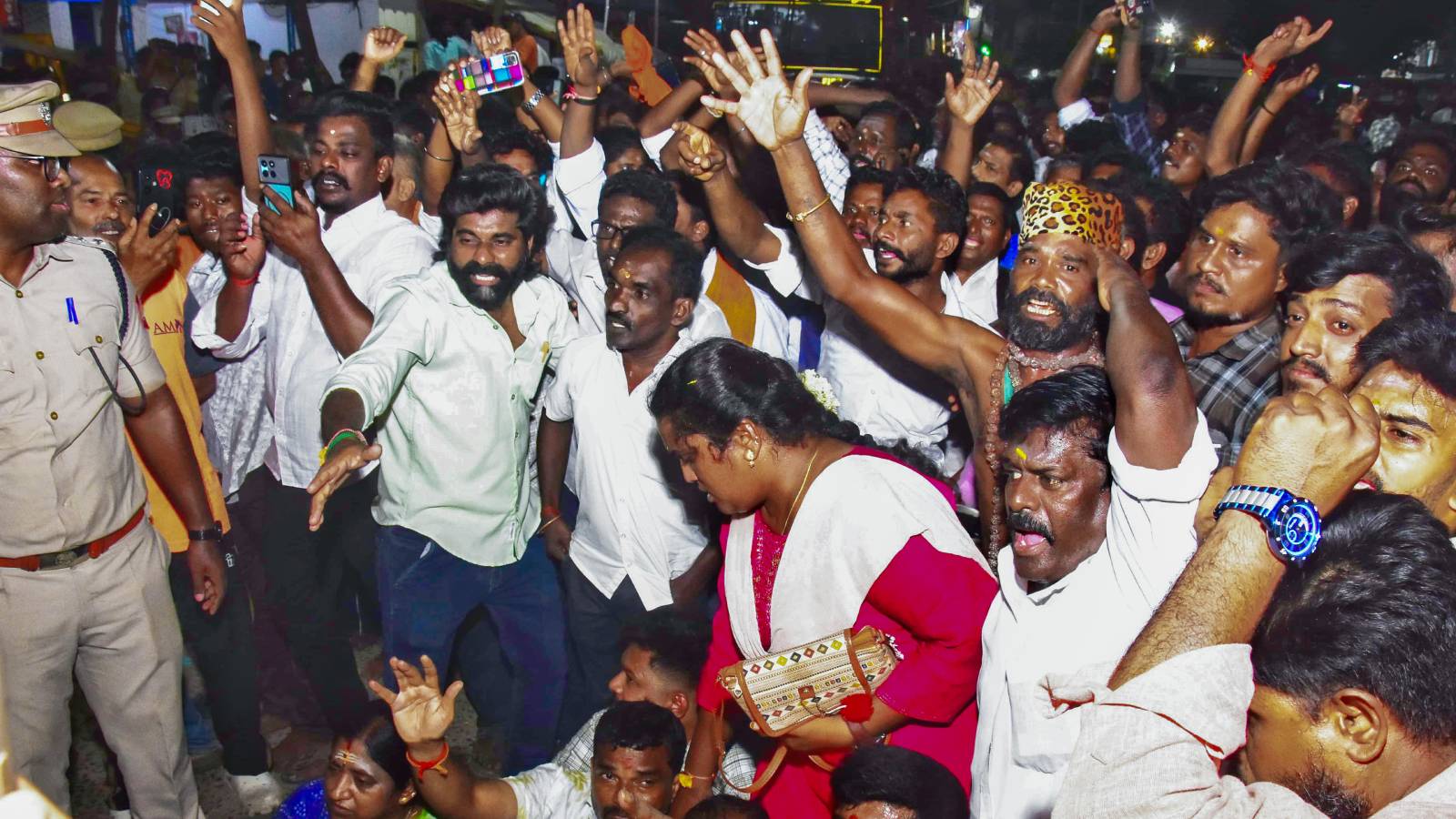
The decision triggered protests by BJP members, Hindu Munnani functionaries and devotees, who accused the state authorities of failing to comply with the Supreme Court's directive. A confrontation broke out when police attempted to prevent the protesters from assembling. Several demonstrators were detained.
High Court had directed compliance with Supreme Court order
Earlier on Tuesday, the Madurai Bench of the Madras High Court directed the district administration and temple authorities to implement the Supreme Court's November 20 interim order.
The bench of Justices G R Swaminathan and M D Sumathi was hearing petitions challenging prohibitory restrictions imposed across Madurai under Section 163 of the Bharatiya Nagarik Suraksha Sanhita (BNSS).
The High Court made it clear that the Tamil Nadu government's pending review petition before the Supreme Court could not be cited as a reason for withholding compliance. It also directed the authorities to release people detained under the prohibitory orders.
The Supreme Court had permitted a restricted team authorised by the temple administration, along with government officials, to light the ceremonial lamp at Deepathoon on November 24. The arrangement was limited to this year's festival and did not establish any permanent customary or ownership rights over the disputed location.
The apex court had also barred public access to the pillar during the ceremony and prohibited processions, gatherings, slogans and demonstrations at the site.
Political reactions and protests
The failure to light the lamp at Deepathoon drew criticism from BJP leaders. State BJP chief spokesperson Narayanan Thirupathy criticised the Law Minister's statement, saying the government would face consequences for not implementing the Supreme Court's order.
VCK president Thol Thirumavalavan, meanwhile, defended the state's position. He argued that the government had the authority to issue directions to senior officials and called on it to stand firm on the issue.
Tamil Nadu Congress Committee president Manickam Tagore also backed the decision to conduct the ritual at the customary location. He said the deepam had been lit at the place where it was traditionally observed.
What is the Thirupparankundram Deepam dispute?
The controversy centres on a rocky outcrop on Thiruparankundram hill, where Hindu groups and some devotees have sought permission to light the Karthigai Deepam at a stone pillar known as Deepathoon.
They have cited historical civil court rulings in support of their claim that the site is associated with the temple. The pillar is near the Hazrat Sultan Sikandar Badusha Auliya Dargah, and the proposed ritual has faced opposition from dargah authorities and Muslim organisations.
The dispute involves competing claims over the location, religious practices, and access to the hill. The Supreme Court's November 20 order allowed the lamp-lighting ceremony as a one-time measure but left the underlying questions unresolved.
Karthigai Deepam observed across Tamil Nadu
While the dispute overshadowed celebrations in Madurai, the festival was observed at temples and homes across Tamil Nadu.
In Tiruvannamalai, the Maha Deepam was lit at 6 pm in a large cauldron containing 3,500 kg of ghee atop the 2,668-foot Arunachala Hill. The Bharani Deepam had been lit earlier, at 4 am, inside the Arunachaleswarar Temple.
Devotees also undertook the 14-km Girivalam around the hill. Temples across the state observed traditional rituals, including the lighting of Sokkappanai bonfires, while families illuminated their homes with clay lamps.