



Seventy-seven years after its adoption, the Constitution has become the centre of a political contest between the BJP’s push for structural reforms and the Congress’s campaign to protect India’s constitutional identity.
The battle for India’s identity is increasingly becoming a battle over its Constitution. As India marks Constitution Day on November 26, the Narendra Modi government is reportedly exploring a fresh parliamentary push for delimitation, reviving a constitutional debate that saw the government suffer a legislative defeat in April.
But the political confrontation extends far beyond the redistribution of parliamentary seats. From simultaneous elections and a Uniform Civil Code to secularism, reservation and federalism, competing visions of India’s future are shaping the national political discourse.
While the BJP presents its agenda as an attempt to modernise India’s governance and strengthen national integration, the Congress portrays itself as the defender of the constitutional framework.
At the heart of this confrontation lies a fundamental question: how much should India change without altering the principles that define the Republic?
The BJP’s vision of constitutional reform
Under Narendra Modi, the BJP has pursued several changes with far-reaching constitutional and political implications.
The 2019 abrogation of Article 370 ended Jammu and Kashmir’s special constitutional status. The government defended the decision as a step towards national integration, while critics raised concerns over federalism and democratic consent.
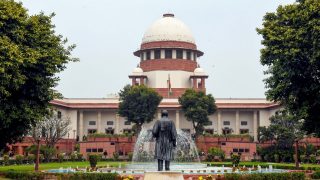
The Supreme Court upheld the abrogation in December 2023.
The proposed One Nation, One Election framework represents another significant institutional reform. The BJP argues that simultaneous elections would reduce expenditure, minimise recurring electoral disruptions and improve governance. The Opposition fears that synchronising national and state elections could weaken regional political voices and undermine federal autonomy.
The Uniform Civil Code is another longstanding BJP commitment. Its supporters argue that common civil laws would promote gender equality and equal treatment under the law. Critics question whether uniformity could come at the expense of religious and cultural diversity.
However, the Uniform Civil Code is not inherently contrary to the Constitution. Article 44 itself identifies it as a Directive Principle of State Policy.
Delimitation: The battle over political power
The immediate constitutional confrontation concerns delimitation and its link to women’s reservation.
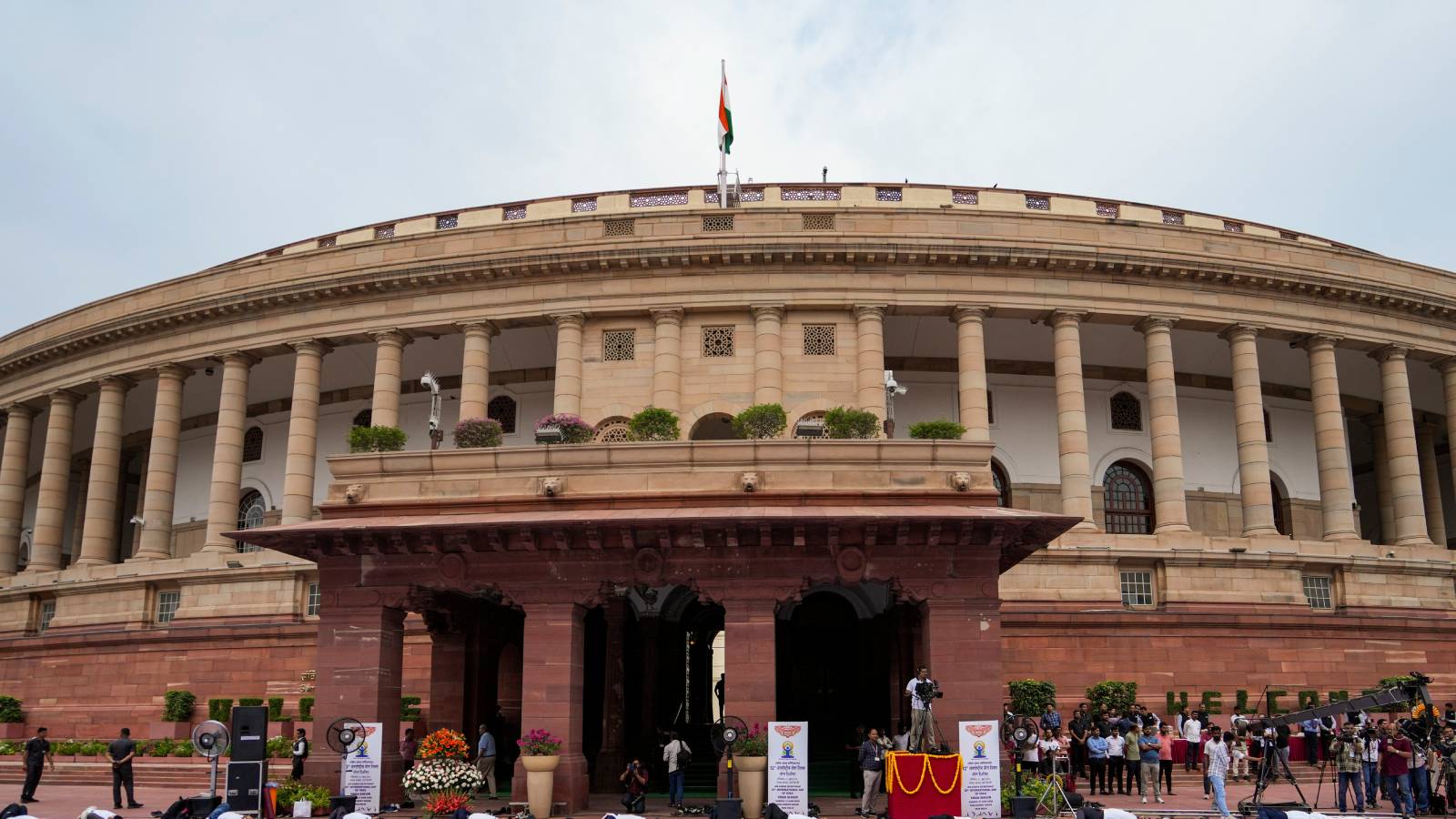
In April 2026, the government’s proposed 131st Constitution Amendment Bill failed to secure the required parliamentary majority. The proposal sought to raise the constitutional ceiling on Lok Sabha membership to 850 and facilitate delimitation using an earlier census.
The government argues that a larger Parliament would provide better representation for India’s growing population while accelerating the implementation of women’s reservation.
The Congress and several other opposition parties argue that population-based redistribution could reduce the relative parliamentary influence of states that have successfully controlled population growth, particularly in southern India.
The Congress has called for implementing women’s reservation within the existing 543-member Lok Sabha.
The disagreement is therefore not simply about increasing parliamentary representation. It is also about how political power should be distributed across India's federal structure.
The ideological battle over India’s identity
Another contentious debate concerns the words ‘socialist’ and ‘secular’ in the Preamble.
Both were inserted through the 42nd Constitutional Amendment in 1976, during the Emergency imposed under Indira Gandhi.
Voices within the wider ideological ecosystem of the BJP have questioned their inclusion, arguing that they were not part of the original Preamble adopted in 1949.
The Congress maintains that secularism is central to India’s constitutional identity and that attempts to dilute it could undermine the country’s pluralistic character.
However, there is a distinction between ideological demands and formal government policy. Calls to reconsider these words do not, by themselves, constitute an official constitutional amendment proposal.
In November 2024, the Supreme Court dismissed petitions challenging their inclusion in the Preamble.
Congress and its claim to defend the Constitution
The Congress made constitutional protection a central theme of its 2024 Lok Sabha election campaign.
Rahul Gandhi’s public appearances carrying a copy of the Constitution became a powerful political symbol. The party alleged that an overwhelming BJP majority could threaten reservation, democratic institutions and constitutional safeguards.
The BJP rejected those allegations, maintaining that it remained committed to the Constitution and the existing reservation system.
However, the Congress’s claim to be the natural guardian of the Constitution must also be examined against its own history.
The Emergency between 1975 and 1977 witnessed the suspension of civil liberties, press censorship and the detention of political opponents.
The 42nd Constitutional Amendment attempted to expand parliamentary authority and restrict aspects of judicial oversight. Congress governments also faced criticism over the use of Article 356 to dismiss elected state governments.
At the same time, Congress-led governments introduced significant democratic reforms, including the constitutional recognition of Panchayati Raj institutions and urban local bodies.
Its constitutional legacy, therefore, encompasses both democratic empowerment and episodes of institutional overreach.
Can the Constitution be fundamentally altered?
The Constitution is not an unchangeable document. It provides Parliament with the power to amend its provisions under Article 368.
But that power is not absolute.
In the landmark Kesavananda Bharati judgment of 1973, the Supreme Court established the basic structure doctrine, ruling that Parliament cannot use its amending power to destroy the Constitution’s fundamental character.
Democracy, secularism, federalism, judicial review and the supremacy of the Constitution are among the principles recognised as elements of its basic structure.
A parliamentary majority, however substantial, does not automatically confer unrestricted authority to redefine the Republic.
Beyond the BJP and the Congress
Seventy-seven years after the Constitution was adopted, the political contest is no longer confined to how India should be governed. It increasingly concerns competing interpretations of what India represents.
The BJP emphasises national integration, institutional reform and cultural identity. The Congress foregrounds pluralism, social justice, federalism and constitutional safeguards.
Both visions must be examined against their stated commitments, legislative actions and records in government.
The Constitution belongs neither to the party seeking to amend it nor to the party claiming to protect it.
Ultimately, the strength of India’s constitutional democracy will be measured not by which political party invokes the Constitution more frequently, but by how those in power respect the limits it places upon them.