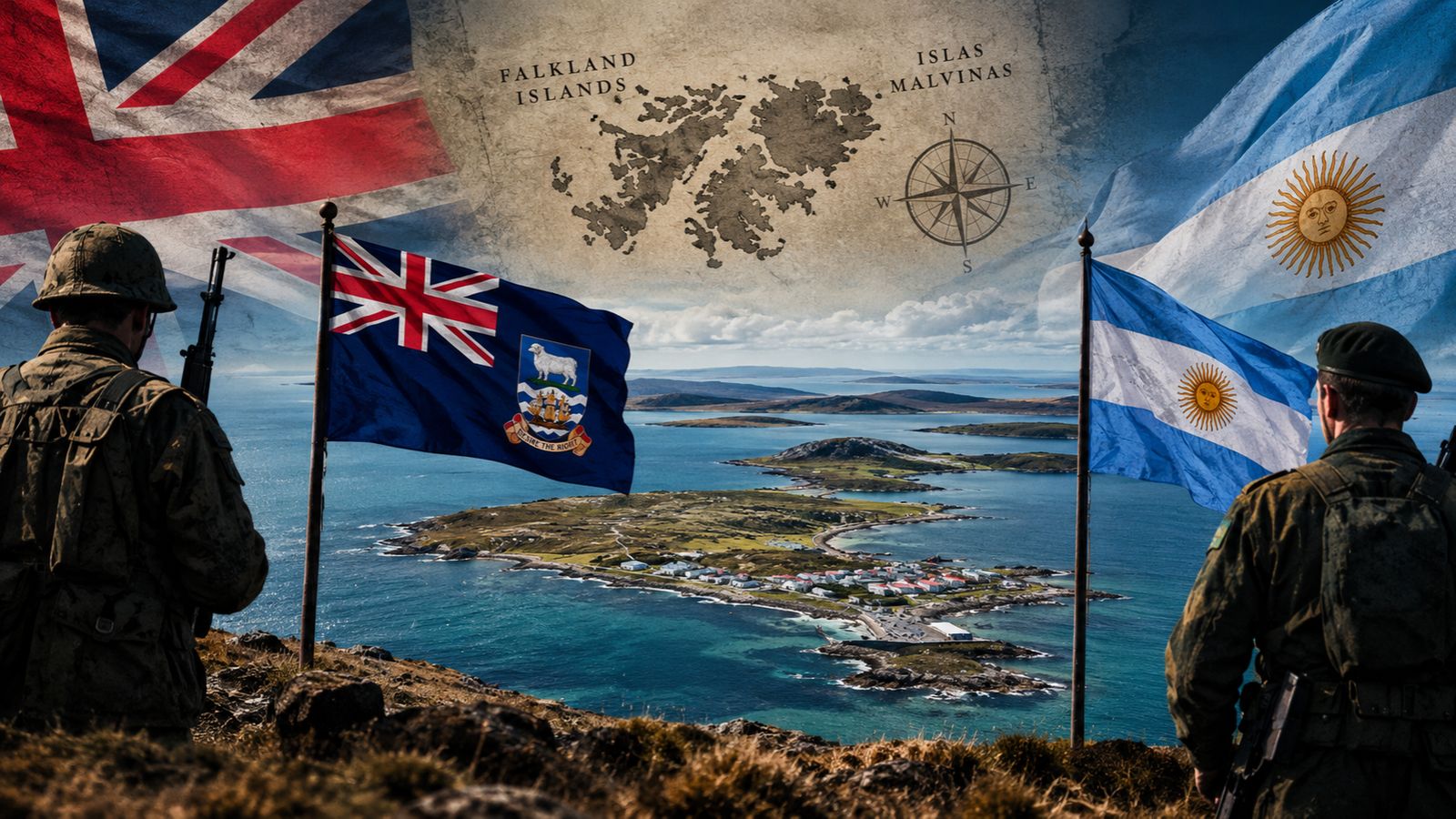


The Falkland Islands have once again emerged as a geopolitical hot topic. The United States has thrown a spanner in the works of a long-standing dispute between the United Kingdom and Argentina over the Falkland Islands. The US has done so by questioning the relevance of the UN Special Committee on Decolonisation (C-24), the global platform Argentina uses to claim sovereignty over the islands.
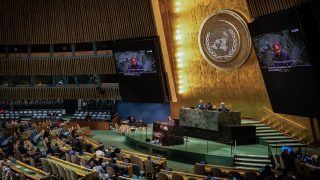
As per a Buenos Aires Times report, the US has argued that the committee 'has outlived its original purpose'. The statement holds significance considering Javier Milei, the President of Argentina, criticised the United Nations at the recent General Assembly in New York, calling the organisation “useless” for not being able to resolve the dispute.
Argentina said it had asked an international maritime tribunal to halt oil development off the disputed Islands, escalating its confrontation with the United Kingdom over the archipelago's first commercial oil project. The office of President Javier Milei said it had filed a request for provisional measures with the International Tribunal for the Law of the Sea in Hamburg, Germany, seeking to stop the development of Sea Lion, a $2.2 billion Israeli-British oil project north of the islands, to “preserve Argentina's sovereign rights.”
The British-controlled Falklands are an enduring national obsession in Argentina, which calls them the ‘Malvinas’ and maintains that Britain has illegally occupied them since 1833. London rejects that claim, citing the islanders' desire to remain a British overseas territory.
It is fascinating that the remote archipelago in the South Atlantic has kept Argentina and the UK engaged in a seemingly endless dispute. But it is not just the two; from England to Spain and going further to the French, why would countries from South America to northwestern Europe claim a territory so small that it makes no difference to their overall land area?
But where does it all stem from? Who actually owns the island and, most importantly, what do the inhabitants of the archipelago want? Here’s a deep look into the centuries-old rift between the UK and Argentina, all in the name of an archipelago in the South Atlantic Ocean.
- Table of contents:
- The discovery
- The Uprising
- The Argentine arrival
- The British return
- Becoming a harbour town
- The Argentine claims
- Invasion of 1982
- 2000s to now
- The 2013 Referendum
- Oil Rush: The Sea Lion discovery
- The legal battlefield
- What's next?
The discovery
According to the account of Richard Hakluyt in 1600, the archipelago situated in South America was first recorded as being discovered by a British traveller, Captain John Davis, in 1592.
However, many other rumours regarding the discovery exist.
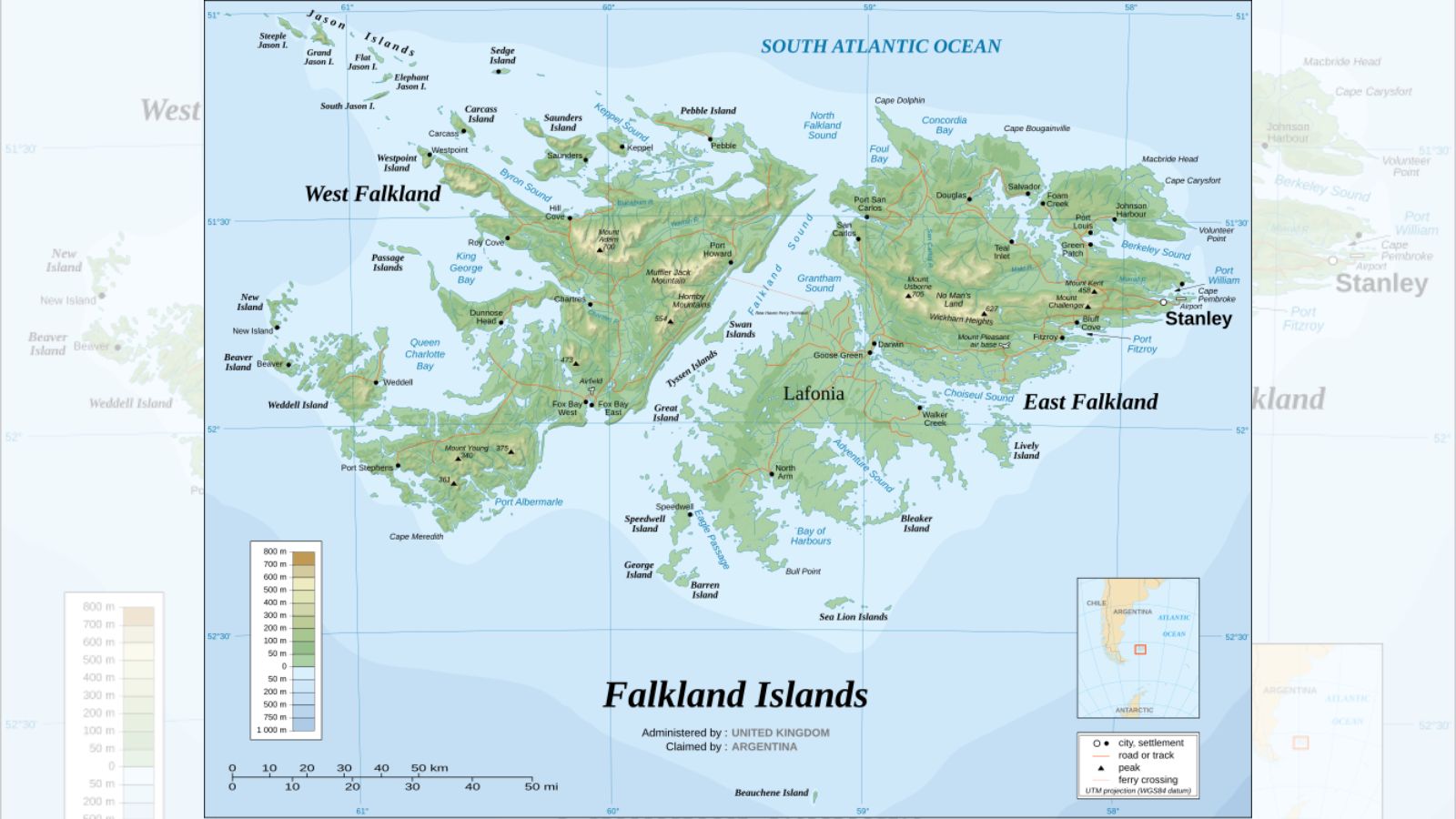
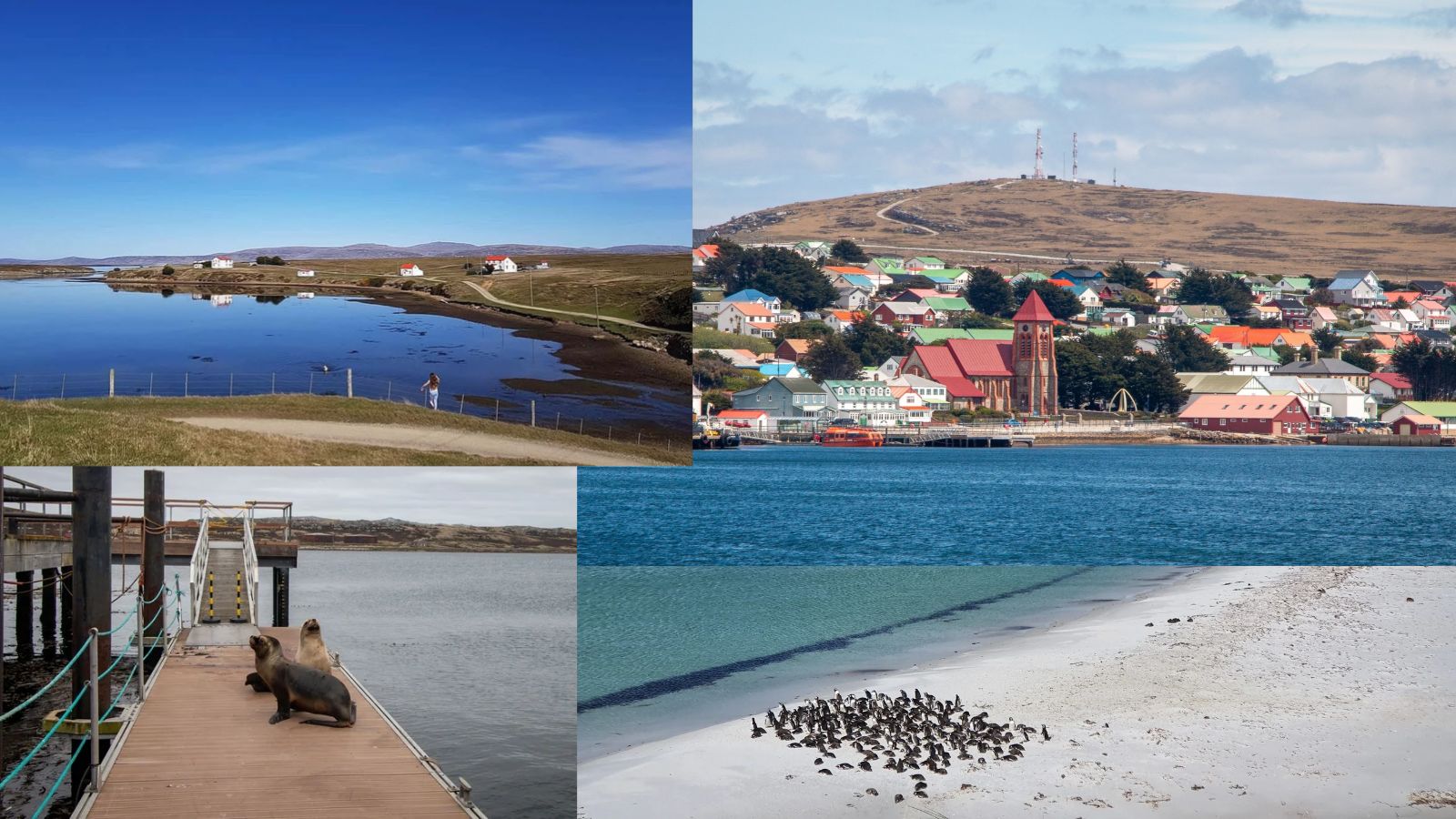
The area is made up of more than 700 islands, covered with rough cliffs and white sand beaches.
Davis was followed by another English explorer, Sir Richard Hawkins, who called the place ‘Hawkins' Maidenland’ in honour of Queen Elizabeth I.
In 1600, a Dutch seaman named Sebald de Weert visited the infamous territory and referred to it as the Sebald Islands.
Finally, on 27 January 1690, the first recorded landing was made by John Strong, giving the channel between the islands the name ‘Falkland Sound’ in honour of Anthony Cary, who was the fifth Viscount Falkland. Later on, the entire region came to be known as the ‘Falklands’.
Years later, the Islands acquired their French name when merchants from St Malo sailed past them while trading with Chile. A 1716 map by explorer Frezier called them “New Islands discovered by vessels from St Malo,” while later maps shortened this to ‘Isles Malouines’. The Spanish adopted the name as ‘Islas Maluinas’, which eventually became ‘Islas Malvinas’, which was also adopted by Argentina.
The Uprising
By the 1760s, the East and West of the Falklands were occupied by two territories, the British and the French.
In 1764, the French nobleman Louis Antoine de Bougainville landed settlers who had left Nova Scotia after the British conquest of French Canada at Port Louis in East Falkland.
In 1765, British Royal Navy officer Commodore Byron landed at Saunders Island north of West Falkland and claimed the isles for the crown of Great Britain. A second British expedition in 1766 returned to Saunders and named their settlement Port Egmont.
Both the colonies existed independently on different sides of the islands, maintaining mutual respect for each other's land.
But things started to change once the French colony, headed by Bougainville, handed over its part to Spain due to diplomatic tensions. The Spaniards took control of Port Louis and started calling it Puerto de la Soledad.
But they did not stop there. They wanted control over the whole archipelago, eventually arriving at Saunders Island with a fleet in 1770 and demanding that the British flee.
The tensions escalated, making the Spanish give up and finally agree to restore British rule in 1771. But by 1774, the British settlers left the island, citing economic reasons but asserting sovereignty. A similar path was followed by Spain in 1811, leaving the island and asserting sovereignty due to the bigger political tensions on the mainland.
By the 19th century, the island became more of an area of fishing and leisure for fellow travellers.
The Argentine arrival
In 1820, a US colonel commissioned in Buenos Aires named David Jewett reached Port Louis. Jewett, on his own initiative, for which no instructions have ever been found, claimed the Islands for the United Provinces (of Buenos Aires), or modern Argentina.
He did not establish a settlement and did not reveal that he had claimed the Islands; it was not until November 1821 that Buenos Aires learnt of it from foreign newspaper reports.
By this time, Argentina had got its independence from the Spanish Empire. Hearing the news, the delegation sent Louis Vernet, a German-born merchant of French descent, who later moved to Buenos Aires, for expeditions. By 1826, he made a settlement in Port Louis, the site of a Spanish colony. By 1829, he was appointed commandant of the settlement.
Vernet tried to enforce Argentine regulations over foreign sealers operating around the islands. This brought him into conflict with American sealing vessels, particularly the ‘Harriet’, whose crew he detained in 1831.
The United States strongly objected. The USS ‘Lexington’ arrived at Puerto Soledad in December 1831, destroyed much of the settlement, and arrested some of Vernet's men.
Vernet had left the Islands in November 1831, on one of the American ships he had captured, and never returned.
In 1832, the Argentine government placed a short-lived garrison at Port Louis, killing their commander in the settlement.
The British return
The British were carefully observing the escalations and decided to return to the base, fearing the territory would become anarchic. In 1832, Captain Onslow of the HMS Clio vessel was instructed to reassert British sovereignty over the Islands, but without expelling the civil population. On the following morning, in a firm but tactful manner, Onslow instructed the Argentine naval schooner captain José María Pinedo, who had taken charge at Port Louis, to leave. No shots were fired; there was no violence of any kind. Four civilians chose to leave with the mutinous garrison in the schooner, but the majority of Vernet’s two dozen settlers, mostly gauchos(skilled horseman/nomads), remained under the British flag.
Argentina regards the British action as an occupation and expulsion, while the British position is that it was a reassertion of an existing sovereignty claim.
Onslow did not stay for long; he gave control over to William Dickson, who had worked for Vernet and was serving as a storekeeper.
He left the place, giving a Union Jack (UK flag) and 25 fathoms of rope.
During the new regime, the gauchos who were controlling the properties of Vernet (who was controlling his assets from Buenos Aires) started demanding hard currency as their wages.
The refusal resulted in mass killings in 1833, a massacre led by gaucho leader Antonio Rivero, which also killed William Dickson.
In January 1834, Lieutenant Henry Smith arrived with British forces. He was sent to maintain order and find the culprits of the massacre. Rivero and his men were taken for trial to Britain but were later released in Montevideo because the killings happened outside Britain and because the accused were non-British citizens, making it a case outside their jurisdiction.
In 1841, to restore order, the British sent a young engineer, Richard Moody, giving him the title of lieutenant-governor.
In 1842, on the advice of explorer Sir James Clark Ross, who visited the island in winter, Moody moved the capital south for more accessibility, establishing the town of Stanley, which still remains the capital of the Falklands.
Becoming a harbour town
Stanley grew into a major trading route. Ships carried goods on and off the island while materials like wool, which were produced on the land, were exported. Slowly, the place became a trading route for ships going to Cape Horn, transforming the port into an important location for merchants.
The town created jobs like ship repairing and mechanics, and a lighthouse was erected in 1854, helping ships navigate safely around the islands.
In 1859, Stanley established a register of shipping. This was basically an official record of ships associated with the Falklands. It reflected how important maritime activity had become to the island economy.
But soon the economy dipped as the ships became more reliable and stronger, needed fewer repairs, and the opening of the Panama Canal in 1914 made the trade route voyages shorter.
Soon, by 1971, the Falklands Island Company (FIC) faced an economic crisis, and the island’s main ship, called Darwin, which was one of the main vessels in the area for outside transportation, was sold off.
Argentina took this opportunity to its advantage, offering an air travel connection between the country and the islands, which increased its involvement with the Falklands, slowly reducing the islanders' dependency on Britain.
The Argentine claims
For 17 years after Britain took full control in 1833, Argentina continued to claim the islands through diplomatic efforts. In 1850, both parties signed a 'Convention of Settlement'—a peace deal addressing British financial claims against Argentina from earlier conflicts. However, this convention did not explicitly settle the Falklands sovereignty dispute, and Argentina never formally abandoned its claim. The issue remained dormant in diplomatic correspondence but would resurface in later decades as nationalist leaders sought to revive it.
Later on, Argentine leaders like President Bartolomé Mitre in 1865 told Congress that there was nothing preventing the consolidation of friendly relations with Britain and France.
Similarly, in 1866, Vice President Marcos Paz also ruled out any differences between the country and Britain.
Spanish naval vessels also visited Stanley in 1863, visiting and returning without any territorial disputes.
In 1882, a Latzina map produced by the Argentine National Statistical Office showed the Falklands in a different colour/shading from Argentina itself.
Then, in 1884, the Argentine government commissioned another map that did include the Falklands as part of Argentina.
The British government objected to this claim, to which the Argentine side responded by disclaiming the rights, as the map was not yet published.
But as we say, how power depends on the hands of the ruler, the changing governments and political leaders will have their own points and agendas. Such a leader was General Perón, who was the President of Argentina during World War II. Perón’s nationalist and anti-British policies turned the Falklands dispute into an increasingly important issue in Argentina’s foreign policy.
In 1965, the UN General Assembly called on Britain and Argentina to negotiate over the sovereignty dispute, but they never reached a solution that was acceptable to the islanders.
In 1968, four elected Falkland Islands councillors broke an oath of secrecy to inform British MPs about a proposed agreement between Britain and Argentina, prompting parliamentary opposition and contributing to greater consideration of Islanders' views in subsequent negotiations. As talks continued through the 1970s, concerns about a possible change in sovereignty remained among Islanders. Argentina's military government, which came to power in 1976 and subsequently carried out the ‘Dirty War’, further influenced perceptions of a potential Argentine administration. At the same time, Argentina's growing role in providing fuel and other services to the Islands increased its practical involvement, while Britain continued to negotiate over the territory's future.
The United Nations has listed the Falkland Islands as a Non-Self-Governing Territory since 1946, placing it under the decolonization framework. However, the two countries interpret this differently: Argentina argues this is a bilateral sovereignty dispute over territory it inherited from Spain, not a matter of self-determination. Britain maintains that the islanders have the full right to decide their own future under international law.
Invasion of 1982
On April 2, 1982, the Argentine junta made their invasion of the islands. The Islanders then experienced 74 days of Argentine occupation, ending with Argentina's surrender on 14 June 1982.
Some sources describe the occupation as ‘traumatic’ and say Islanders were ‘imprisoned’ in some settlements.
Three Islanders, 649 Argentine military personnel, and 255 British military personnel were killed during the conflict.
In 1983, Prime Minister Margaret Thatcher visited the Islands and received the Freedom of the Falkland Islands.
The war left the island in deep economic and infrastructural crisis. In order to tackle that, the British government built its own military airport, ‘Mount Pleasant ’, about 35 miles from Stanley, in order to have a permanent defence system. Its first runway opened in May 1985.
After the war, Britain and Argentina remained hostile because Argentina continued to claim sovereignty over the Falklands.
However, things began changing when Carlos Menem became Argentina's president in 1989.
Diplomatic relations were eventually restored in 1990, and the two countries began technical discussions about issues such as fishing and oil exploration, among others.
After the war, a new Constitution came into force in 1985. It strengthened the Islanders' ability to govern themselves:
- Islanders were given a constitutional right to self-determination.
- The position of Governor was restored (who had briefly been replaced by a ‘civil commissioner
- There were eight elected councillors.
- Those councillors selected three members to form an Executive Council, which functioned somewhat like a cabinet.
The Constitution was later changed to give elected representatives more responsibility. In 2002, the Governor stopped chairing the Legislative Council, with councillors electing their own chairman.
Then, under the 2009 Constitution, the elected representatives became known as Members of the Legislative Assembly (MLAs).
On 29 October 1986, the Falklands introduced the Falkland Islands Interim Conservation Zone (FICZ).
It extended roughly 150 miles around the Islands, with adjustments on the southwestern side because of the Argentine mainland. The zone turned out to be enormously profitable.
There was huge demand for licences to fish for squid, and the government began collecting substantial licence fees. Eventually, some Islanders became owners of fishing vessels themselves.
Argentina and the Falkland Islands Fisheries Department conducted joint research cruises and exchanged information about fishing because of no other option but to cooperate in order to avoid overfishing in one region.
But this cooperation ended in 2005, when the government of Argentine President Néstor Kirchner broke it off in protest over changes to the Falklands' fisheries laws.
After 1982, Britain was providing substantial development assistance. But fishing changed the situation. The Islands began generating enough money to finance their own development, which went into education, communication, health care, and roads, slowly reducing the islanders' financial dependency on the British.
Similarly till 1982,90 per cent of land ownership in the Falklands belonged to people outside the islands. This changed, and by 2003 almost 95 per cent of ownership was held by the island inhabitants.
Falklands oil fields, modern abattoir, etc. helped increase the economy of the Falklands. By June 2011, the Falkland Islands Government had £183 million invested in different investments around the world.
2000s to now
Relations with Argentina deteriorated again during the presidency of Néstor Kirchner. In 2005, Argentina withdrew from a bilateral fisheries cooperation arrangement, objecting to changes in Falkland Islands fisheries policy. This marked a significant deterioration in practical cooperation.
The 2013 Referendum
After decades of diplomatic stalemate, the Falkland Islands government held a sovereignty referendum on 10-11 March 2013. The result was unequivocal: 99.8 per cent of voters chose to remain a British Overseas Territory, with only three votes against, on a 92 per cent turnout.
Britain immediately cited this as definitive proof that any sovereignty discussion must begin with the islanders' consent—a position Argentina rejects, arguing the referendum was illegitimate because it excluded Argentina from the decision.
Oil Rush: The Sea Lion discovery
In 2010, exploration drilling by Rockhopper Exploration confirmed the ‘Sea Lion’ oilfield, containing an estimated 1.7 billion barrels of crude—enough to transform the islands' economy.
Argentina protested immediately, calling all exploration illegal. But the Falklands government, now financially independent from British aid thanks to fishing licenses, pressed ahead. By 2026, Britain’s Rockhopper and Israeli partner Navitas Petroleum were preparing to begin extraction, with first oil expected in 2028.
On 3 September 2026, Argentine President Javier Milei used a primetime national address to declare the Sea Lion project a "clear and present danger" to Argentine sovereignty. He announced legislation to sanction oil companies, their suppliers, and shareholders operating around the islands without Buenos Aires' authorisation.
"The Falklands are our future," Milei said. "There can be no argument. They are part of the Argentine territory."
He cited US President Donald Trump's comments suggesting Washington might reconsider its neutral stance on the dispute. Trump had told reporters that the Falklands were "one of many" positions under review, and questioned whether Britain still had "the capacity" to fight for the islands
Downing Street replied through a spokesperson for Prime Minister Andy Burnham, saying UK support was "unwavering" and that the islands "will remain British so far as long as the islanders wish."
UK Foreign Secretary Ed Miliband added on social media: "The Islands are British and will remain so because that is the overwhelming position of the Islanders."
The oil companies themselves were unfazed. Rockhopper and Navitas issued a joint statement saying they held "valid petroleum licences granted by the government of the Falkland Islands, and with the full support of the UK government," and that their timetable would not be affected.
The issue did not just stop at a geopolitical issue but rather escalated into the realm of soft power, like sports. The dispute spilled onto the world's biggest sporting stage during the 2026 FIFA World Cup, when Argentina defeated England 2-1 in the semi-finals on July 15, 2026. Argentine players celebrated by unfurling a banner reading ‘Las Malvinas son Argentinas’ (The Falklands are Argentine).
The incident immediately drew condemnation from British officials. A spokesperson for Prime Minister Keir Starmer stated: "The World Cup might not be ours, but the Falkland Islands definitely are." British Business Secretary Peter Kyle called the display "entirely inappropriate" and urged FIFA to investigate.
FIFA opened an investigation, citing rules against political messaging during matches and celebrations. In August 2026, the governing body fined the Argentine Football Association £235,000 (approximately $237,000) for the banner display.
The legal battlefield
Behind the rhetoric lies a complex legal dispute. The UN has listed the Falklands as a Non-Self-Governing Territory since 1946, but Argentina insists this is a bilateral sovereignty dispute, not a decolonisation issue.
Chatham House international law expert Marc Weller noted in May 2026 that Britain's legal position rests on "uninterrupted and peaceful display of state authority" since 1833, while Argentina's claim based on inheritance from Spain faces "significant obstacles" under international law.
Argentina avoids arguing that its own people have been denied self-determination—instead framing the issue as anti-colonial resistance. Britain, by contrast, emphasizes the 2013 referendum as proof that islanders have exercised their right to choose.
What's next?
The dispute shows no sign of resolution. Milei has announced plans for a new naval base in Tierra del Fuego, while Britain maintains its Mount Pleasant airbase and a permanent military garrison in the Falklands.
The UN continues calling for bilateral negotiations, but both sides remain unshakable
With oil production looming in 2028 and US support for Britain potentially wavering, and China backing Argentina, the Falklands remain one of the world's most enduring and increasingly relevant territorial disputes.
So the bigger question remains: Do the islands belong to their people, or will nations fight over their rule for generations to come?
Primary source: www.falklands.gov.fk