

Every generation of film lovers revisits Ritwik Ghatak, and in 2026 he is being seen again, not just because it is his centenary year or because the National Film Development Corporation Limited (NFDC) and the National Film Archive of India (NFAI) have restored his films in 4K. There is a political calling to return to Ghatak now. We are living through a period when displacement has once again become a defining part of the world around us. Wars, persecution and political upheavals continue to push millions from their homes. At the end of 2025, 117.8 million people worldwide were forcibly displaced, according to the United Nations High Commissioner for Refugees (UNHCR).
Ghatak looked at the challenges of displacement in Meghe Dhaka Tara in 1960, through the predicaments faced by a family exiled by the Partition of Bengal more than a decade earlier. Ghatak's interest in Meghe Dhaka Tara goes beyond showcasing the historical event associated with the partition. The film looks at what displacement does to people after they have reached their new 'homes'. It examines its impact on their relationships, their ambitions and even their idea of what they owe one another. That makes the film worth returning to now, because the world he observed has not disappeared.
Meghe Dhaka Tara (The Cloud-Capped Star), released in 1960, is the first in Ghatak's partition trilogy. Komal Gandhar (1961) and Subarnarekha (1965) complete the trilogy. Based on a novel by Shaktipada Rajguru with the same title, the film follows Nita (Supriya Choudhury) and her family, refugees from East Bengal, as they try to rebuild their lives in a refugee colony on the outskirts of Calcutta.
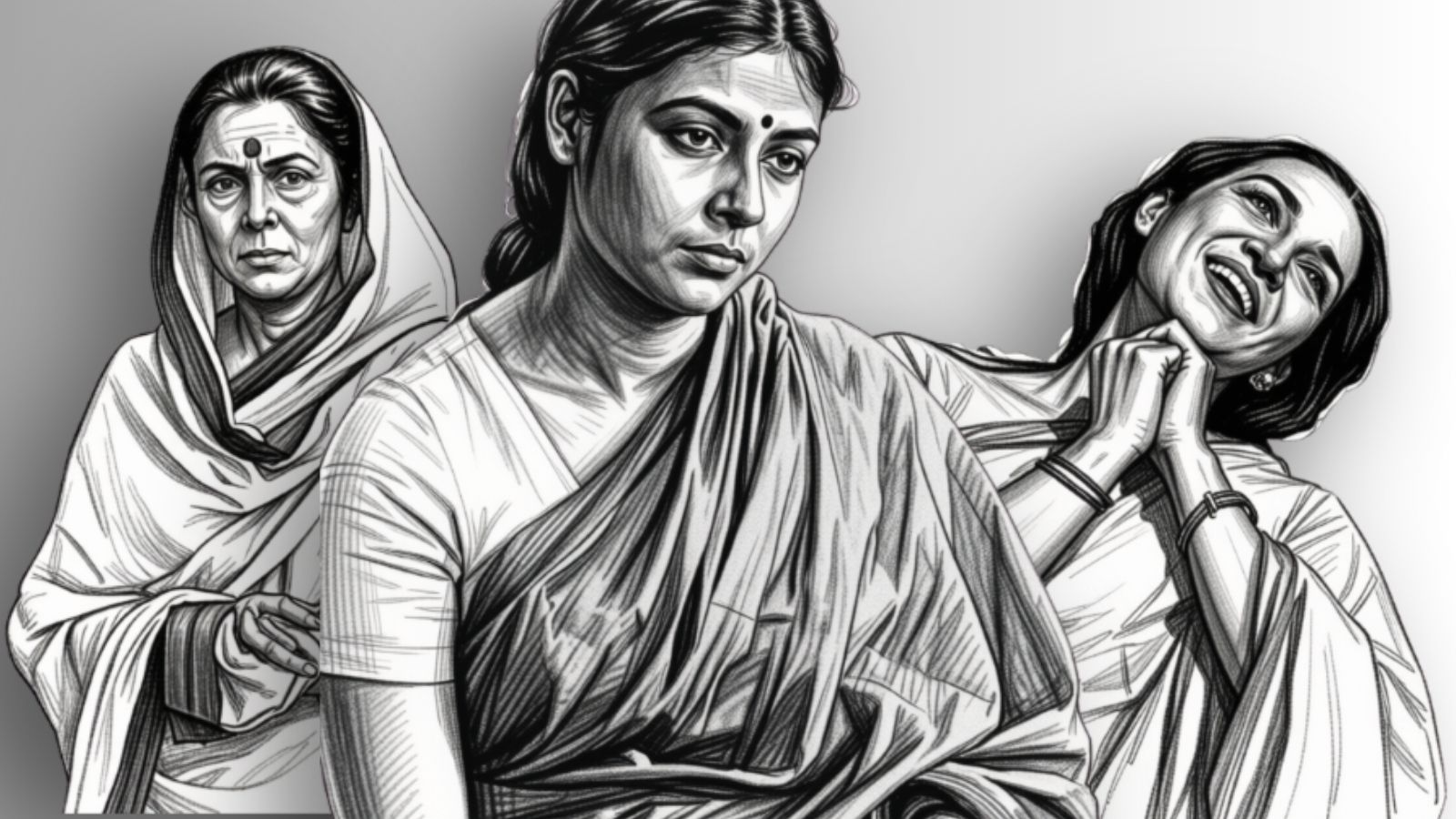
Ghatak, who considered melodrama as his birthright, uses the form in Meghe Dhaka Tara, but gives its familiar language of sacrifice and suffering an unsettling turn. He gives his women enough interiority to exceed the roles melodrama normally assigns them. The three women at the centre of the film — Nita, her mother (Gita Dey), and Gita (Gita Ghatak) — respond very differently to the same conditions of displacement and scarcity. Their choices are difficult, sometimes cruel and often painful to watch, but each has a logic of her own.
Nita
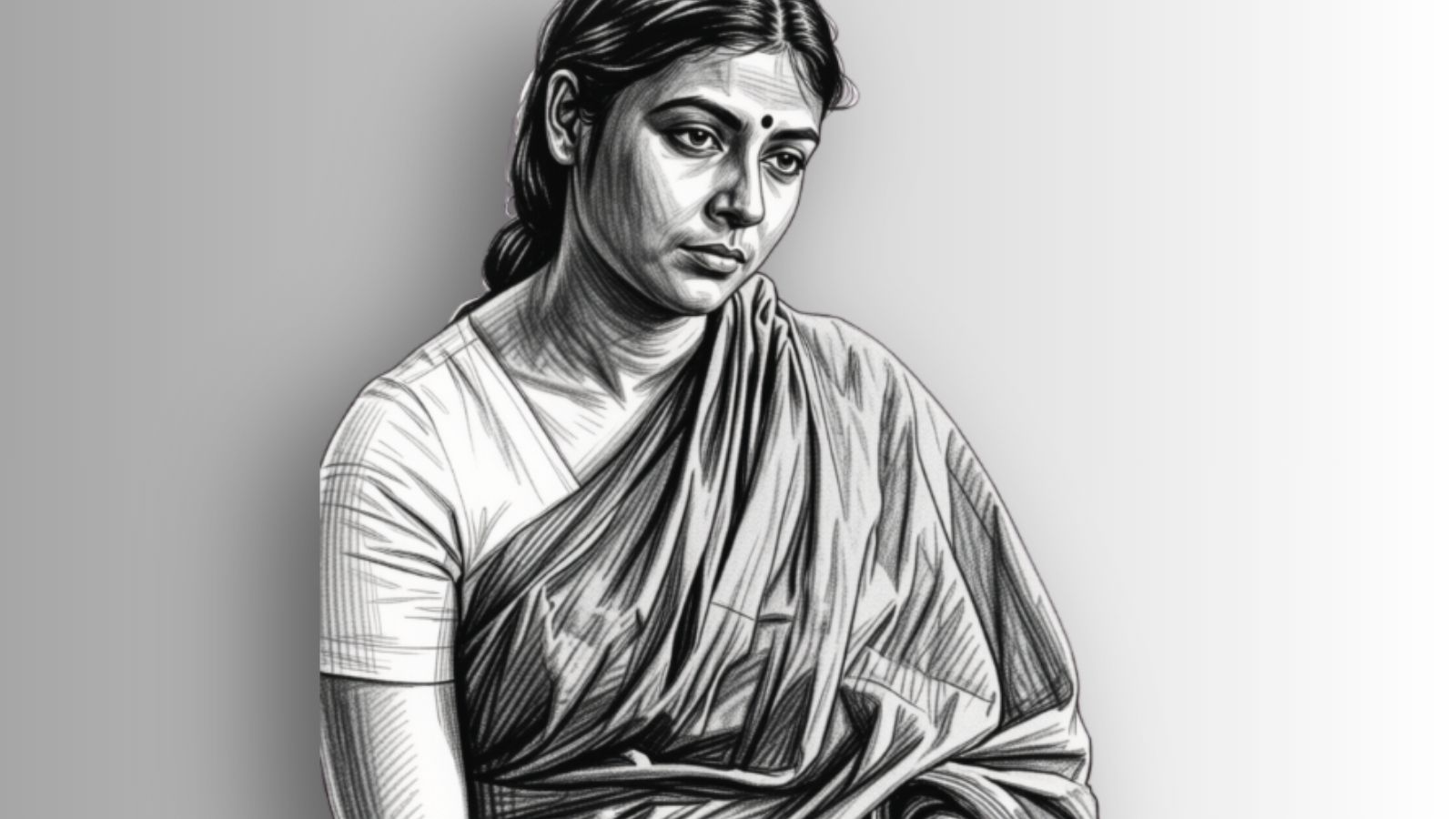
When Meghe Dhaka Tara begins, Nita is shown as an independent young woman who does tuition to support her father while preparing for graduation. Later, when misfortune strikes them, she shoulders the family responsibility to give her elder brother, Shankar (Anil Chatterjee), time to practise his singing. She gives up her graduation dreams and takes up a clerical job, the go-to prospect of middle-class families at those troubled times, something her schoolteacher father (Bijon Bhattacharya) considered a deterrent to the growth of families in the lower strata of society.
Ghatak details Nita's self-abnegating nature thoroughly through multiple instances. In Meghe Dhaka Tara, through the famous opening scene of a long shot of Nita walking out of the vast spread of an array of trees, Ghatak reveals the all-providing nature of Nita. He then reiterates it multiple times in the scenes that follow, adhering true to the structure of melodramatic narration. It almost feels like he is reintroducing his protagonist to the audience.
Nita wades through life, neglecting her emotional and physical needs. When Sanat, her former suitor who marries her sister Gita instead, confides in her his wish to see things the way they were, Nita addresses the life she didn't live for the first time. Nita tells Sanat (Niranjan Ray) that she has moved on, and her present life is only to work till her body carries on to provide for her ailing father, mother, and injured brother. And she will carry on as if it was her penance for the sin of neglecting herself.
But Nita's sacrifice is not the whole of her character. She has accepted self-denial as the way she must live, but the desire for a life of her own never completely disappears. It remains buried beneath the responsibilities she has taken upon herself. When tuberculosis finally leaves her facing a point of no return, that buried desire comes back to the surface.
She sheds her stolid stature and allows her earnest desire to live to surface only at the very end, while looking death in the eyes. At the nursing home in Shillong, she tells Shankar that she wants to live. After spending the entire film giving up things that could have made her happy, Nita finally asks for something that belongs entirely to herself. Had Ghatak followed the familiar trajectory of melodrama, Nita's suffering and sacrifice would have ultimately found their moral vindication. Instead, she dies with her desire to live finally acknowledged but unfulfilled.
Mother
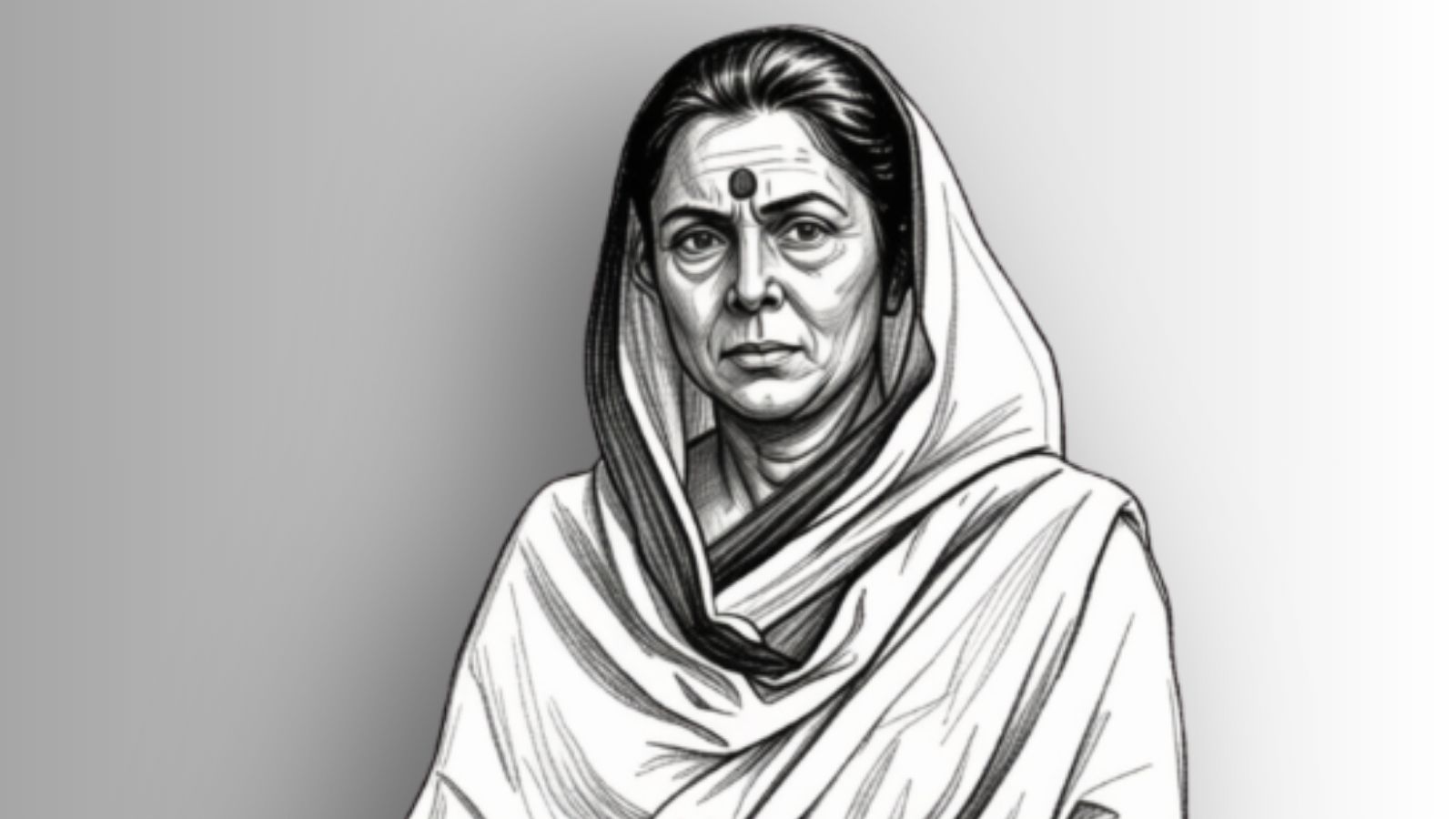
Ritwik Ghatak confounds Indian society and the cinema industry, accustomed to the notion that hardships and self-sacrifice are the inheritance of motherhood, with the characterisation of Nita's mother. She is practical and manipulative for the sake of her younger children and to keep the family afloat. In one of the rare bonding moments between mother and Nita, she tells her that she has known her husband from the age of seven. It is a small line, but it reveals how early the roles that shaped her life had entered it. She had endured more than enough even before partition and displacement ruptured their life.
Mother is exceptionally harsh towards Shankar and Nita and protective of Gita and Mantu (Dwiju Bhawal). If the viewers are to assume, it could be because Shankar and Nita are the remnants of their well-to-do life, which is now a fading memory years after partition. Life is a game of chess for mother, and she is ready to sacrifice the queen, Nita's needs and dreams, to keep life's attacks at bay.
She can't be blamed, from where she is standing. Shankar looks much like a good-for-nothing fellow; she sees through Gita's shallowness; Mantu, with his factory job and football, could abandon the family any given day; and Nita is the only reliable option she has.
That is why the mother fears Nita's closeness with Sanat. Their marriage could, even if not immediately, strain and crack the fragile platform on which she has pitched her family. One can only sigh and think, if only she knew Nita well and believed Shankar's abilities as her daughter did.
Mother's character is incredibly complex, though, peripherally, she may resemble an evil stereotype of the woman required to drive the melodrama forward. But Ghatak has placed her in the story like a stone statue that stands cracked among the ruins of life.
Gita
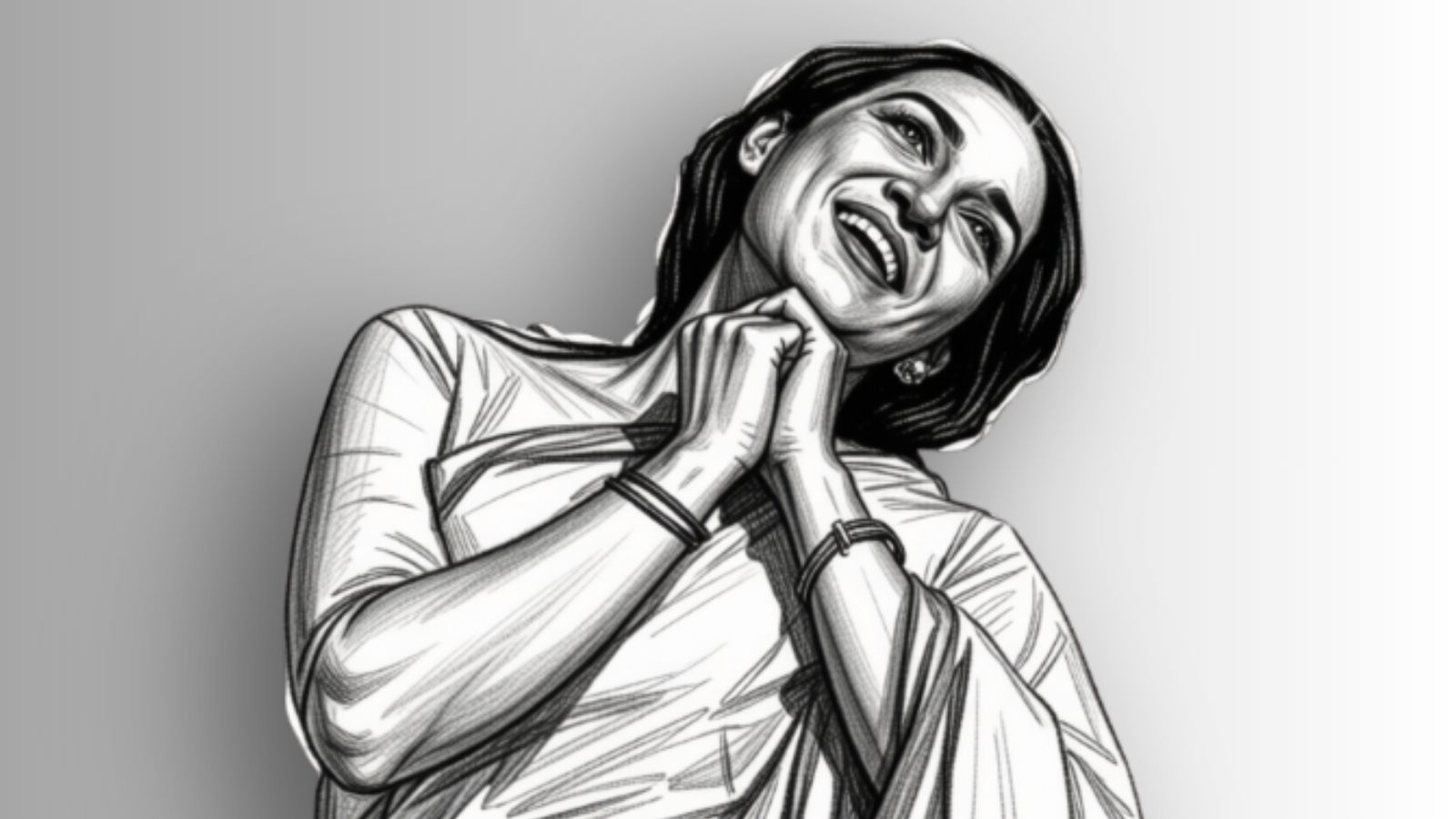
Gita, portrayed as naive and lost in the glories of recently discovered young adulthood, evolves into a practical individual when she realises the vulnerability of Sanat. Rather than portraying Gita as a mere extension of mother, Ghatak crafts her as an individual who knows what is best for her.
Her memories of their affluent life beyond the rupture of partition could be distant and fragmented, but that is enough for her to formulate her life's philosophy - every woman for herself. When she sees Nita's stoic approach to life and her platonic relationship with Sanat, Gita pounces on the opportunity to build a safe and secure life for herself.
The scene where Gita teases mother by asking if she can take the tea to Sanat, sitting alone in Nita's room, is proof that she is not as juvenile as mother perceived her to be. This question lands as a lightning strike of realisation on mother, who had earlier used Gita to intrude into the privacy of Nita and Sanat.
Gita has a complete disdain for Nita's forbearing ways. While breaking the news of her marriage with Sanat to Nita, Gita says, "Don't run out crying, not everyone is as patient as you are." It is Gita's way of telling Nita, 'I am taking the rope to exit the well of bad luck that you have overlooked for long, even if it was for my sake.'
For Gita, the concept of life is simple and straightforward — pounce on the first opportunity to improve it. Nita never quite gets it; even when she runs off from the home after contracting tuberculosis, it is to safeguard her family from the disease.
The three women therefore become three different responses to the same broken world. Nita gives herself to the family. Her mother tries to keep the family together by calculating whom she can depend on. Gita chooses herself when an opportunity to escape arrives. None of them has emerged untouched from the displacement that surrounds them.
In the climax of the film, when Shankar returns from the sanatorium in Shillong after Nita's death, Ghatak recreates Nita's introduction scene with another young woman. Standing in front of the grocery shop, Shankar sees her, a split image of Nita, passing by. Progress has made its way into the camp; the dirt road on which Nita's slipper had snapped is now paved with gravel. But the hardships of the people have not lessened. As Shankar watches, the girl's slipper tears, and instead of buying a new one, she shoves the buckle back and walks on, limping. It is then that Shankar realises that Nita's story is not confined to their family, or to the partition that displaced them. It belongs to everyone who has been uprooted — then by partition, now by war, persecution and the upheavals that continue to displace millions. The gravel roads may have since become asphalt. The struggles have not changed.
(In Makes Sense, Sajesh Mohan explores the politics, ideas and cultural forces that shape the stories and conversations around us — from public affairs to popular culture.)