

The International Association for Suicide Prevention, in association with the World Health Organisation (WHO), observes September as Suicide Prevention Awareness Month and September 10 as ‘Suicide Prevention Day’. The theme for 2024–2026, ‘Changing the narrative on suicide’, aims to bring the focus to a crucial part of the programme: creating awareness that suicide is a collective responsibility rather than an individual failure.
According to data from the World Health Organisation, an estimated 208,000 lives are lost to suicide every year in the South-East Asia region alone. It remains one of the primary causes of death affecting people of all ages, genders and backgrounds. In this context, we spoke to Dr CJ John, Senior Consultant Psychiatrist, Medical Trust Hospital, Ernakulam, about how to sensitise and educate ourselves to be more aware and empathetic towards others.
The first step towards that, according to Dr CJ John, is to be aware of the process he calls ‘mental health first aid’ — an understanding which he considers as crucial as knowing physical first aid. “For that, we need to be equipped with action plans rooted in empathy”, says Dr John.
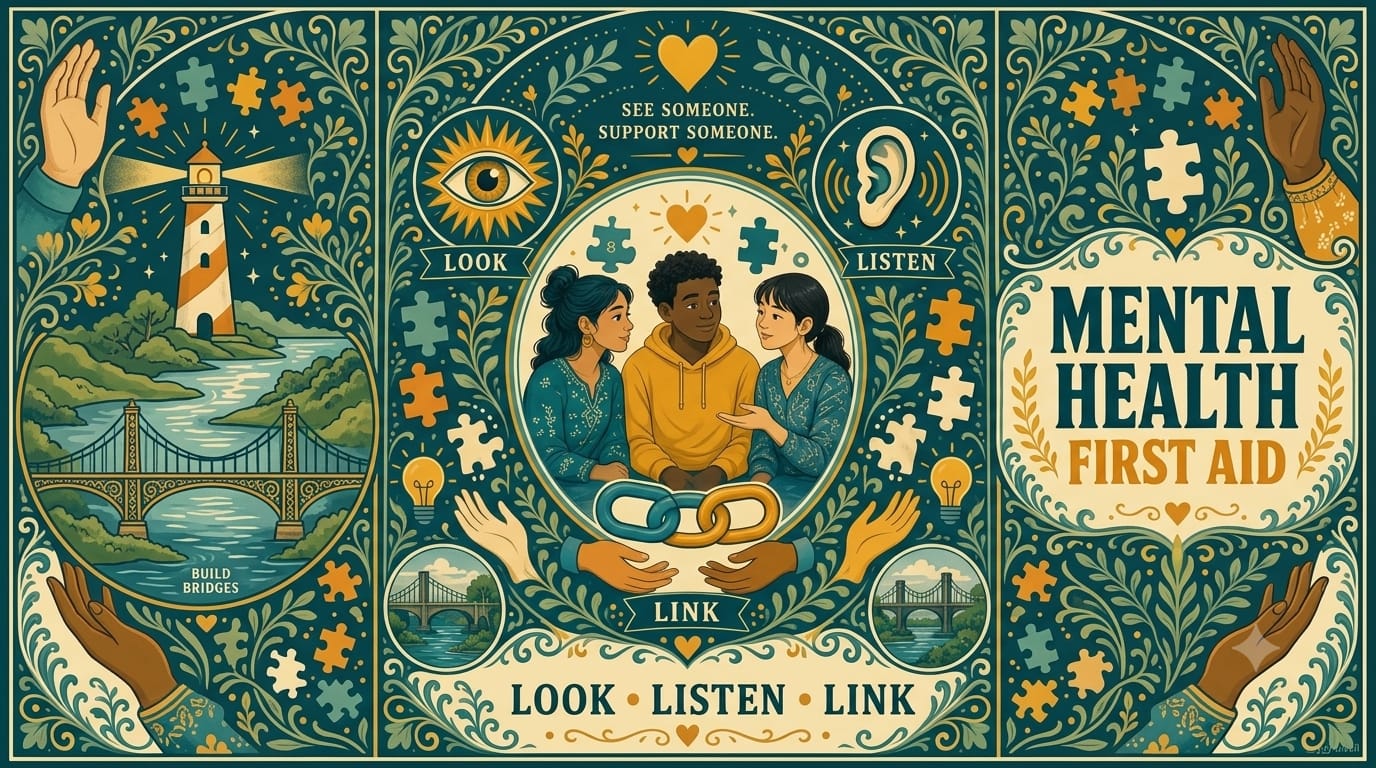
What is Mental Health First Aid?
Mental health first aid is built on the foundation of three pillars, commonly known as the 3Ls: Look, Listen and Link.
According to Dr John, these three steps can help people recognise distress, respond with empathy and connect those who need help with the right support.
- Look beyond what is in the periphery, beyond what you can see with your eyes. Look for others’ internal emotional state. Develop a habit of observing empathetically. Identify whether someone is gloomy, sad or depressed, or feeling isolated.
- Listen with empathy. Rather than pushing someone to pour their entire life out in one sitting, try to create a safe space. Try to put yourself in their shoes and listen to understand, not to judge. If you see someone in visible distress, ask them if you can help them in any way. Or you may ask, ‘I can see something is bothering you; what is it? You can talk to me and trust me.’ In most cases, having someone to listen itself eases the person’s discomfort to a large extent. So offer help whenever you can. And once you offer help, make sure you maintain confidentiality.
- The last and most important L is Link. In some cases, a listener alone may not fully eliminate their distress. The person might be grieving the loss of a loved one, facing relationship issues, dealing with a lack of family or societal acceptance due to their gender identity, experiencing distress due to a lack of societal accessibility, or coping with a serious illness. Most of the time, the listener in you might not know how to cope with or solve an issue, even when you are willing to listen. So there comes the need to connect those in distress to the right kind of mental health practitioners, or, if it’s a financial crisis, a financial expert, a family counsellor, a doctor and so on.
“We as a society lack this kind of sensitivity,” says Dr John. “Most of the time, why can’t people even give a hint to their loved ones about their inner turmoil? This is the question we need to ask ourselves, and that has to trigger an action plan.”
When it comes to a family, Dr John says that, in today’s context, all families must engage in healthy mental health-related discussions. First and foremost, create an open space where people can talk about anything and everything without fear. Have face-to-face interactions as part of the routine. The aim of emotional well-being should not be based on someone’s rank, mark, social position or performance.
This need not be a serious round-table conference about each mental health issue. It can be a discussion on how your day went, about a movie and so on. Such interactions will help the child or anyone in the family be assured that ‘I have a space where I’ll be listened to.’ Most of the time, someone, especially a child, will be hesitant to open up for fear of being judged or humiliated, or because issues get trivialised. The former interactions are what make the child think that someone is unapproachable. So it is important to understand that the tone in daily conversation matters, and it’s not just about the time when someone is distressed.
Homes should be a space where a child can always run to rather than run away from. Even at the school level, Dr John advises keeping at least three people in your close circle to whom you can confide anything without feeling hesitant or ashamed. It can be a family member, friend or relative, or mentors who have the qualities of confidentiality, truthfulness, calmness, etc.
A home that encourages healthy conversations not only helps prevent suicide, but it also keeps them away from using harmful substances, engaging in unlawful activities and so on, according to Dr John.
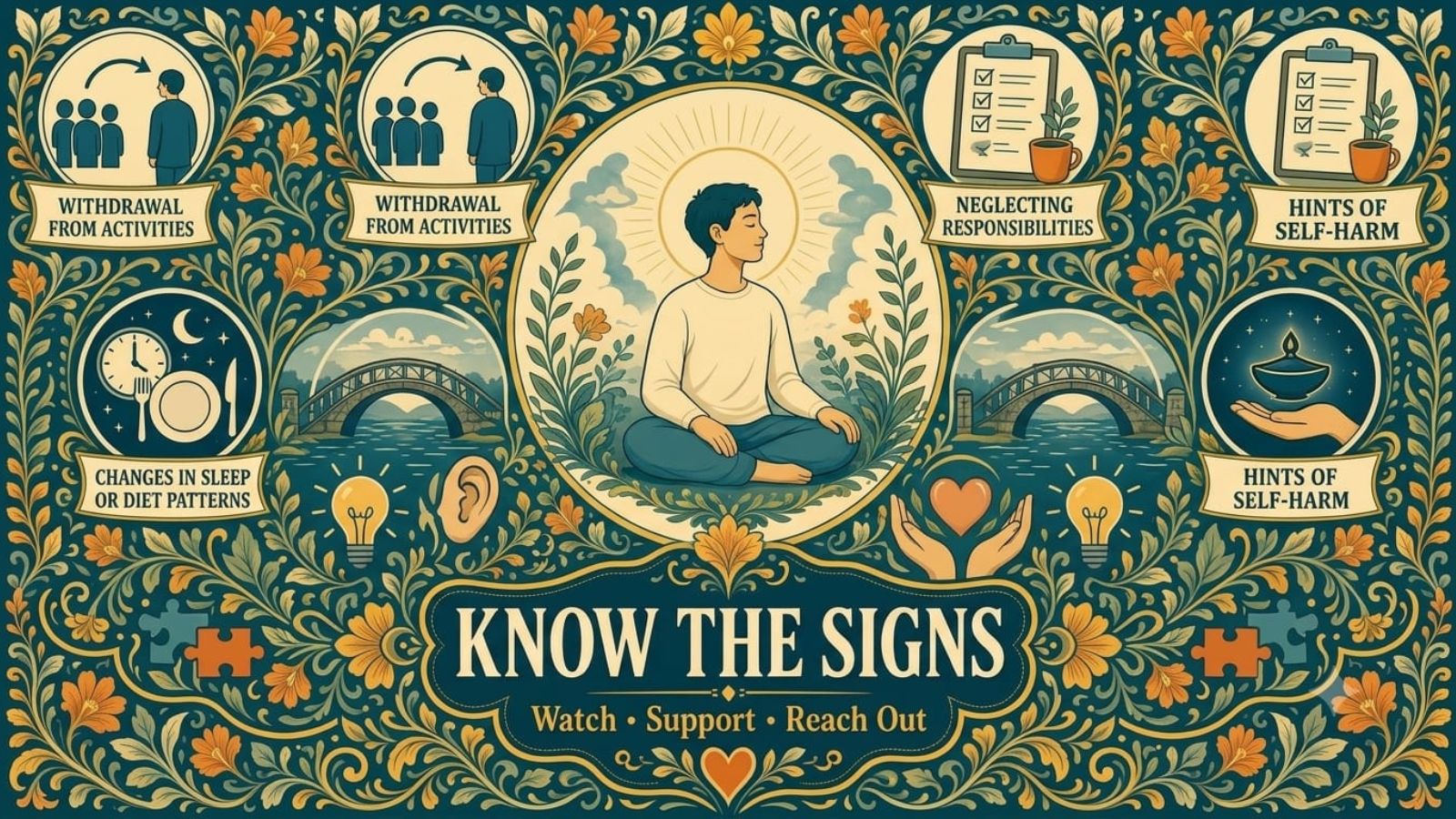
Common symptoms one has to keep watch on
In the Gen Z equation, they are largely a digital generation. Most of them are always present digitally, which has its pros and cons. The number one con is that they are deprived of physical interaction, which will eventually affect their mental health in various aspects. When physical socialisation diminishes, they create a secret world for themselves. So, when it comes to the parental aspect, getting entry to their world is a skilful task in itself.
Before, it was a bit easier to pick up the clues. Nowadays, it’s a bit difficult to understand someone’s emotional drifts. So it is important to enhance the entry to their world. It’s doubtful whether our parenting patterns or social systems are adapted to accommodate that.
The most common symptoms to notice, according to Dr John, are:
- Someone withdrawing from activities they once enjoyed or things they liked. Like someone who used to be very attentive about the way they dressed becoming shabby or unmindful of that aspect altogether.
- Neglecting their core responsibilities.
- Lesser interaction.
- They tend to confine themselves. (This aspect has now become a norm, so many people fail to recognise this cue.)
- Changes in sleep patterns or appetite.
- Hints about suicide or self-harm. (Most of the time, people post such statements on social media as posts/stories. We tend to ignore it, and later they die by suicide.)
Qualities of a good therapist
Dr John says we are in a boom of unauthorised mental health professionals. The checklist to keep in such a situation is:
- Empathic.
- One who does not jump to conclusions easily but can listen well.
- Those who are recommended by others.
- Those who have the right kind of education in the related field.
- Those who do not form conclusions based on their religious preferences.
- Maintain a strong and clear boundary.
- Doesn’t offer one-sided advice but helps the client to unearth what they actually want.
Even if you book a session with a therapist and you feel the vibe isn’t right, it is better to back off than continue in a wrong atmosphere.
(If you or someone you know is experiencing emotional distress, thoughts of self-harm, or a mental health crisis, seek help from a qualified mental health professional or contact a crisis support helpline in your area. 24x7 helpline number: 1800-599-0019)