

It is no secret that the internet is not feminist, let alone women-friendly. With a face and without a face, netizens pounce on the first opportunity to give free gyan (knowledge) to women, from driving to the ideal length of their skirts. Some even write theses in the comment section about the XX chromosomes they see on screens, on streets, and in their homes.
This time, what hurt the poor crow of the internet was postpartum Katrina. And their worry: “Katrina Kaif can’t fit in jeans anymore…! Can she play ‘Sheila’ again…?”
For some, the earth stopped spinning. For others, there was darkness in their eyes, but the pain was the same: “None of us expected this from you, Katrina!”
Let’s do a C-section of the issue in ‘Weekend Vines’.
“Katrina, why…?”, ask netizens
The latest episode of online discussion on women’s bodies before, during, and after pregnancy flooded the feeds when Katrina, in her mamma cool avatar, stepped out of her home for Ganesh Chaturthi celebrations.
On November 7, 2025, Katrina and Vicky Kaushal welcomed their first child, a baby boy named Vihaan Kaushal.
For fans out there, she has changed; she no longer looks anything like the model figure they used to have a crush on.
But don’t ask them who asked them to define a person just by their body. Don’t ask them who set the beauty standards. You won’t get any answer.
While talking to The Hollywood Reporter India, Katrina pointed out what her new beauty standards are: “When I started early in my modelling and acting career, there were a lot of stereotypes about what the beauty standards were. Now for me, looking my best is really about feeling my best, and that comes from taking care of myself as a whole.”
Yes, she changed, proudly, unapologetically, but not in the way a certain section of the world wanted.
“Be real, celebrity.!”
Back then, when the internet was not that accessible, people used to rely on Page 3 for celebrity news and gossip. Off-screen movements of a star have always had a market.
Whenever a celebrity appeared somewhere, like at a family function, people had an opinion: “Be real…”, “off your makeup…”
And, most importantly, they had special advice for women in glamour who worked in the entertainment or fashion field and chose not to have kids: “Be a mother; that completes you as a woman.” Meaning, when society meets an independent woman, it wants her to be real and fulfil what it feels her role is.
But as soon as a woman embraces her vulnerability, society pounces back, asking her to get back into her eye-candy role.
Let me ask a Gen Z question: “Are u fr?”
Turns out, even rich and famous women, whom we consider epitomes of independence, have no escape from the patriarchy.
The ‘object’ called ‘a woman’s body’
Bringing a new human being into the world comes with physical and psychological changes for women. Their bodies change; they might not return to the shape society expects.
The American College of Obstetricians and Gynaecologists describes postpartum care as an ongoing process rather than a single six-week check-up, addressing the mother’s physical, social and psychological well-being. ACOG also advises women to work towards reaching their prepregnancy weight within 6–12 months postpartum, but that medical guidance is very different from the demand for a particular appearance on social media.
Medicine talks about postpartum health. The internet talks about postpartum appearance.
The World Health Organisation, in its 2022 postnatal-care guidance, emphasises that postnatal care should be tailored to each woman’s and baby’s individual situation, including physical health and well-being, as well as the woman’s emotional well-being and mental health.
WHO also notes that the physical and emotional consequences of childbirth, from injuries to recurring pain and trauma, can be debilitating if unmanaged.
And then come the internet bullies
The virtual crowd is blessed with anonymity; it can bully anyone, launch cyberattacks and spread fake information. It acts like a big brother who has nobody’s permission for anything.
It didn’t begin with Katrina.
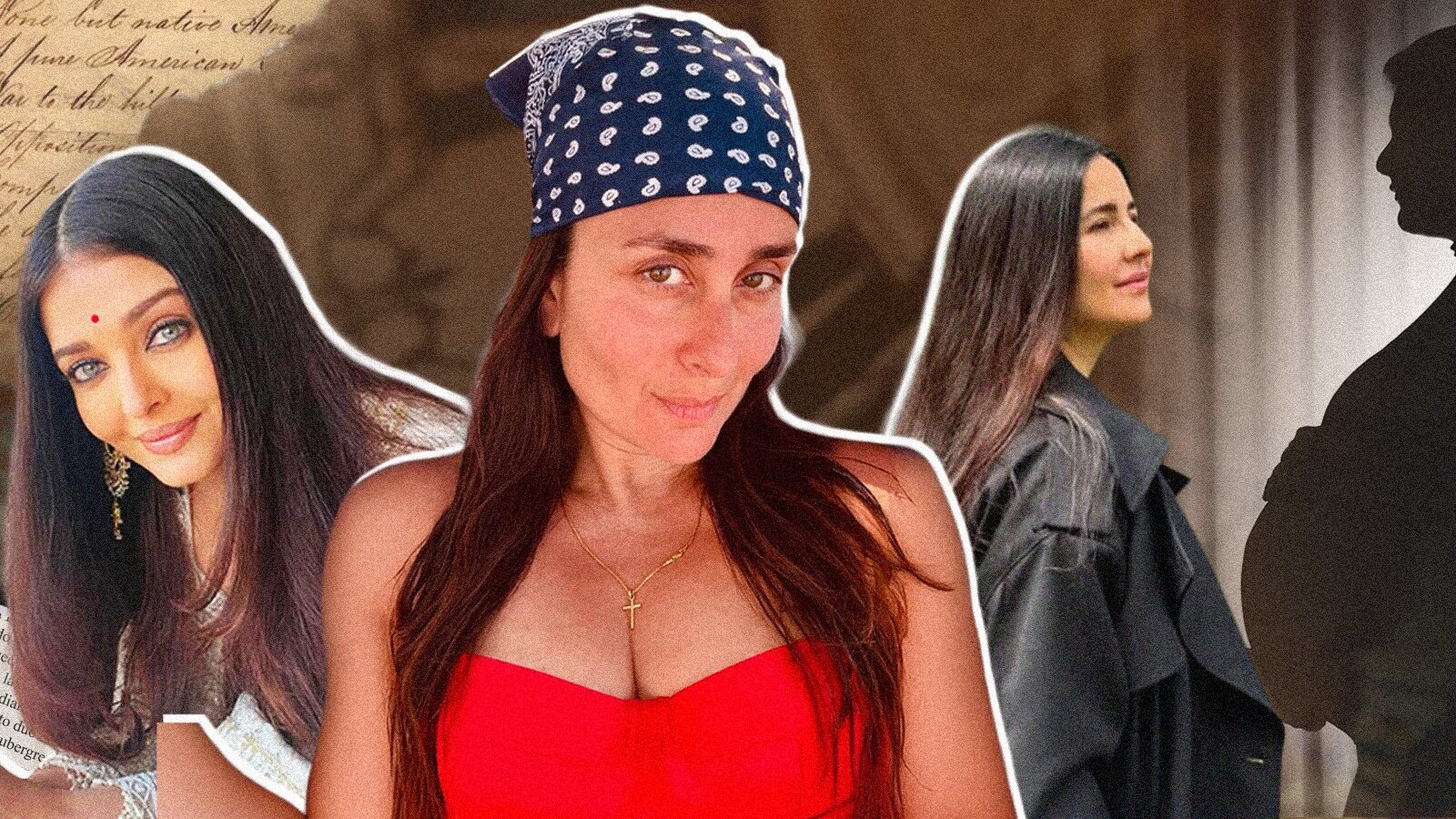
The internet had a complaint even with Aishwarya Rai Bachchan. People were not pleased with her postpartum weight gain and appearance. But they eventually seemed to be kind of happy because she fit back in and played in Mani Ratnam’s Ponniyin Selvan: I and Ponniyin Selvan: II.
Then there was Kiara Advani. It was not because she ‘completely lost her shape’. She disappointed the internet because she expressed an opinion.
And she said to Vogue India: “When I look at my body, I think, ‘Wow, you created a human.’ Nothing compares. Now, whatever shape or size I am in, I will always respect my body.”
The internet didn’t find it very offensive then; it let her use her right to freedom of expression.
But then, in an interview with Bombay Times, she again used her freedom of expression: “When you are pregnant, you are this Devi, and the minute you deliver the baby, they expect you to be back in shape and back on track. But the hardest part for the woman is after. That is the part where she needs support.” Which the virtual crowd didn’t enjoy much.
Kareena Kapoor also has something to say about the endless body-shaming and bullying. Her response was remarkably calm: she said she enjoyed her pregnancy and felt confident and comfortable in her body, whatever her shape or size, in a conversation with Mid-Day.
Be authentic. Be vulnerable. Be a mother. Just don’t change too much - Katrina Kaif’s postpartum body reveals the strange conditions the internet places on women, especially when ‘real’ stops looking glamorous.