


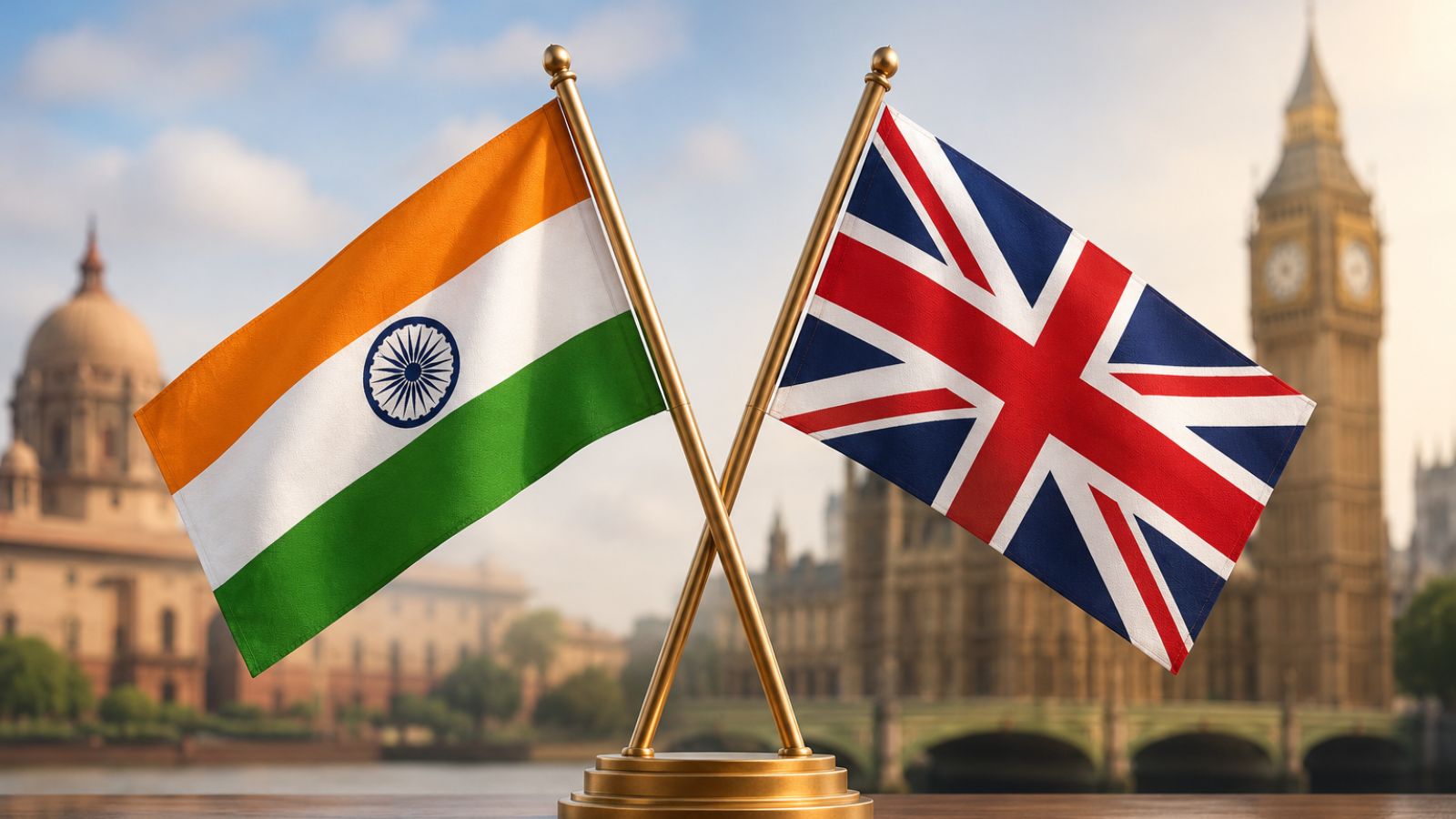


New Delhi: The Comprehensive Economic and Trade Agreement (CETA) between India and the United Kingdom (UK) came into force from July 15, with an aim to boost two-way commerce to $100 billion by 2030.
The bilateral trade in goods and services stands at about $55-60 billion at present. While goods trade was $25.12 billion in 2025-26, services trade stood at $35.44 billion in 2024.
“The target is that in the next 3-4 years, we will be able to reach $100 billion,” Commerce Secretary Rajesh Agarwal said on Tuesday.
Under the pact, a number of India’s export sectors such as textiles, leather and footwear, gems and jewellery and plastics will enter the British market at zero duty from July 15 itself.
Additional Secretary in the Department of Commerce, Darpan Jain, said sensitive segments, including small and mid-segment Internal Combustion Engine (ICE) vehicles and affordable Electronic Vehicles (EV), remain protected, allowing Indian manufacturers to strengthen scale, technology and competitiveness.
Also Read:
India has not granted any tariff concessions for EVs, hybrids, and hydrogen vehicles during the first five years of the implementation of the pact with an aim to safeguard India’s emerging clean mobility ecosystem.
Silver Imports
India has granted duty concessions on imports of silver from the UK under the Trade Agreement.
"We have given the concession, but rules of origin are quite stringent," an official said, adding, "Rules of origin are very stringent, which does not lead to a potential abuse of the duty concessions".
Among India's largest imports from the UK, silver bars stand out. India imported nearly $5.2 billion worth of silver from the UK in FY26, about 45 per cent of its global silver-bar imports.
According to think tank GTRI, the current 10.75 per cent duty will be eliminated over 10 years, although imports remain subject to licencing requirements.
By contrast, gold bars, despite imports of $111 million, receive no tariff concession, reflecting India's sensitivity over precious-metal imports.
India-UK Double Contribution Convention (DCC)
Indian companies operating in the UK would not have to make social security contributions for up to five years for employees they move from India to support their operations.
Currently, Indian employees and their employers contribute around 23 per cent of the salary to the UK's National Insurance System.
"Current contribution is like a tax of 23 per cent as employees are unable to draw benefits. DCC will ensure that workers will not pay double contributions towards their social security," Jain said, adding that various industry estimates suggest current annual savings of more than $600 million on this account every year.
This will benefit over 75,000 Indian workers and over 900 employers by exempting Indian professionals and their employers from these contributions in the UK for a stay of up to 5 years.