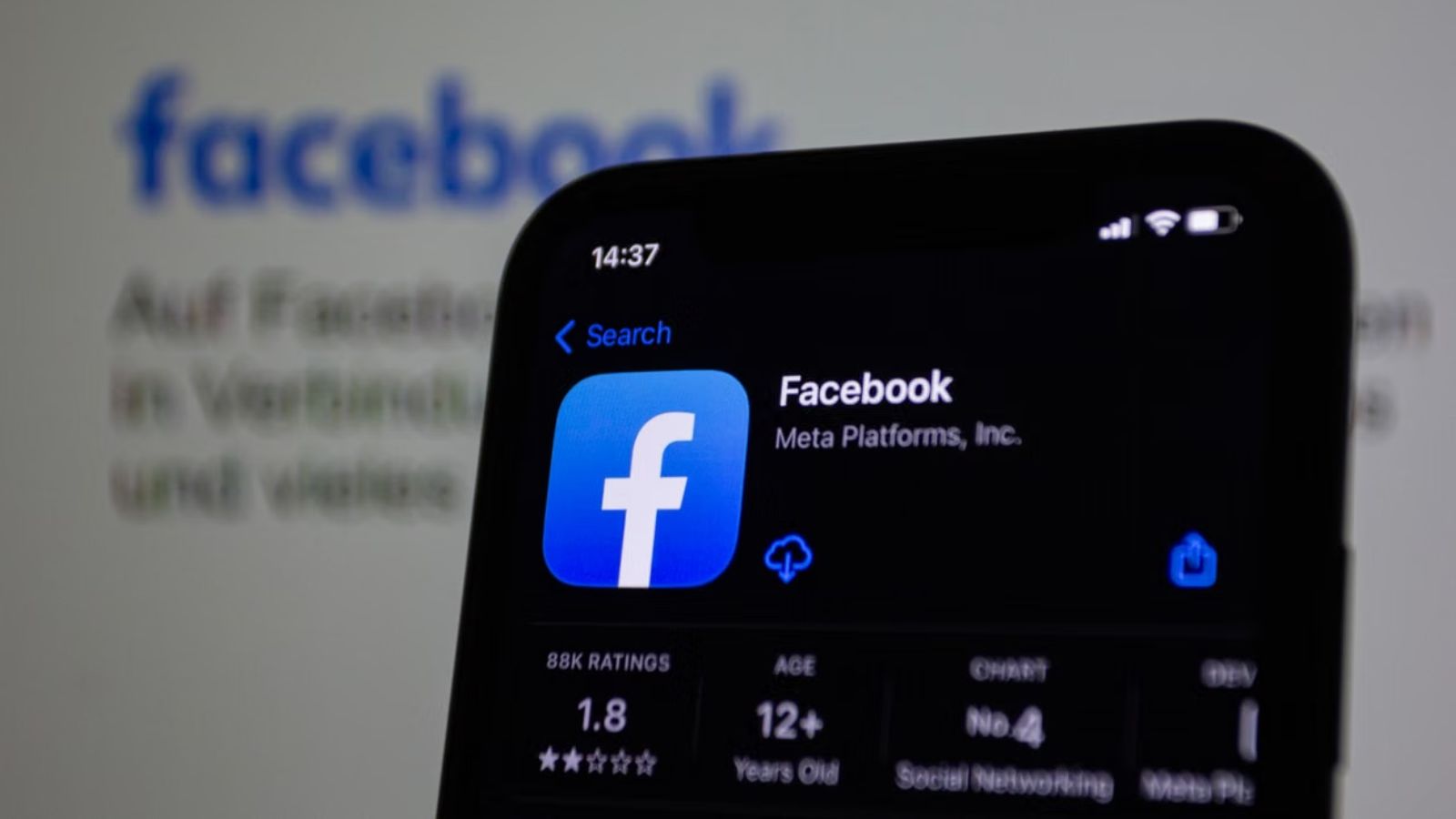


Victoria: In recent days, media reports have highlighted instances in which Facebook paid creators whose content could be considered controversial.
ABC News Verify found that Facebook had monetised Australian accounts described as having links to white nationalism, neo-Nazism or anti-vaccine content. Some of the material posted by these accounts appeared to conflict with Meta's own monetisation policies.
Meta did not answer questions about the individual pages or their earnings. The company said creators who breach its policies can have their earnings disabled and may be removed from the platform for repeated violations.
But there is an important distinction between allowing contentious speech to remain online and paying the people producing it.
Monetisation creates a commercial relationship between platforms and creators. When income depends on performance, creators have a financial incentive to produce more of the content that attracts attention.
This dynamic can also be exploited by so-called “meme factories” in countries such as Indonesia, India and China. These operations can produce politically themed content for pages, including groups associated with Australian politician Pauline Hanson, without necessarily having any connection to or detailed knowledge of the political figures involved.
Also Read:
So, how does Facebook's system work, and what does it mean for the content users see?
How Facebook content monetisation works
Meta introduced its Facebook Content Monetisation programme in 2024 by combining several existing monetisation features, including ads on Reels.
Eligible creators can earn money from public videos, Stories, photos and text posts.
The programme remains invitation-only, and Meta does not publish specific criteria determining which creators receive invitations. Creators can, however, register their interest in joining.
Meta describes the system as performance-based. Broadly, the more eligible engagement a piece of content receives, the greater its potential to generate revenue. Facebook paid creators nearly US$3 billion in 2025.
In March, Meta said its payment system would place greater emphasis on “qualified views”, views that the company considers eligible, along with longer watch time and deeper engagement.
Creators can see an approximate earnings rate per 1,000 qualified views. However, Meta does not publicly disclose precisely how those signals are weighted or how individual payments are calculated.
There are three separate systems to consider: community standards, distribution and monetisation.
Community standards determine whether content is allowed to remain on Facebook. Recommendation and distribution systems influence how widely that content travels. Monetisation rules determine whether eligible content can generate income.
Meta itself acknowledges these distinctions.
Content can remain on the platform while being excluded from recommendations. Material that does not violate community standards can still be distributed less widely, for example if Meta considers it low quality. Similarly, content may be permitted on Facebook but not monetised because its creator is not part of the programme.
In other words, being allowed online, being widely distributed and being paid for are not the same thing.
Why inflammatory content can still earn
Facebook has rules governing what creators can post and monetise. The challenge is that ranking, recommendation, payment and enforcement systems are separate mechanisms operating at enormous scale.
In research on digital media ecologies, the concept of “medialogy” can be used to examine these platforms as interconnected systems involving interfaces, data, institutions, commercial interests and everyday practices.
This approach shifts the focus away from the idea that a single “algorithm” is responsible for what users see.
Facebook's creator economy effectively turns attention into data. Views, watch time, reactions, comments and other forms of engagement become measurable signals that influence both visibility and economic value.
Creators can respond to these signals. They study dashboards and audience behaviour and learn which subjects, formats and tones generate the strongest response.
Research suggests that morally charged content can benefit from these dynamics.
A large study published last year found that moral-emotional language was positively associated with sharing across multiple topics and datasets, although the effects varied. Another study found that misinformation generated more outrage than trustworthy reporting, and that this outrage contributed to sharing.
That does not mean every angry or controversial post will succeed. Nor does it establish that recommendation systems alone cause political polarisation.
Exposure to misinformation and extremist content is often concentrated among relatively small groups, while audience demand also plays an important role.
But when payment is tied to performance, and provocative content performs well against the metrics that determine earnings, harmful material can acquire financial value, unless platforms consistently enforce rules that counter that incentive.
The available evidence does not establish that Meta intends to financially support extremism.
It does, however, raise questions about whether the company's performance-driven creator economy and its safety and enforcement systems can sometimes work at cross purposes.
Are other platforms doing the same?
Not in precisely the same way.
YouTube shares advertising and subscription revenue with creators. Under its terms, creators receive 55% of net watch-page advertising revenue and 45% of Shorts revenue. Its separate advertiser-friendly content rules can restrict or eliminate earnings from hateful, incendiary or demeaning material, even when the content itself remains available.
TikTok's Creator Rewards Programme, where available, pays eligible videos after they reach 1,000 qualified views in the For You feed. Its formula takes into account factors including watch time, completion, search traffic, engagement, location and advertising value. Eligible videos must be original and at least one minute long.
X, formerly known as Twitter, has also been changing its monetisation programme. From September 8, eligible creators will be able to earn revenue from impressions their posts receive on the home feeds of premium users. Misleading content, adult content and hate or extremist material may be excluded or restricted under its policies.
What does monetisation mean for what we see online?
The broader risk is similar across platforms, even when their individual monetisation models differ.
Platforms turn measurable attention into economic value and then rely on separate policy and enforcement systems to prevent harmful content from benefiting financially.
That creates an accountability challenge.
Platforms could provide greater public disclosure about which accounts and categories of content receive payments. Independent audits could examine the relationship between recommendation and monetisation systems. Researchers could receive privacy-protected access to relevant distribution and earnings data.
Repeated policy violations could also trigger timely and reviewable demonetisation.
Ultimately, the question is not simply whether social media platforms have rules.
It is whether they can demonstrate that their payment systems do not undermine those rules.