


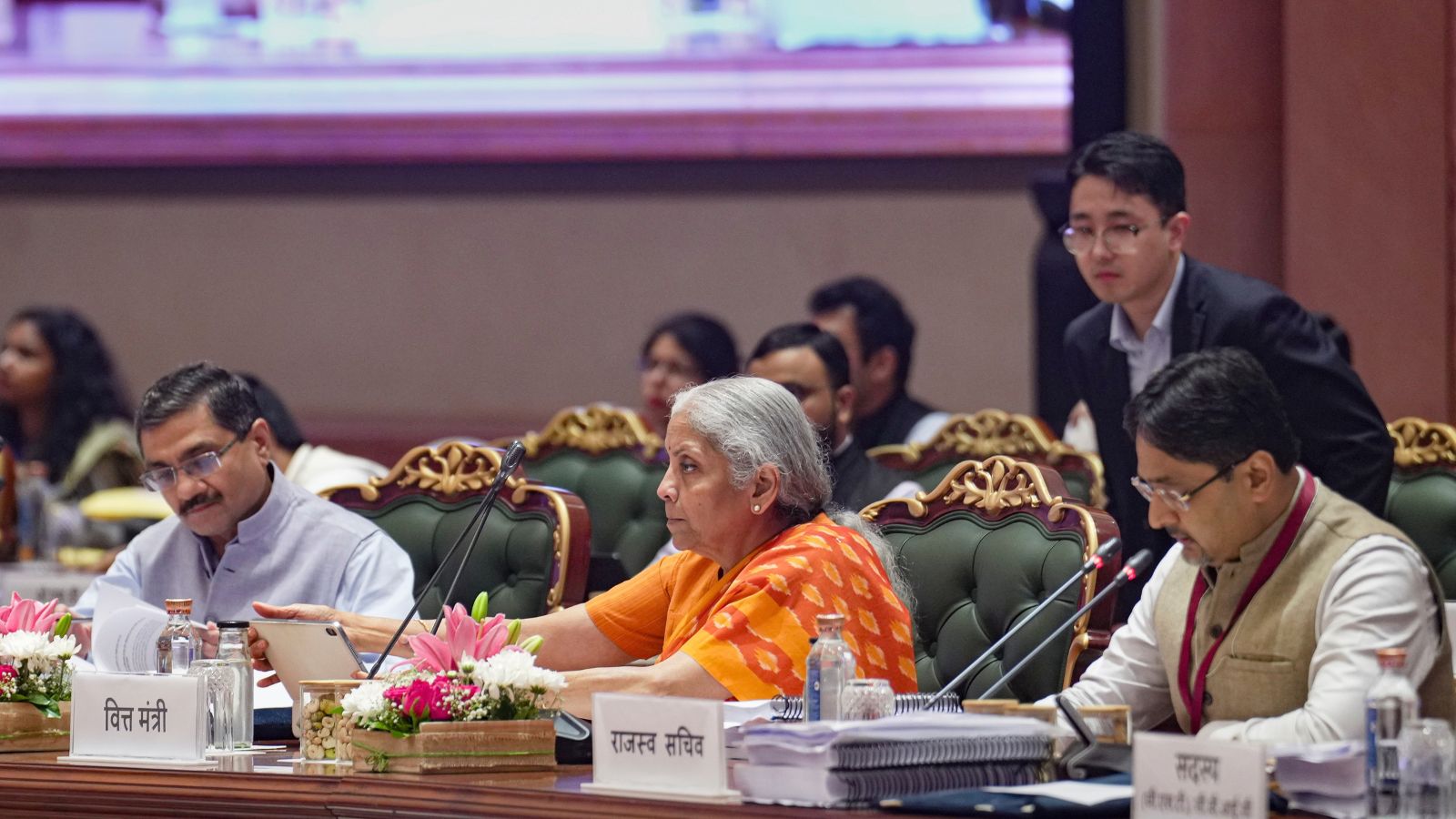


New Delhi: The 57th GST Council on Thursday approved reforms to simplify tax compliance, speed up refunds and reduce penalties, with Finance Minister Nirmala Sitharaman saying nearly 99 per cent of issues related to rates and processes had been addressed.
The Council approved removing the power of arrest under the Goods and Services Tax (GST) law and raising the prosecution threshold fivefold from Rs 1 crore to Rs 5 crore. It also recommended removing the minimum punishment, leaving the nature and extent of punishment to judicial discretion.
The general penalty, applicable where no specific penalty is prescribed, was reduced from Rs 25,000 to Rs 10,000. The Council also approved a Rs 10,000 threshold for issuing GST notices.
Also Read:

The process reforms will be implemented from April 1, 2027, Sitharaman said, adding that they could take about a year to stabilise.
The government is also working towards a centralised, faceless tax administration system for around two lakh taxpayers registered under the Central GST (CGST) system across multiple jurisdictions. The Central Board of Indirect Taxes and Customs is targeting implementation by April 1, 2027, with the framework to be put up for public consultation before the next Budget.
On refunds, the Council reduced the time for acknowledging claims from 15 days to 10 days. If neither an acknowledgement nor a deficiency memo is issued within that period, the claim will be treated as acknowledged. It also recommended that 90 per cent of eligible claims be sanctioned within three working days of acknowledgement, based on risk assessment.
Refunds under the inverted duty structure will be extended to input services for input tax credit (ITC) availed on or after November 1, 2026. Changes to refund calculations for tax paid on plant and machinery will take effect from April 1, 2027.
The Council also approved setting up a Committee of Officers to examine the transition towards invoice matching for ITC claims. The committee will report within three months and consider safeguards for genuine buyers who hold valid invoices, have received the goods and have paid their suppliers in full.
Other recommendations include allowing ITC on employee health and life insurance, certain telecom towers and pipelines outside factory premises, and addressing ITC treatment for free samples and expired stock requiring destruction.
Small taxpayers selling through e-commerce platforms will be allowed to declare a platform's warehouse in another state as their principal place of business, subject to the platform's consent. Registration will be limited to supplies through e-commerce operators.
For goods in transit, only the state of origin and destination will be allowed to inspect consignments. Vehicles may be stopped only on specific intelligence and with prior authorisation from an officer not below the rank of Joint Commissioner.
The Council also agreed in principle to an annual return scheme for businesses with turnover of up to Rs 5 crore that supply only to consumers. They would file annual returns and pay tax quarterly, with details to be considered at the next meeting.
Sitharaman said GST rate reductions introduced last year had not caused revenue losses, with collections growing steadily. The Council decided that rate changes would be considered only once a year and approved no rate changes at Thursday's meeting.
(With inputs from PTI & other sources)