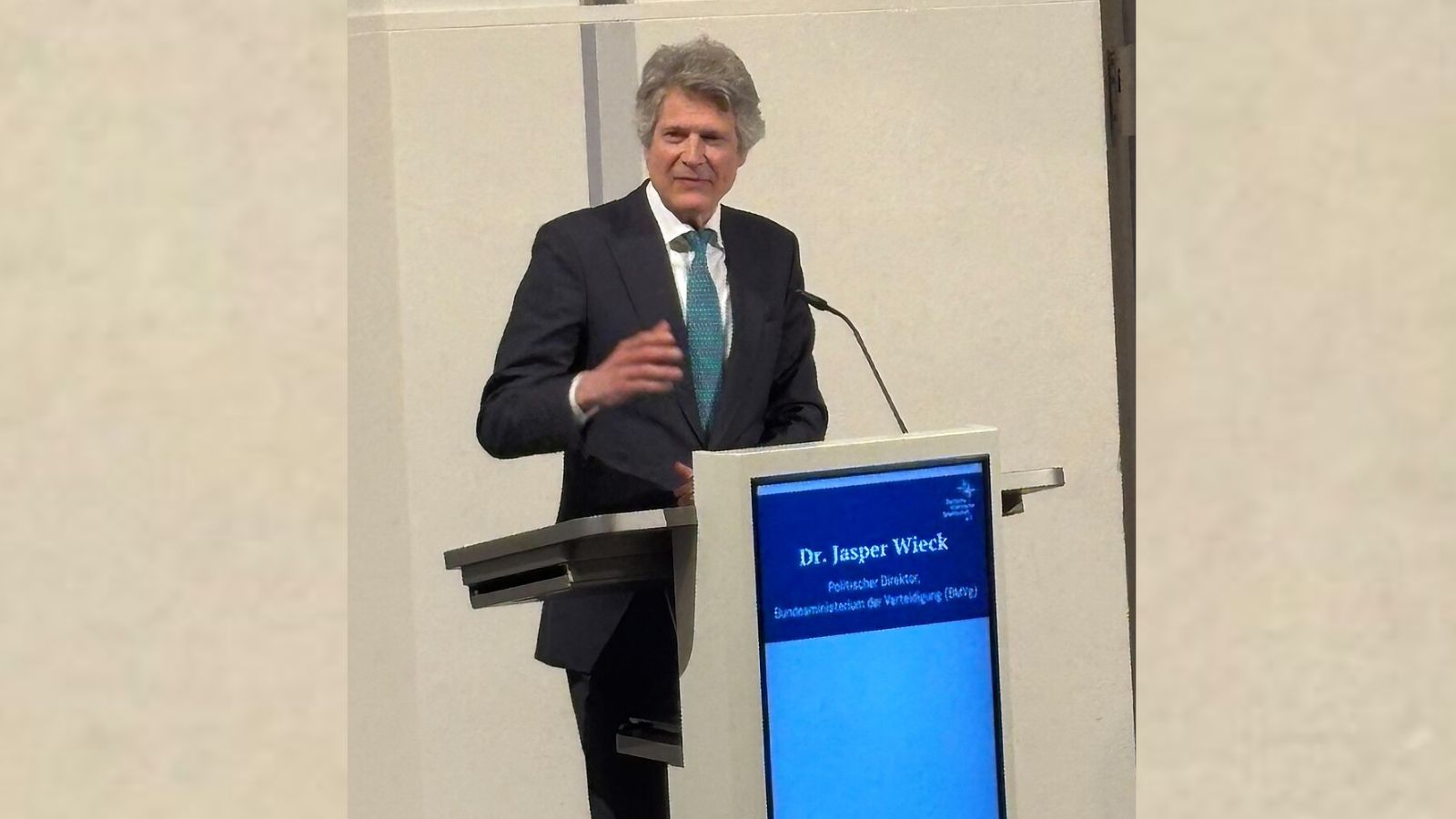


New Delhi: Domestic production of renewable energy is key to ensuring energy security for India amid disruptions to global supplies, and Germany is keen to work with Indian companies towards manufacturing solar panels and batteries, German Ambassador to India Jasper Wieck has said.
Also Read:
"Renewable energies are a very important part of the answer to the question of disruptions on energy supply worldwide," Wieck told PTI during the 20th anniversary of the Indo-German Energy Forum (IGEF) here on Tuesday.
Wieck said disruptions to energy supplies in Europe and Asia, including around the Strait of Hormuz, had highlighted the need to strengthen energy security through domestic renewable energy production and reduce dependence on external sources.
The Strait of Hormuz is a major route for global oil shipments, connecting the Persian Gulf with the Gulf of Oman. Shipping has been disrupted since the US and Israel launched strikes on Iran in February, prompting Tehran to restrict passage and attack vessels amid the conflict.
The German envoy said domestically produced renewable energy would mean greater energy security for India, adding that the two countries had worked together on the issue for two decades.
The IGEF, established in 2006 by the governments of India and Germany, is a platform for bilateral dialogue and cooperation on energy policy, bringing together government agencies, industry, financial institutions and research organisations to work on shared priorities. Wieck said the Bharat Renewable Energy Summit, inaugurated by Prime Minister Narendra Modi on Monday, was an important platform for bringing Indian and German companies together.
"I'm very proud that we have a very strong business delegation which came from Germany," he said.
The summit provided an opportunity for companies from both countries to explore partnerships and develop renewable energy manufacturing capacity in India, he said. "That means more self-reliance, more resilience, more independence, and that is very much in the philosophy of Atmanirbhar Bharat (Self-Reliant India)," Wieck said. He further said that India needs to develop domestic manufacturing of solar panels and batteries to avoid replacing one external dependence with another.
"Where do the solar panels come from? Where do all the batteries come from? In the future, they should be produced in India, and German companies stand ready to cooperate with Indian companies to make that happen," he said.
According to the International Energy Agency, China's share in all the manufacturing stages of solar panels exceeds 80 per cent. At the IGEF anniversary event, Wieck said the forum had helped India integrate renewable energy into power plants and advance energy efficiency, battery storage and green hydrogen.
"The Indo-German Energy Forum has become a true success story," he said, adding that the partnership had also built mutual trust and networks between the two countries. "I believe the most exciting chapters of our energy partnership are still ahead of us. Our ambition is to work with our Indian partners not only to expand renewable energy, but also to build the industries and value chains of the future," Wieck said.
The ambassador said the next phase of bilateral energy cooperation would also focus on green hydrogen, industrial capacity and building future energy value chains. Germany and India launched the Indo-German Green Hydrogen Roadmap in October 2024, following work by the bilateral Green Hydrogen Task Force supported by the forum. The roadmap seeks to strengthen cooperation in green hydrogen, infrastructure, industrial applications and sustainable energy trade.