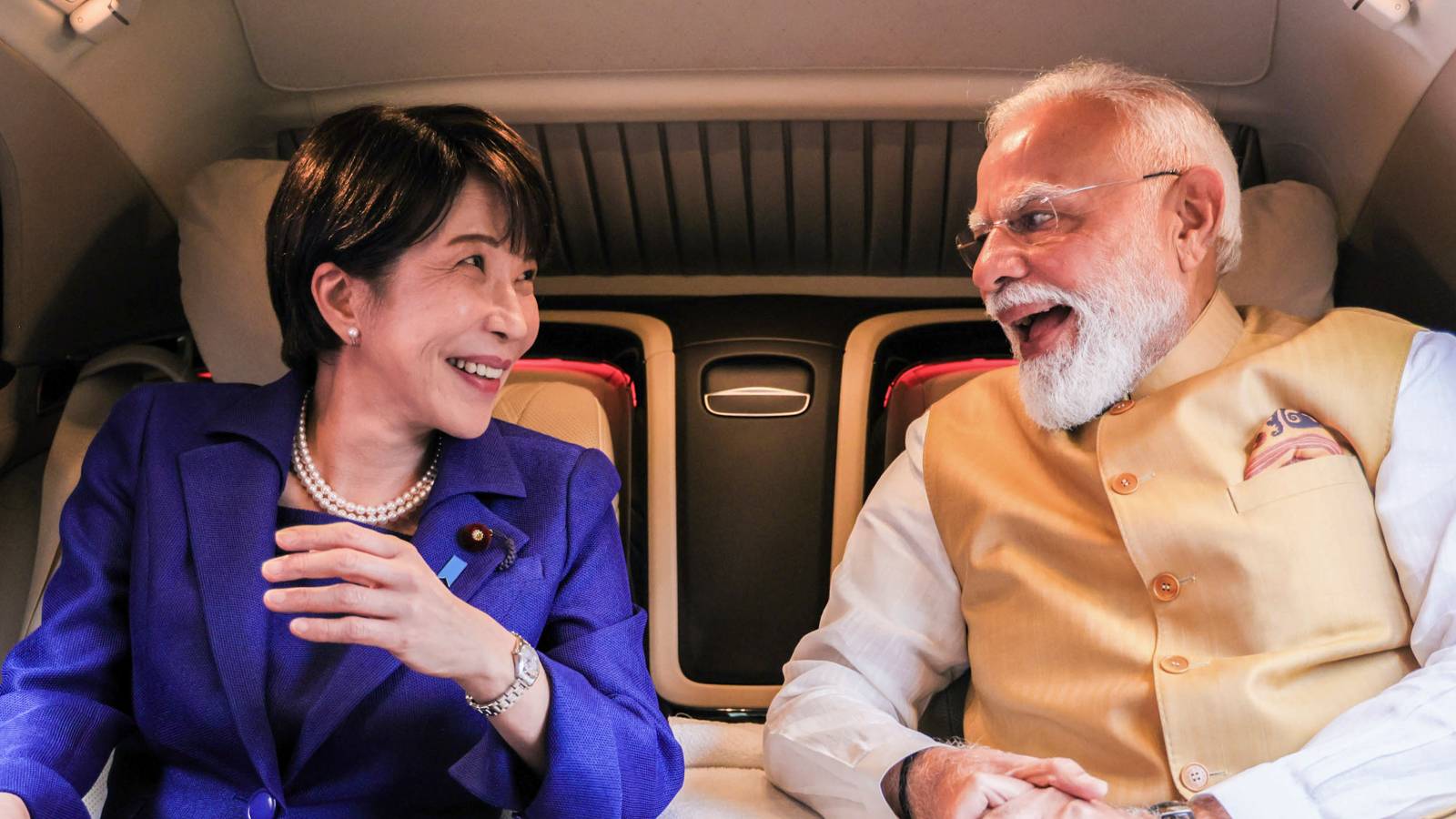


New Delhi: India and Japan on Thursday unveiled a raft of landmark initiatives, including an economic partnership framework, a defence pact to co-develop military hardware, and measures to strengthen energy ties to tackle oil shocks, following summit talks between Prime Minister Narendra Modi and his Japanese counterpart, Sanae Takaichi.
The major outcomes of the meeting included a declaration on economic security, a joint statement on cooperation in the field of artificial intelligence, and a framework to strengthen collaboration in the energy supply chain.
The two sides also finalised the India-Japan Next-Generation Mobility Partnership Framework to facilitate cooperation in shipbuilding, aviation and logistics.
"In today's era of uncertainty, both India and Japan fully understand the importance of economic security and energy security. With this in mind, we have today prepared a joint roadmap for economic security," Modi said in his media statement.
"Through this, we will strengthen supply chain resilience in strategic sectors such as semiconductors, quantum technology and advanced materials," he said.
Modi and Takaichi also discussed the situation in the Indo-Pacific region, which has witnessed growing Chinese military assertiveness.
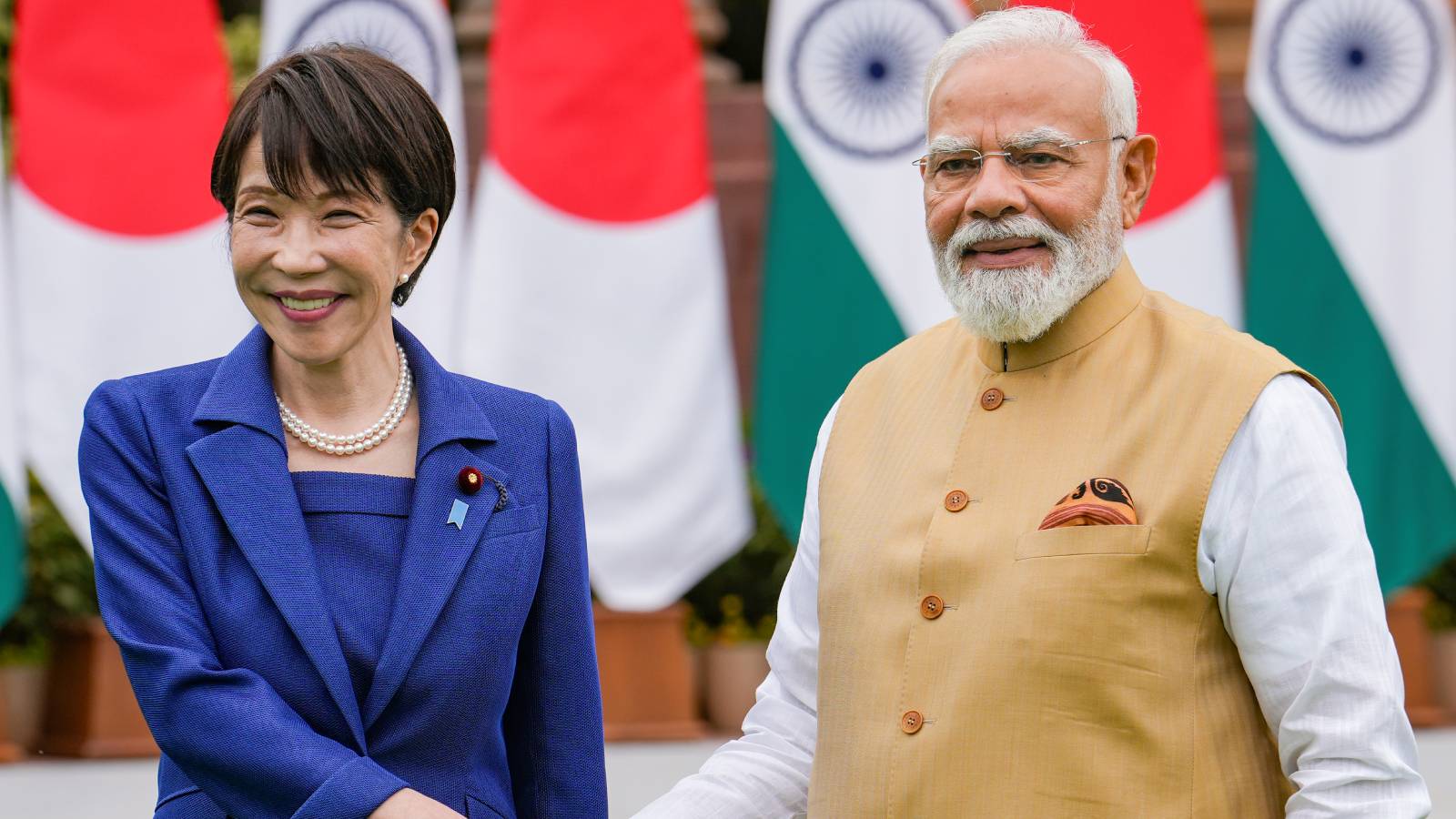
"Today, both India and Japan are among the world's largest economies. A free, prosperous and rules-based Indo-Pacific is our shared priority. As the region's largest democratic and market economies, we have launched several significant initiatives today. Through these, we will jointly pave the way for peace, stability and progress across the entire region," Modi said.
Energy security, defence, pharmaceuticals among key sectors
India and Japan also took several significant decisions in the field of energy security.
Under the India-Japan Bio-gas Initiative, Japan will assist India in setting up 1,000 biogas and organic fertiliser plants across the country. Modi said the project would give fresh impetus to sustainability, prosperity and rural livelihoods.
"We have also taken a significant initiative on energy resilience to tackle situations such as oil shocks. Furthermore, our cooperation in batteries, green hydrogen and nuclear energy will make a vital contribution to the world's clean energy future," Modi said.
As India and Japan view economic security as shared security and the energy transition as a shared opportunity, both countries will work together to advance this agenda.
Highlighting the growth in bilateral trade, Modi said that over the past year, more than 100 new business agreements had been signed, bringing over USD 10 billion in Japanese investment to India.
"Our goal is clear: to achieve Japanese investment of 10 trillion yen in India over the next 10 years and to double the number of Japanese companies operating in India," he said.
India and Japan also signed an agreement for their first co-development project in the defence sector.
"This project for a naval radio antenna will open a new chapter in our defence technology partnership. We will now jointly develop defence technologies that will strengthen regional peace, maritime security and the rules-based order," Modi said.
The two countries also signed agreements in the pharmaceuticals, medical devices and biotechnology sectors.
The two prime ministers conducted a comprehensive review of bilateral ties across trade and investment, economic security, energy, emerging technologies, defence and people-to-people exchanges. Both leaders also witnessed the exchange of key Memoranda of Understanding (MoUs) and agreements covering economic security, clean energy, critical technologies, and research and development.
India and Japan also agreed on a list of activities to commemorate the 75th anniversary of the establishment of diplomatic relations in 2027, Ministry of External Affairs spokesperson Randhir Jaiswal said.
The Japanese prime minister, who is on a three-day visit to India, said both countries were focusing on economic growth through investment and innovation.
"I am committed to building a strong economy and enhancing Japan's supply chains and technological capabilities through investments in 17 strategic sectors," Takaichi said.
"Prime Minister Modi has launched Viksit Bharat, a national mission to make India a developed nation by 2047, and is strongly driving India's growth," she said.
"In this way, we share the common goal of making our countries stronger and more prosperous through future-oriented investments," she added.
India-Japan ties have witnessed steady growth since they were elevated to a Special Strategic and Global Partnership in 2014.
As the two countries approach the 75th anniversary of diplomatic relations in 2027, cooperation continues to deepen across trade and investment, economic security, defence, science and technology, culture, and people-to-people exchanges. The bilateral relationship now comprises more than 70 institutional dialogue mechanisms.
Modi last visited Japan for the 15th India-Japan Annual Summit in Tokyo in August last year. The annual summit remains the flagship platform for advancing the strategic partnership.