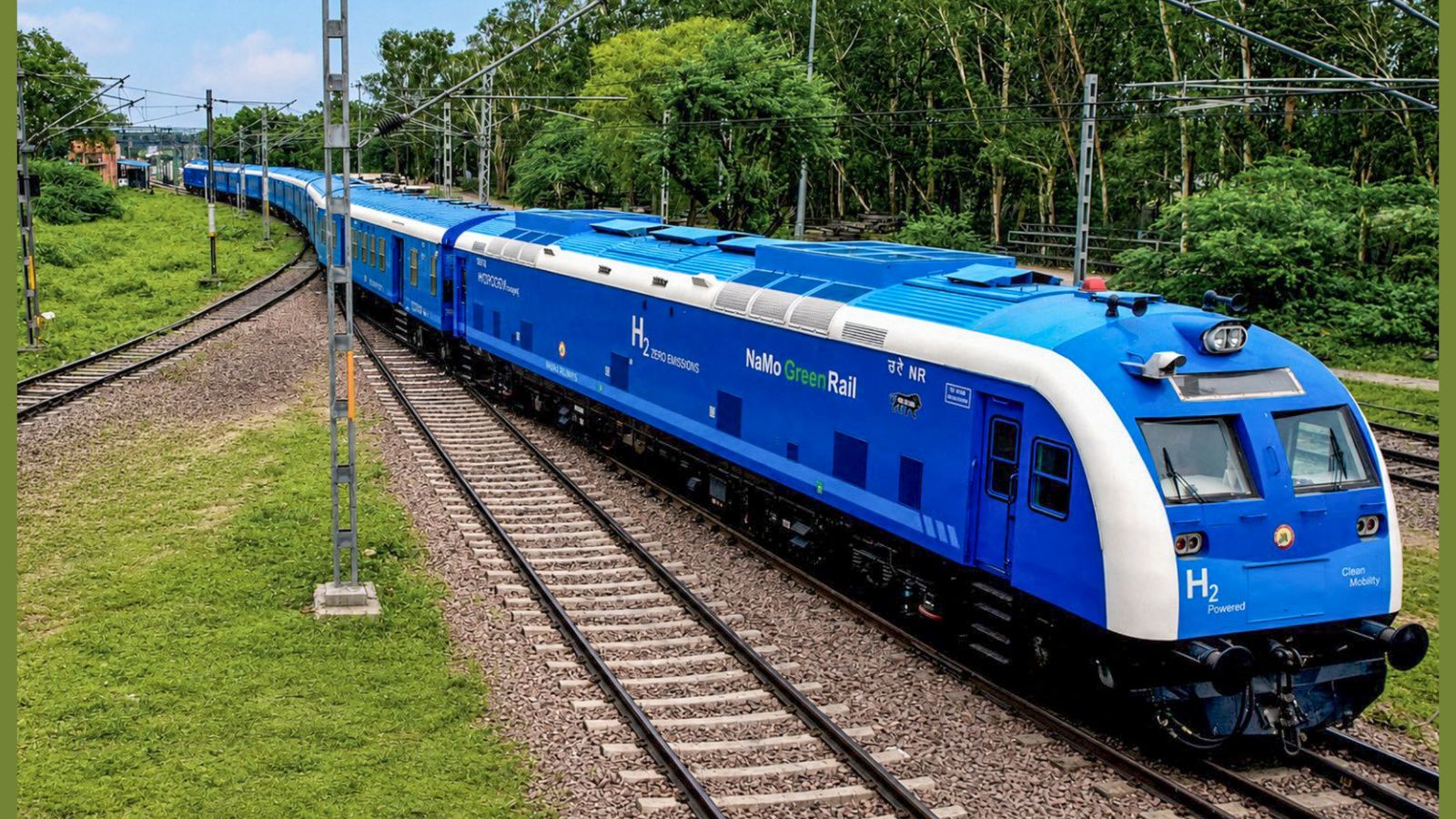


New Delhi: The launch of India's first hydrogen-powered train on Friday marks another milestone in the country's transition towards cleaner transport. However, experts say the technology is likely to play a niche role rather than becoming the dominant solution for Indian Railways, as most of the country's broad-gauge network is already electrified.
Also Read:
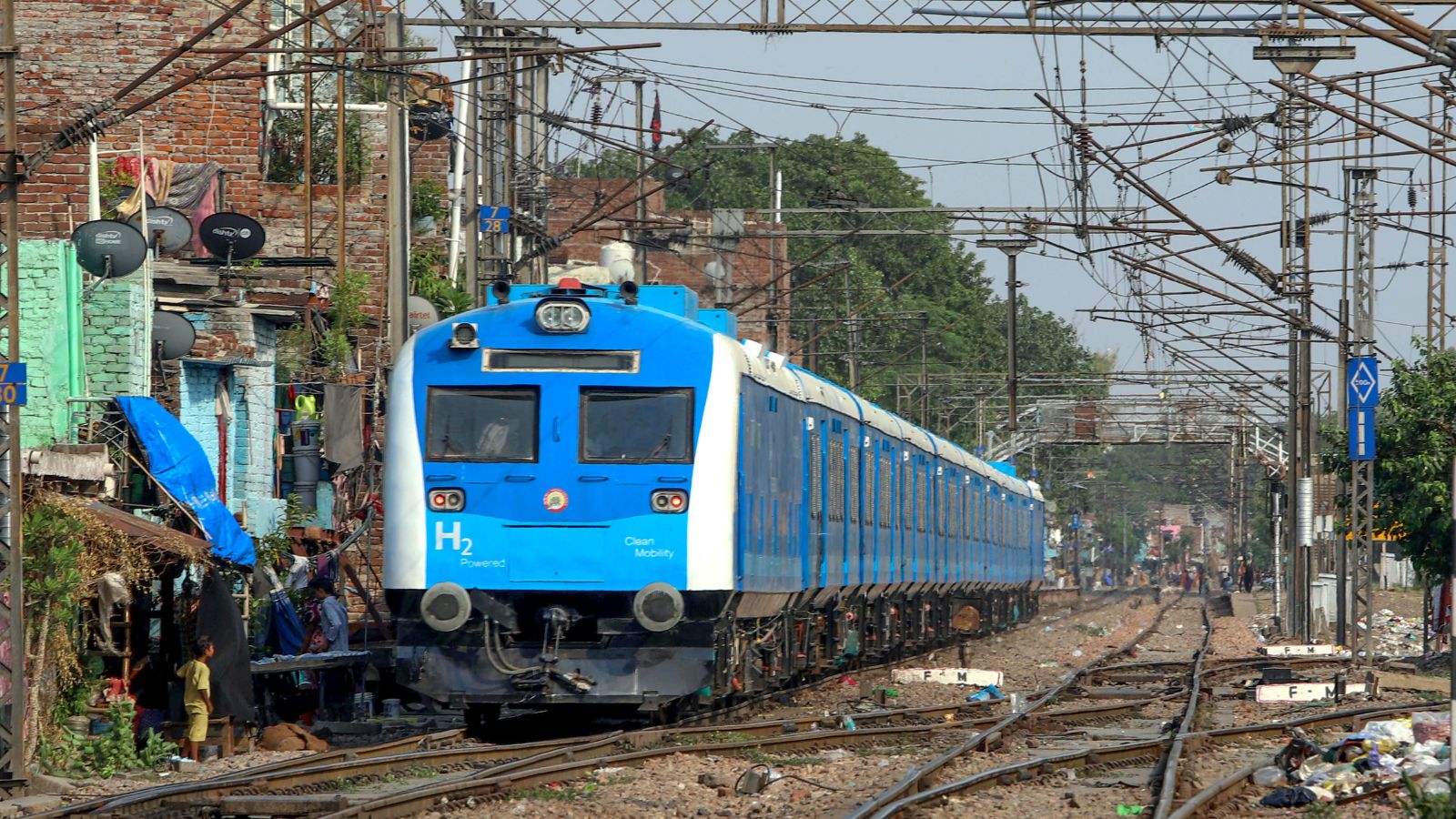
They say hydrogen's long-term contribution to India's energy transition and climate goals will depend on the availability of affordable green hydrogen, produced using renewable electricity, and whether it proves economically viable for specific rail routes.
Prime Minister Narendra Modi is scheduled to inaugurate India's first hydrogen-powered passenger train on Friday. The service will operate between Jind and Sonipat in the northern state of Haryana, covering the 89-kilometre journey in about two hours with 12 intermediate stops.
According to the Ministry of Railways, the 10-coach trainset will be powered by a 1,200-kilowatt hydrogen fuel-cell propulsion system and will operate at a maximum speed of 75 km/h.
The ministry described the project as another step in the evolution of Indian Railways, reflecting the country's shift from coal and steam to cleaner and more sustainable energy sources.
How does a hydrogen-powered train work?
"A hydrogen fuel-cell train is essentially an electric train that generates its own electricity on board," said Harpreet Singh Arora, professor at Shiv Nadar University's School of Engineering.
Instead of drawing power from overhead electric lines, hydrogen stored in high-pressure tanks reacts with oxygen inside a fuel cell to generate electricity, which powers the train's motors.
Moushumi Mohanty, Senior Programme Manager for the Electric Mobility Programme at the Centre for Science and Environment (CSE), said the only direct emission from the process is water vapour.
Hydrogen is widely regarded as a clean fuel because it does not emit carbon dioxide, particulate matter, sulphur oxides or nitrogen oxides during use.
The hydrogen used by the train is produced separately, compressed, transported to the refuelling station and then filled into onboard storage tanks.
To support operations, Indian Railways has established an indigenous hydrogen storage and refuelling facility at Jind.
The infrastructure includes hydrogen production or supply systems, compression units, high-pressure storage tanks, dispensing equipment and multiple safety mechanisms.
The train and refuelling plant are equipped with hydrogen leak detectors, heat sensors and automatic shut-off systems capable of cutting off hydrogen flow without human intervention. The driver's cabin also includes emergency safety features that allow the train to be moved to a secure location if required.
India joins a select group of countries
With the launch, India joins countries such as Germany, France, Japan, China and the United States that have introduced hydrogen-powered trains or are testing the technology.
Germany pioneered commercial hydrogen rail transport in 2018 with the launch of the world's first hydrogen train in Lower Saxony.
According to experts, hydrogen trains offer the greatest benefits on non-electrified rail routes where installing overhead electric infrastructure is technically difficult or financially expensive.
What does it mean for India's climate goals?
Arora said the introduction of hydrogen trains supports India's efforts to reduce greenhouse gas emissions and dependence on fossil fuels in energy-intensive sectors.
India's latest Biennial Update Report submitted to the United Nations shows that transport accounted for more than 13 per cent of emissions from the country's energy sector in 2020. Railways contributed only about one per cent of transport-related emissions, while road transport accounted for roughly 94 per cent.
Experts caution that hydrogen's environmental benefits depend largely on how it is produced.
Mainak Mukherjee, Product Analyst at global technology company SLB, said green hydrogen — produced through electrolysis powered by renewable electricity — is essential to maximise emissions reductions.
Mohanty said hydrogen deployment should prioritise green hydrogen production, minimise leakage across the supply chain, improve fuel-cell efficiency and focus on applications where direct electrification is not practical.
A 2024 study by researchers at the University of Michigan found that green hydrogen is best suited for heavy-duty transport sectors such as rail, shipping, aviation and long-haul trucking, where battery-electric alternatives face limitations in range and payload.
The study, published in the journal Joule, also found that battery-electric transport remains three to eight times more energy-efficient than hydrogen-powered systems or synthetic fuels produced using green hydrogen.
A complementary rather than mainstream solution
Despite the technology's promise, experts believe hydrogen-powered trains are unlikely to replace electric rail in India.
More than 95 per cent of India's broad-gauge railway network has already been electrified, limiting the number of routes where hydrogen offers a clear advantage.
Mohanty said hydrogen trains are therefore expected to serve specialised routes rather than becoming the primary mode of rail propulsion.
"Their long-term contribution to climate goals will depend on the availability of affordable green hydrogen and whether they prove economically competitive for specific routes," she said.
Arora added that railways provide an ideal testing ground for hydrogen because trains operate on fixed routes and schedules, making refuelling infrastructure easier to establish while meeting the high-power requirements of long-distance travel.
He noted that hydrogen fuel cells typically convert hydrogen into electricity with an efficiency of around 50–60 per cent, while hydrogen production through electrolysis currently operates at about 60–70 per cent efficiency, depending on the technology used.