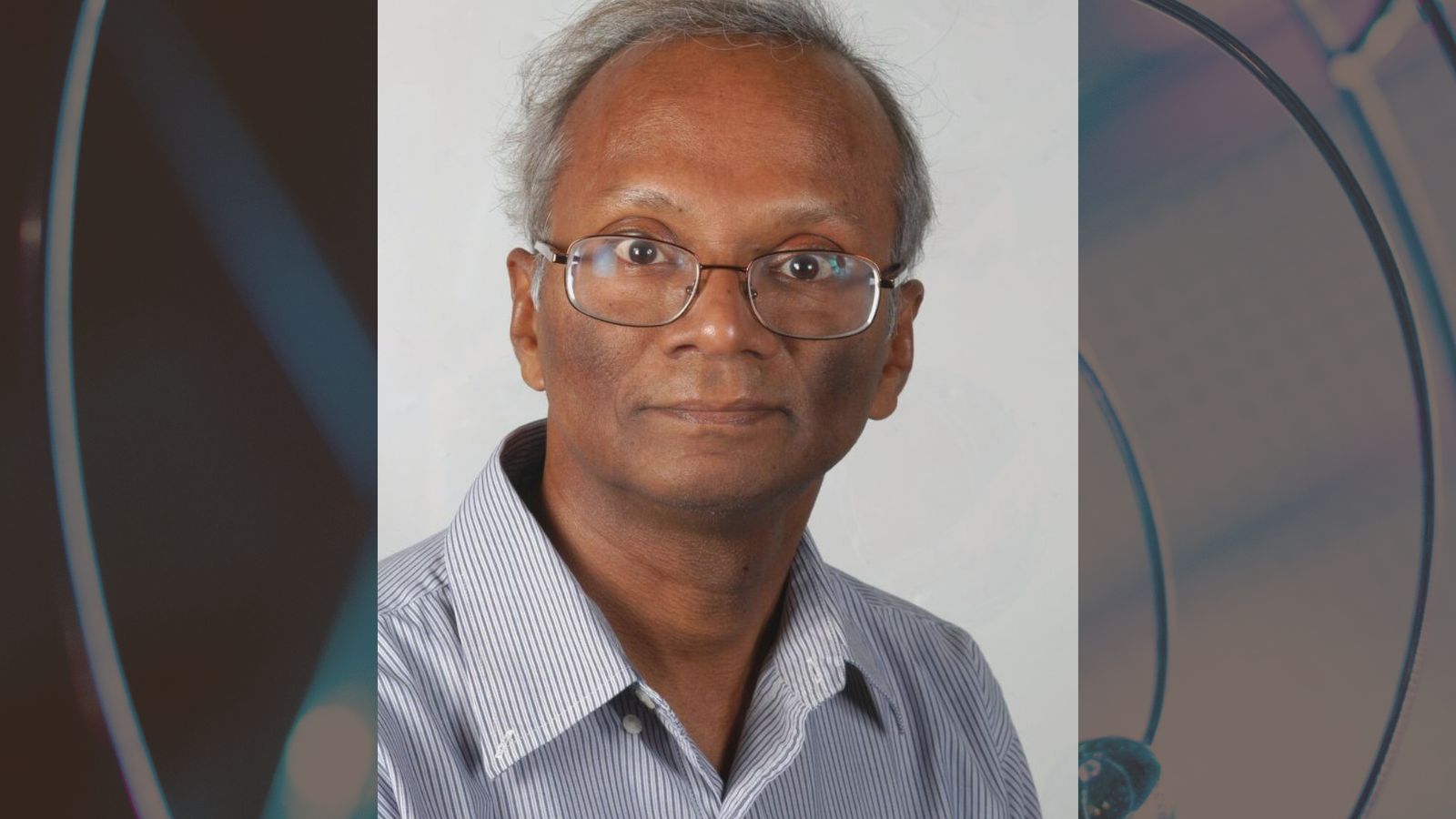


Born on 30 December 1951 in Pratapgrarh, Uttar Pradesh to Murli Dhar and Rama Gupta Deepak Dhar is an Indian Theoretical physicist. He is widely known for his research on statistical physics and stochastic processes. Recently, awarded with the Dirac Medal for his contributions in statistical mechanics Dhar's name was once again in the news. The award is conferred by the International Centre for Theoretical Physics (ICTP), Italy.
His Abelian Sandpile Model describes how complex systems organise themselves and trigger sudden massive occurrences. It is used to study the earthquakes, stock market, power grids and so on.
Educational background
1970- Bachelors in Science from University of Allahabad
1972- Master’s degree in Physics from IIT Kanpur
1978- PhD from California Institute of Technology(Caltech)
Major scientific contributions
- Worked on statistical mechanics and kinetics of random lattice.
- Introduced the spectral dimension in the study of fractals.
- Work with Ramaswamy to solve the ‘Abelian Sandpile Model’ of self organised criticality and developed a new model named ‘Dhar-Ramaswamy Model’.
- Used Bethe ansatz on direct site animals enumerated problem which was later called Dhar directed site-animals enumerated problem.
- Initiated models of metastable glassy states in stochastic evolution.
Honours received so far
1983- INSA Young Scientist Medal
1991- Shanti Swarup Bhatnagar Prize
1993- J. Robert Schrieffer Prize
2001- INSA SN Bose Medal
2002- TWAS Prize
2022- Boltzmann Medal
2023- Padma Bhusan
2026- Dirac Medal
Currently he is a professor at the International Centre for Theoretical Sciences (ICTS- TIFR), Bengaluru.