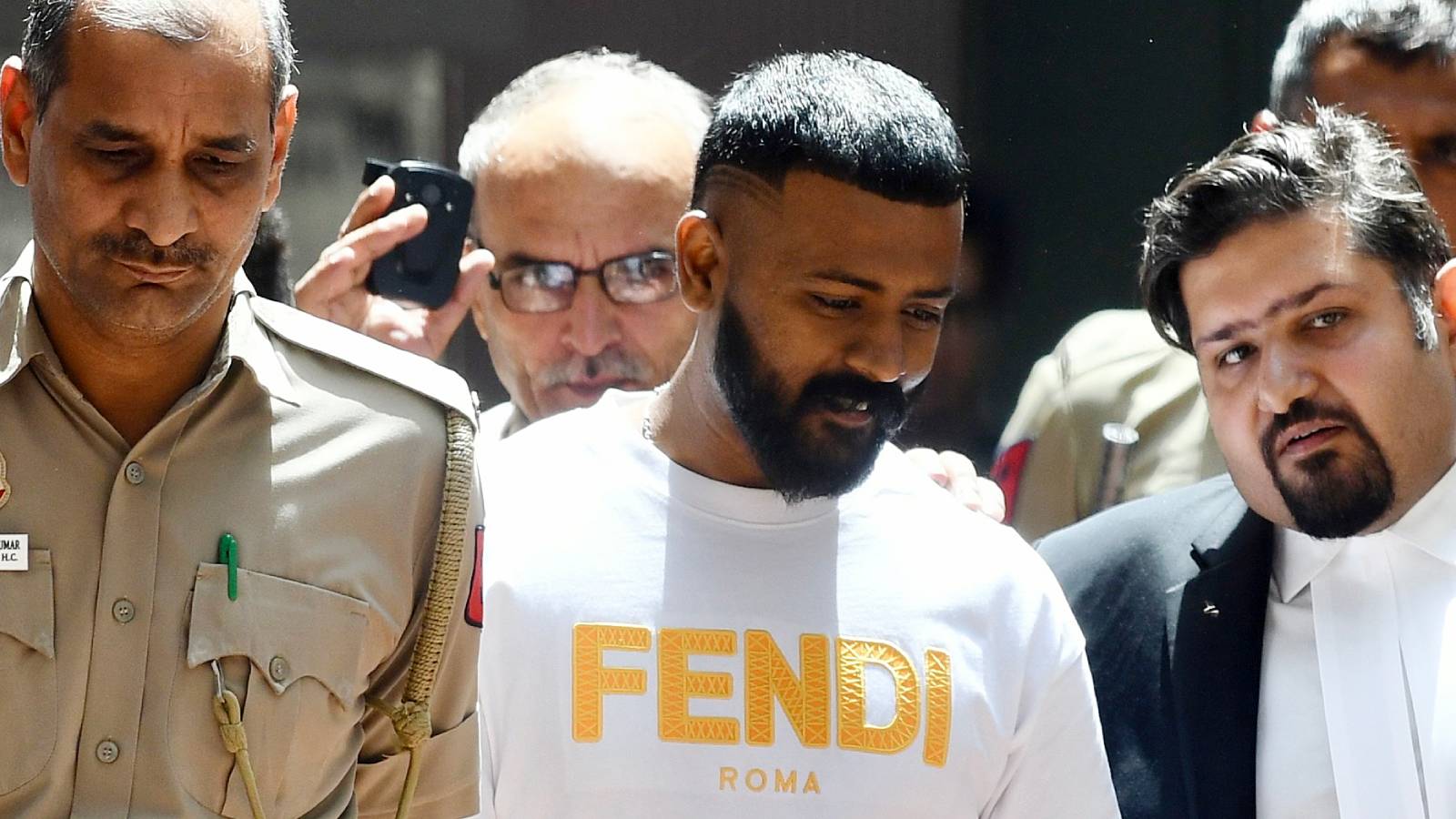


New Delhi: A Delhi court has sentenced conman Sukesh Chandrasekhar to eight years in jail for impersonating a Supreme Court judge during a bail proceeding, terming the act "institutional sacrilege" and a possible attack on the integrity of the judicial process.
Chief Judicial Magistrate Harshita Mishra was hearing arguments on the sentence against Chandrasekhar. She awarded him two years' rigorous imprisonment each for impersonating a public servant and intimidating a public servant, and four years for criminal intimidation through anonymous communication.
The court directed all the substantive sentences to run consecutively, taking the total sentence to eight years.
In an order dated August 29, which was made available on Monday, the court said, "The deliberate, calculated and deceptive manner in which the offences were committed by the convict in this case warrants a sentence commensurate with the gravity of the attack upon the rule of law and the administration of justice."
On August 20, the trial court held Chandrasekhar guilty of offences under IPC Sections 170 (personating a public servant), 189 (threat of injury to a public servant) and 507 (criminal intimidation by anonymous communication). It described his actions as a "direct affront" to the independence and sanctity of the judicial process.
Court terms Sukesh's act "institutional sacrilege"
In its sentencing order, the court said the case was "profoundly disturbing" and qualitatively different from other cases of impersonation as it struck at one of the foundational pillars of a democratic state — the judiciary.
"The convict deliberately manufactured the identity of a Judge of the highest constitutional court of the Land for the purpose of influencing a judicial proceeding, which was kind of institutional sacrilege," the court said.
It said Chandrasekhar manufactured the identity of a judge of the highest constitutional court to influence a judicial proceeding and secure bail in another criminal case.
"If such attempts are permitted to pass as mere acts of deception, it would embolden persons who seek to circumvent the courtroom by manufacturing authority outside it," the judge's order said.
The judicial process could not be allowed to become vulnerable to purported commands, "however sophisticated or audacious the impersonation may be", it said.
The court said the case also highlighted a new and concerning dimension of interference with the administration of justice in the era of deepfakes and artificial intelligence.
"The nature of the offences, the distinct mischief addressed by each provision, the manner in which the offences were committed and, most importantly, their cumulative impact upon the administration of justice makes this a fit and compelling case for consecutive sentences," the judge said.
She warned that AI-generated voices, faces, videos and communications could make it increasingly difficult to distinguish fabricated communications from genuine ones.
"It is consequently necessary for the judicial system to remain one step ahead of those who seek to exploit technological advancement for criminal purposes and to treat such cases with an iron hand," Mishra said.
Rejecting the argument that the failure to deceive the judicial officer should mitigate the sentence, the court said the fact that the attempted manipulation did not succeed did not make the impersonation innocuous.
"The convict has shown no remorse for his mendacious actions and continues to tread on the road to perdition. When the trial was nearing conclusion, the convict started a slanderous campaign against this court also, hoping to derail the trial and delay the pronouncement of judgment," the judge said.
The court noted that the failure to deceive the judicial officer was "merely fortuitous" and did not extinguish the criminality of Chandrasekhar's actions.
It also said he showed no genuine remorse during the trial and instead sought to question the credibility of the complainant judicial officer.
The court said concurrent sentences would understate the criminality involved, as the offences addressed distinct legal wrongs and their cumulative impact on the administration of justice warranted consecutive sentences.
What is the case?
The case arose from a phone call made on April 28, 2017, while Chandrasekhar was in police custody in connection with a corruption case.
According to the prosecution, he obtained access to the mobile phone of police constable Manjeet and used it to contact the official landline and mobile phone of Poonam Chaudhary, then a special judge dealing with cases under the Prevention of Corruption Act.
The court said Chandrasekhar first impersonated the private secretary of a then-sitting Supreme Court judge and later the judge himself.
He tried to persuade Chaudhary to grant him bail at the earliest and threatened her with adverse professional consequences if she did not comply.