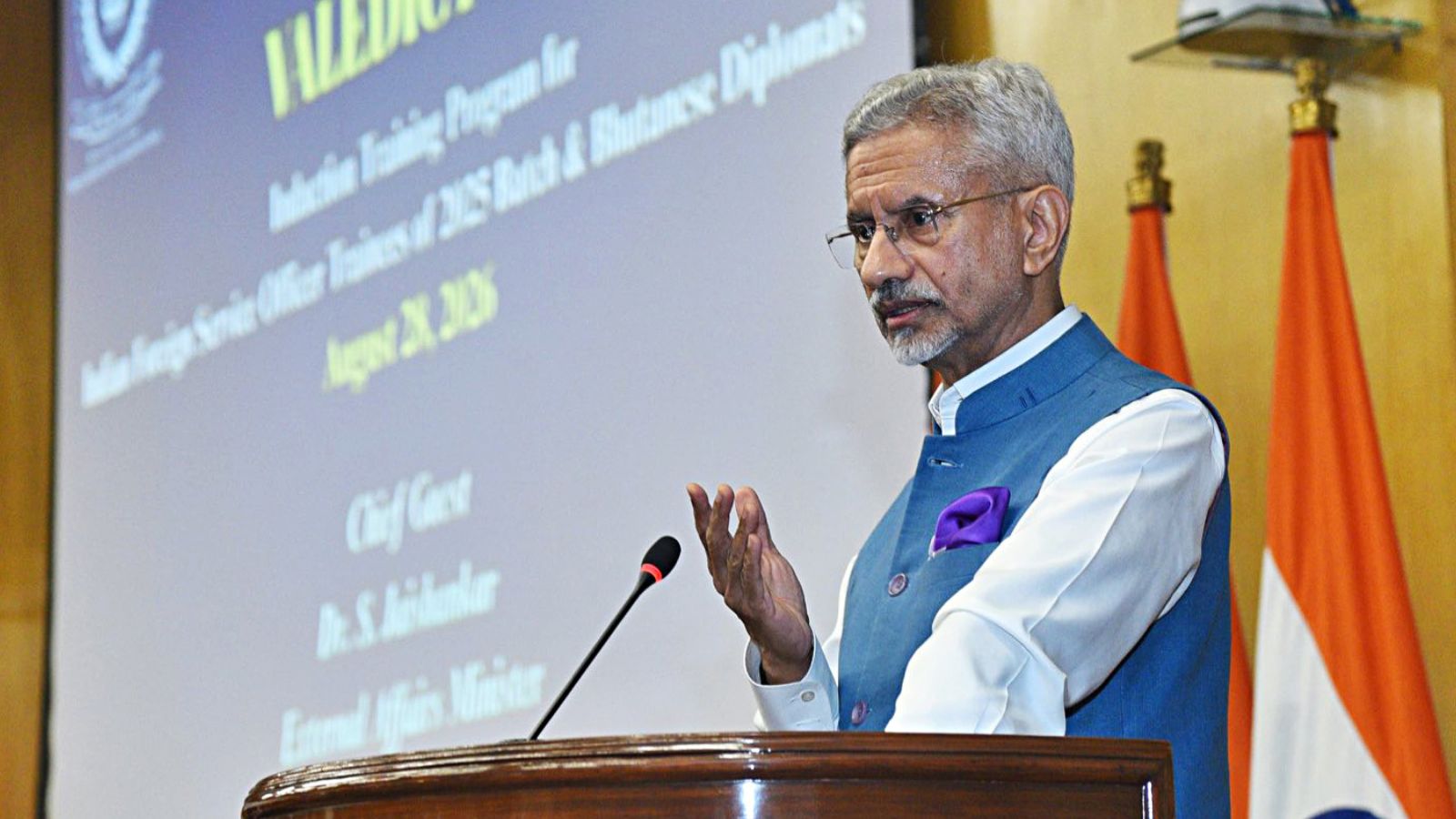


New Delhi: External Affairs Minister S Jaishankar has assured Janata Dal (United) [JD(U]) working president and Rajya Sabha MP Sanjay Kumar Jha that Bihar's water requirements will be taken into account before the government takes a decision on the renewal of the Farakka (Ganga) Water Treaty with Bangladesh.
In a letter to Jha dated August 28, Jaishankar said the government 'fully' understands his concerns regarding the treaty and will take an appropriate decision keeping the relevant factors in view.
Jha had raised the issue in the Rajya Sabha on August 6, seeking protection of Bihar's water interests in any renewal of the Farakka (Ganga) Water Treaty, which was signed in 1996 and is due to expire in December this year.
The JD(U) leader has been opposing the renewal of the Farakka Treaty with Bangladesh, alleging that it has done "great injustice" to Bihar over the past three decades.
Jha had also raised the issue at a recent meeting with Finance Minister Nirmala Sitharaman and Jaishankar, which he attended along with Bihar Chief Minister Samrat Choudhary.
Referring to the special mention made by Jha in the Rajya Sabha, Jaishankar said inter-ministerial discussions had been held under the leadership of the Ministry of Jal Shakti, with the participation of various stakeholders, to comprehensively discuss the implementation and future of the treaty.
He said an authorised representative of the Bihar government participated in discussions held on August 22, 2023, October 30, 2023, March 15, 2024 and May 31, 2024.
"During these discussions, the views and requirements of stakeholders, including Bihar's drinking water and industrial water requirements, were duly considered," the minister said.
"The government will take an appropriate decision keeping these factors in view," he added.
Jha has argued that the treaty has adversely affected Bihar by contributing to silt accumulation upstream of the Ganga and requiring 1,500 cusecs of water to be released to Bangladesh during the lean season, when only around 400 cusecs enters Bihar at Buxar.
He has urged India government to ensure that any future arrangement takes into account Bihar's requirements for industry, irrigation, agriculture and drinking water, as well as its projected population in 2050.