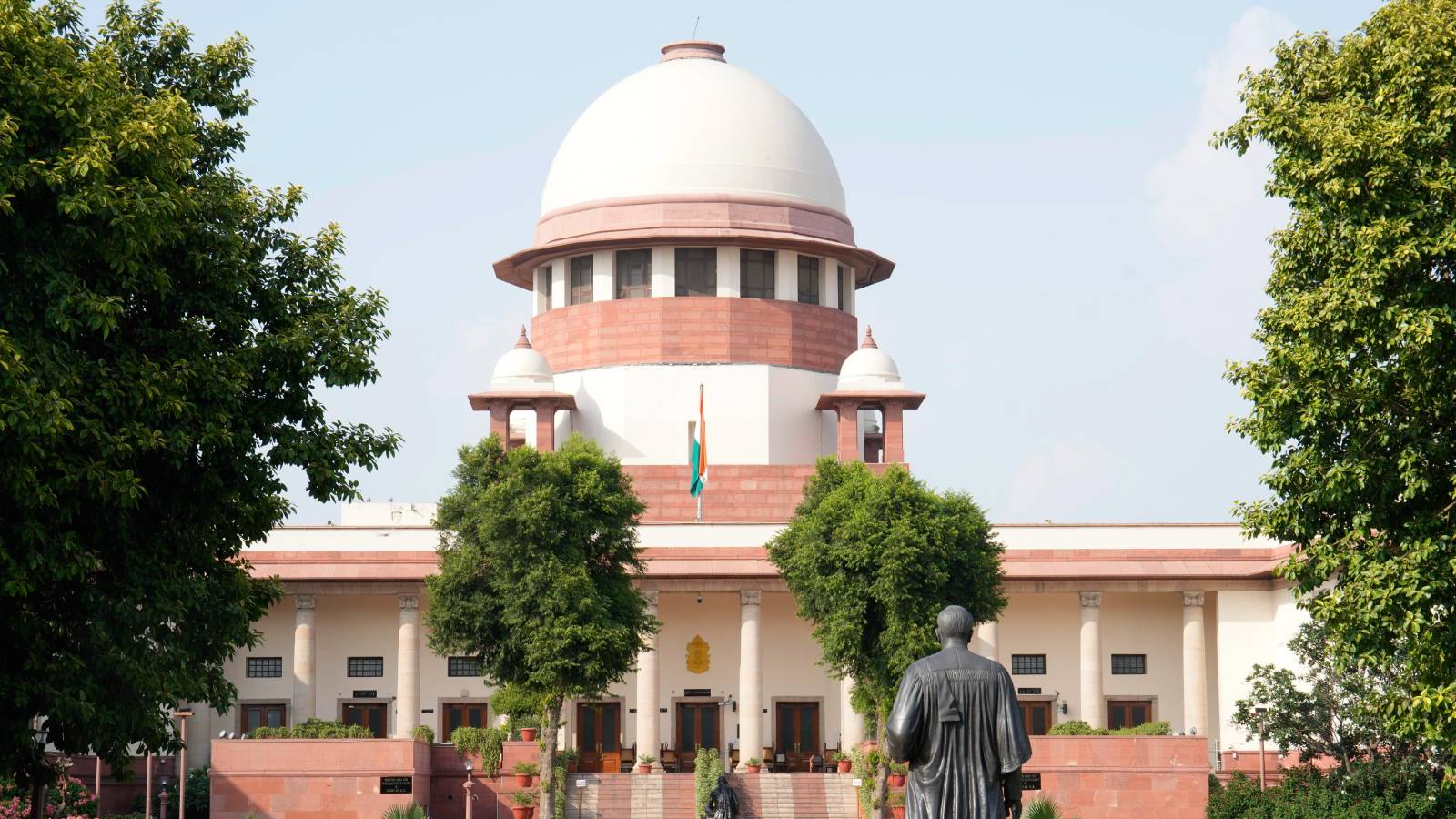


New Delhi: The Supreme Court has agreed to hear next week a petition challenging the functioning of the Election Commission of India (ECI), alleging that Chief Election Commissioner Gyanesh Kumar exercised powers vested in the multi-member body without following its prescribed decision-making process.
Senior advocate Vikas Singh mentioned the matter before a bench headed by Chief Justice of India Surya Kant, seeking an early hearing. He argued that the law requires decisions of the Commission to be taken unanimously or, where members disagree, by a majority.
The petition, filed under Article 32 of the Constitution by Bihar-based petitioner Rakesh Kumar Singh, contends that the CEC cannot individually exercise powers vested in the Election Commission as a constitutional body.
It cites at least 14 objections allegedly recorded by Election Commissioners Sukhbir Singh Sandhu and Vivek Joshi between October 2025 and August 2026. These include claims that communications were issued in the Commission’s name without its approval, meeting agendas and minutes were not circulated, and changes to electoral-roll systems were made without the participation or approval of the other two members.
The petition asks the court to examine the Commission’s records to establish whether the disputed actions were authorised in accordance with the Constitution and the law.
What does the petition challenge?
The petition argues that Article 324 vests the powers to supervise, direct and control elections in the Election Commission, rather than in the CEC acting individually.
It relies on the Supreme Court’s 1995 Constitution Bench judgment in T.N. Seshan v. Union of India, which recognised the substantive role of Election Commissioners in a multi-member Commission.
The plea also invokes Section 18 of the Chief Election Commissioner and Other Election Commissioners Act, 2023. The provision states that the Commission should, as far as possible, conduct its business unanimously. Where members differ, decisions are to be taken by majority.
The petitioner argues that these provisions require the Commission to follow a collective process when exercising its powers. The court has yet to examine the allegations or determine whether the disputed decisions violated the law.
Read also: CEC vs Election Commissioners: Who holds the power in India's poll body? | Explained
Dispute over electoral rolls and Form 6
A key part of the petition concerns changes to Form 6, which is used to register new voters. The dispute arose during the Special Intensive Revision (SIR) of electoral rolls.
According to the petition, Election Commissioner Vivek Joshi objected to changes that required applicants to provide SIR-linked information, arguing that the form could not be altered without amending the Registration of Electors Rules, 1960. Sandhu subsequently endorsed the objection and described the change as “unauthorised and illegal”.
The petition says the disputed field was introduced in July 2026 despite these objections. It asks the court to examine the records relating to the decision and the process through which it was approved.
The plea also raises concerns about the centralisation of electoral-roll data and access to the ERONet and ECINet systems by officials responsible for maintaining voter lists.
Joshi had proposed an independent audit of database access credentials, while Sandhu questioned the authority of the ECI’s Director General (IT) to restrict access available to statutory electoral officers.
These concerns are significant because Electoral Registration Officers are responsible for preparing and revising electoral rolls. The petition asks whether the Commission’s internal procedures and the software used to implement decisions have allowed those officers to exercise their statutory responsibilities.
Read also: ECINet row: Why a dispute over the Election Commission’s app matters to a voter | Explained
Appeals against restoration of voters in West Bengal
The petition also refers to appeals filed in the name of the Election Commission before appellate tribunals in West Bengal. The appeals challenged the restoration of voters whose names had been removed from electoral rolls but whose inclusion was subsequently directed by judicial officers.
Sandhu allegedly questioned who had authorised the appeals and under what authority they had been filed. The petition seeks access to the relevant records to establish whether the decisions were taken through the Commission’s prescribed process.
The issue adds another dimension to the dispute: whether actions taken in the name of the Commission were supported by decisions of the multi-member body.
How the internal disagreement became public
The petition draws on objections reportedly raised by Sandhu and Joshi over several months. Their concerns included the handling of electoral-roll revisions, changes to voter-registration procedures, access to voter data and the allocation of responsibilities within the Commission.
The reported disagreements have brought the internal functioning of the ECI into public scrutiny. The Commission has rejected the suggestion that it is being run by one person, saying its decisions have been unanimous and that the objections should not be considered in isolation.
The allegations have also prompted political reactions, with opposition parties demanding accountability from the CEC. However, the petition before the Supreme Court is focused on the legal question of how the Commission exercises its powers.
Read also: India's poll body chief Gyanesh Kumar under fire: What is behind the political controversy?
Why the dispute raises questions about institutional trust
The Election Commission is responsible for conducting elections and overseeing the electoral process. Its credibility depends not only on the decisions it makes but also on whether those decisions are taken through transparent and legally established procedures.
The present dispute centres on allegations that key decisions were made without the participation or approval of two members of the three-member Commission. If established, such a finding could raise questions about compliance with the legal framework governing the poll body. The allegations, however, have not been judicially established.
The controversy has also renewed attention on the relationship between the Commission’s internal functioning and public confidence in its independence. The Supreme Court’s examination of the petition could bring greater clarity to the procedures governing the Commission’s decisions.
Read also: Gyanesh Kumar, the Election Commission and the question of institutional trust | In Context
What has the petitioner sought?
The petitioner has asked the Supreme Court to examine the Commission’s primary records, including meeting agendas and minutes, approval sheets, file notings, work-allocation orders and IT-access records. The plea says these documents are necessary to determine whether the disputed actions were authorised under Article 324 and Section 18 of the 2023 Act.
Among the interim reliefs sought are the preservation of electoral-roll data and audit trails, a direction against further substantive changes to Form 6, and protection against irreversible alterations to electoral-roll data while the case is pending.
The petitioner has also sought an interim direction restraining Gyanesh Kumar from exercising the functions of CEC and requiring the Commission’s business to be conducted by the other two Commissioners.
The main prayer seeks a declaration that the powers under Article 324 must be exercised by the Election Commission as a multi-member body in accordance with Section 18. It also asks the court to hold that communications, orders, directions or appeals cannot be issued in the Commission’s name without a decision taken unanimously or, where necessary, by majority.
The Supreme Court is yet to hear the petition on its merits. Its consideration will determine how the legal questions raised by the petitioner are taken forward.
(With inputs from ANI and Reporter World)