


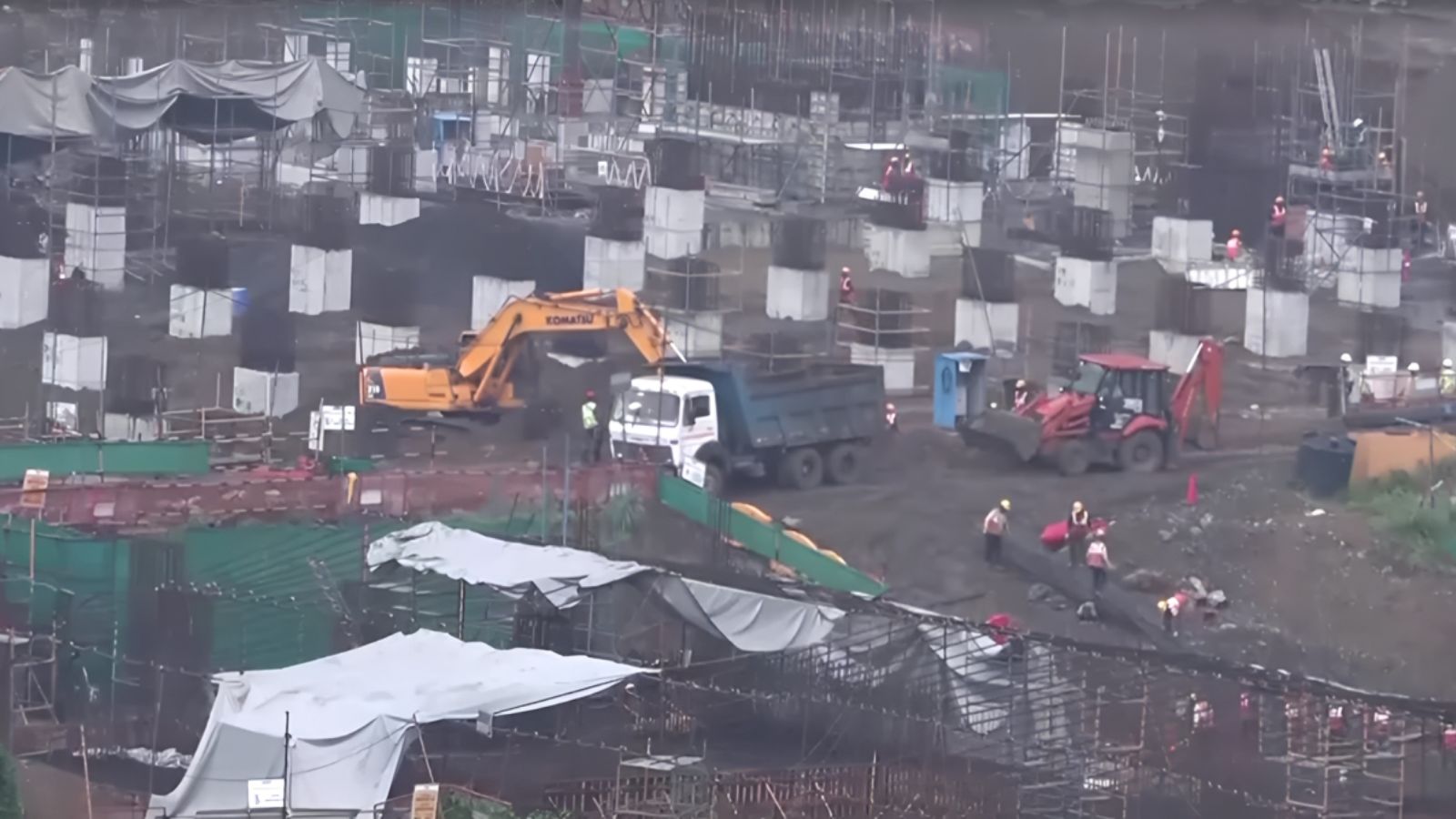


Maharashtra: India’s ambition to become a major hub for artificial intelligence infrastructure is facing growing opposition from residents concerned about the environmental and social impact of data centres being built near their homes.
For Tushar Shetty, a 46-year-old engineer living in a 21st-floor apartment in Mumbai, the changes are visible outside his window. An area once covered in greenery has become a stretch of exposed red earth after trees were felled to make way for an Amazon facility linked to the technology giant’s planned $21 billion investment in India’s AI infrastructure by 2030.
Shetty said he would not have moved to the apartment had he known about the development.
“It was filled with trees but now, since the data centre is getting built, a major portion of the trees have been cut,” he said. “It will be an operation (that runs) 24/7 that will never stop.”
The concerns echo resistance in other parts of the world, including Virginia in the United States and the outskirts of Amsterdam and Dublin. Residents have increasingly objected to the expansion of AI data centres, citing noise, rising electricity consumption, water stress, and the industrialisation of residential neighbourhoods.
India’s AI ambitions meet local concerns
The opposition is also growing in India, where Amazon, Google and Microsoft are investing billions in data-centre infrastructure. The projects support Prime Minister Narendra Modi’s ambition to host “the whole world's data”, with facilities planned across regions stretching from Maharashtra in western India to Andhra Pradesh in the south.
India is not yet able to match the frontier AI models emerging from the United States and China. Instead, it is betting that building the physical infrastructure underpinning artificial intelligence could prove equally valuable.
The strategy forms a central part of Modi’s investment pitch as India’s role as the world’s back office loses some of its appeal. But the ambition is colliding with concerns over scarce resources and the communities living alongside the infrastructure that powers the digital economy.
India has 4% of the world’s freshwater for 18% of its population, while data centres are clustering in cities already facing water shortages. S&P Global estimates that 60% to 80% of Indian data centres could face high water stress this decade.
Data centres used about 150 billion litres of water in 2025, a figure projected to more than double by 2030, according to research firm Mordor Intelligence.
Amazon’s Mumbai facility becomes a flashpoint
The Amazon project near Mumbai has emerged as one of the most prominent points of contention. Reuters interviews with more than two dozen residents and a review of official correspondence indicate growing concerns that the facility could strain local water and power supplies and generate noise harmful to health, particularly for children and older people.
Amazon and local authorities have defended the project, saying it will not place additional pressure on public utilities because it will use dedicated water and power sources. The dispute has nevertheless triggered street protests and drawn opposition politicians into the campaign against the facility.
On September 8, hundreds of residents, including elderly people, gathered near the site with placards reading “Data centres are energy vampires”. They called for the project to be moved elsewhere.
More than 1,000 residents living near the proposed Amazon facility say it was pushed through without meaningful consultation and want it relocated.
Jatin Kothare, who lives near the planned 54-acre (21.9-hectare) facility, raised concerns about the environmental and health effects.
“Trees will be getting cut, water will be getting consumed, temperature will be rising, humming sound would be coming,” he said. “We welcome development, but not at the cost of our health and safety.”
Amazon defends project as protests grow
The dispute has drawn comparisons with Virginia, which has the world’s largest concentration of data centres. Amazon paused a proposal in 2024 to build three facilities there amid concerns about noise and proximity to homes, saying it wanted more time to engage with the community.
Residents near the Mumbai project say they were not given the same opportunity.
Amazon is not overly concerned about the protests because government officials have assured the company they will pass, according to a person familiar with its planning. The company is nevertheless drawing up community outreach plans to address concerns about noise, water and power.
Amazon told Reuters that the data centre would use water-free cooling, a dedicated power supply separate from homes and measures to reduce noise. It also said tree-felling had been permitted and that more saplings had been planted than trees removed.
Even some executives in the industry have questioned whether data centres should be built next to residential neighbourhoods.
Google and Microsoft expand AI infrastructure
Amazon is not the only technology company investing heavily in India’s AI infrastructure.
Microsoft has announced a four-year investment plan worth $20.5 billion for India, with most of the spending earmarked for AI data centres.
In Andhra Pradesh, environmentalists are opposing Google’s $15 billion data-centre project, citing potential risks to wildlife, water and power supplies. They have also alleged that land belonging to a temple was used without permission. Google and the state government deny any wrongdoing.
The expansion has also become a political issue in Mumbai. In September, Aaditya Thackeray, an opposition legislator, joined protesters demanding that Amazon’s facility be relocated. He said his party would move the project if it returned to power.
Modi’s government has mounted a public defence of the data-centre expansion, including through online campaigns describing the facilities as “the invisible engines powering India's digital life”. It has argued that modern technologies use water and electricity more efficiently.
The Ministry of Electronics and Information Technology, the Prime Minister’s Office and the Maharashtra chief minister’s office did not respond to requests for comment.
Residents fear impact on property values
For residents near the Mumbai project, concerns extend beyond the loss of trees and the potential pressure on local resources to the value of their homes.
Anuradha Rode said she feared that concerns among prospective buyers about the view and the planned data centre were already affecting resale prices.
“Our property price already slashed, people are already enquiring about this particular site and they are saying there will be a data centre, so our property price will deteriorate,” she said.