



On 10 October, Delhi prepared for a protest by preparing to stop one. The blueprint was drawn from the July 20 protest seeking Dharmendra Pradhan's resignation over the NEET paper leak, and the other one happened 15 years ago in 2011.
Compared to July, this time there was no confrontation at the barricades at all, because the authorities made sure there was nothing to confront. They sealed Jantar Mantar, the city's designated protest site, before the demonstration even began.
Barricades went up. Mobile internet was suspended in parts of central Delhi. Access was restricted at metro stations, markets and major roads. Rail and road, the two ways ordinary people reach the national capital, were obstructed as a precaution ahead of the protest called by the Cockroach Janta Party (CJP).
Then came the detentions. Al Jazeera reported more than two thousand people detained. The Hindu, citing Delhi Police sources, put the number at nearly two thousand five hundred. Reuters, citing a Union Home Ministry official, reported about two thousand. Young people were picked up from inside trains and buses as they headed towards Jantar Mantar. Those who reached the site were stopped, put into buses and other vehicles, and taken to detention centres.
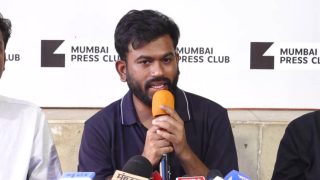
Three CJP leaders, including its founder Abhijeet Dipke, were detained on board an Air India flight from Mumbai after it landed in Delhi. Police boarded the aircraft. Dipke filmed it. "I have come to get arrested. I am not afraid of you guys," he said, before turning to the other passengers: "It was nice to know you all. We can see where the nation is heading." In one of the videos, a co-passenger can be heard saying, "Love you, we are with you."
None of this was confined to the national capital. ANI reported about six hundred arrests in Mumbai. Delhi Police told LiveLaw that roughly a thousand more had been detained the previous day across the country. The Union Home Secretary had written to every state and union territory, and preventive blocks were placed at state borders and transit points to stop people from reaching Delhi.
The protest had been called by the Cockroach Janta Party, backed by Left student organisations including AISA, SFI and AISF, and by the student wing of the Aam Aadmi Party. Their demand was the resignation of Chief Election Commissioner Gyanesh Kumar. Their wider grievance was the Special Intensive Revision of electoral rolls, which has struck more than thirteen crore names off draft rolls across thirty states and union territories.
The protests had grown sharply after October 5, when Chief Justice Surya Kant said in open court that the Supreme Court had not approved a change to Form 6 that the Election Commission had publicly claimed it endorsed.
This much is now part of India's political record. A government with 240 seats of its own treated a gathering at Jantar Mantar as something to be prevented rather than policed. The explanation lies in two places. One is fifteen years back. The other is three months ago.
April 2011 and July 2026: the Indian cases that worked
In April 2011, Anna Hazare began a fast at Jantar Mantar demanding a stronger anti-corruption law. It became a national event within days.
That August, police took him into custody before a planned fast. The government ordered his release the same evening. Hazare refused to leave Tihar Jail until he was allowed to fast in public. He walked out on August 19, and the confrontation gave the movement a second surge. By the end of the month, he had ended his fast after Parliament passed a resolution endorsing the principles of a Lokpal law.
Fifteen years later, the Cockroach Janta Party occupied the same ground over the NEET paper leak, and stayed there for close to a month. And it was not the CJP alone. Sonam Wangchuk fasted for twenty-six days across June and July over the same paper leak. AISA was on the ground with the CJP. One site, one stage, several organisations, one demand.
It worked. Union Education Minister Dharmendra Pradhan resigned on July 25, announcing it on X and saying he had sent his letter to the Prime Minister. It came hours after opposition leaders dismissed reports that the government was considering shifting him to another ministry.
And the agitation did not stop there. The CJP had three demands. The resignation was only the first. "We have two more demands," Dipke said that day. "We will not go like that."
After a third round of talks with Union Ministers JP Nadda and Jitendra Singh, the government accepted both of the others: a compensation payment to the families of students who died by suicide, and no action against the protesters of July 20.
A youth movement with no party and no seats held a site in the capital for four weeks and took a Union Minister with it, then held out until the rest of its list was met.
But July is also where the State learned what not to do again.
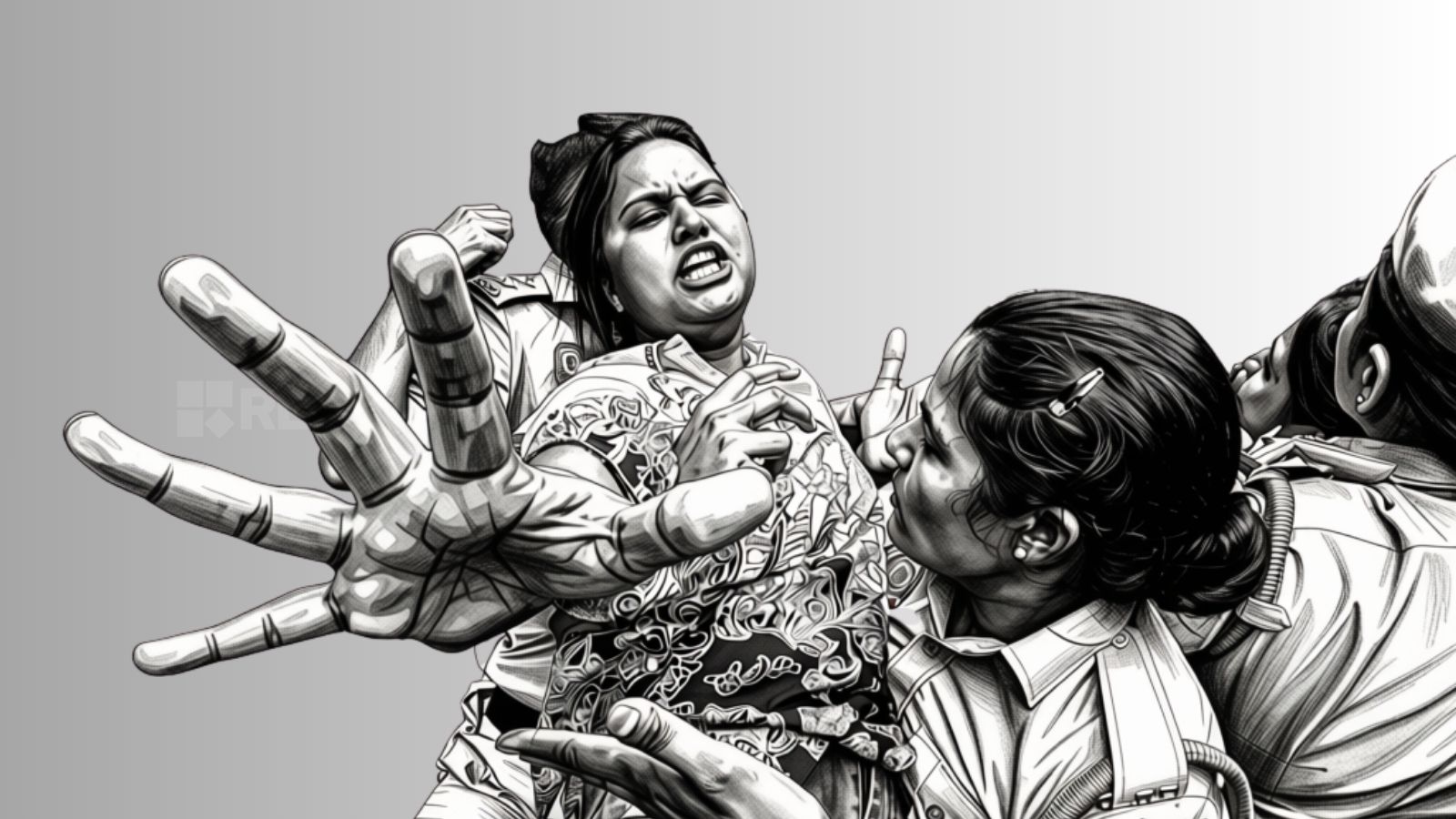
The July 20 march towards Parliament produced videos of men in plain clothes hitting protesters, and one of a senior officer, Additional DCP Sandeep Lamba, striking a woman who was standing alone by the side of the road. Delhi Police told the Supreme Court on affidavit that the plainclothes men were "spotters" who blended into the crowd to help people being harassed, and that the footage was "being shown out of context."
By then it hardly mattered. Lamba was removed from protest duty. The conduct was raised in the Delhi High Court. A writ petition on police brutality reached the Supreme Court. And a Union Minister resigned.
July produced images, and the images produced consequences.
Now compare both confrontations with October. The distinction is straightforward: make no heroes, and make no images. In 2011 the State arrested one man, blinked within hours, and he refused to leave, which handed him a second act. In July it conceded at the table after four weeks. In October there was no venue to occupy, no arrest to protest against, and nobody left inside overnight. People were held off the streets, moved into vehicles, taken to centres at the far ends of the city, and released hours later. No venue, no martyrs, no incarcerations.
That is not an improvised response. It is a response that learned.
Why the demand is a resignation
There is a reason this protest asks for one man to go, rather than for a prosecution or a removal. Under the 2023 law, the Chief Election Commissioner and the Election Commissioners are protected from civil and criminal proceedings for anything done in the discharge of their official functions. The protection continues after they leave office. The Judges Protection Act of 1985 offers judges something comparable, but with a saving clause preserving action against a judge by the government or by the courts. The 2023 law has no such clause.
This was argued before the Supreme Court on October 5. From the bench, Justice Joymalya Bagchi observed: "This protection is perhaps only for the President. It does not apply even to judges."
Removing a Chief Election Commissioner requires the same process as removing a Supreme Court judge, and the numbers for that do not exist in this Parliament.
So prosecution is barred and removal is out of reach. What remains is resignation, and a resignation cannot be compelled by procedure. It can only be demanded in public.
The shape of this protest is what is left when the process has been closed off.
Not every wrong can become a movement
July worked for a reason that has nothing to do with how many people were angry. A student could name the day they were wronged. An examination had been compromised, there were people responsible for running it, and there was a single name to chant a demand at. The harm was immediate and personal, and it fell on young people with phones and the confidence to use them.
Now consider the state of government schools, an issue the CJP raised right after the NEET win. It is a larger failure by almost any measure. It has no single date and cannot be pinned on one official. It is decades of underinvestment under governments of every party, which is why no party can be made to own it. And the people it harms most have the least time and money to reach a protest.
Mobilisation gets easier when a wrong has a date, a name and a remedy. Most of what is deeply wrong in Indian public life has none of those in a form that fits on a placard.
The revision has the same problem. Those most exposed to deletion are the people with the weakest paperwork: birth registrations filed late, incomplete family records, no way to establish a link to an older roll. They are, generally, people with the least access to the systems through which they are now expected to prove they exist. Someone who finds their name missing may not know why it went, how to contest it, or whom to ask.
The phrase 'vote chori' is an attempt to make that legible. Theft has a victim. Theft can be named and reversed. But a phrase is not evidence, and it works only if people recognise their own experience in it.
Here the arithmetic is awkward. The Lokniti-CSDS post-poll survey of the 2024 election, published in The Hindu, found upper-caste Hindus backing the NDA at sixty per cent, almost exactly where they stood in 2019. That constituency has not drifted. The opposition's recovery in 2024 came from elsewhere, principally from dominant OBCs, who moved eleven points towards it, and from sections of Dalit voters.
But the shape is hard to miss. The constituency that filled Ramlila Maidan in 2011 is broadly not the one on the streets now. The grievance is no smaller for that. The work of building a constituency around it is harder.
This time there is no single movement at all
A movement needs a base, meaning the social constituency that sustains it, and a vehicle, meaning an organisation that can turn support into political change.
In 2011 there was one movement on one stage, and no vehicle. People with very different politics stood together on that stage, which was the source of both its reach and its eventual collapse. When a vehicle finally appeared, it could carry only part of what had gathered there.
India Against Corruption brought together people with very different motives. Its core support was urban, middle-class and upper-caste, according to Mitu Sengupta's analysis in the Journal of Asian Studies. Others joined in large numbers. But the organised leadership of lower-caste and minority communities largely stayed away, and so did the trade unions and the established social movements. The Aam Aadmi Party (AAP) emerged from it and turned the anti-corruption message into an electoral project. The BJP benefited from the atmosphere. Several prominent figures joined established parties. Hazare declined to lead one.
A protest can create pressure without creating a constituency.
October 2026 is stranger than that. There is no single movement. There are two, and they have not stood on the same ground.
One is the youth and left mobilisation, and it is a genuine coalition rather than a flag of convenience. The call for October 10 was made jointly by the Cockroach Janta Party, which is a youth movement rather than a political party despite the name, and by AISA, SFI and AISF, along with the student wing of the AAP. AISA's national president Neha Bora and the CJP's Saurav Das announced it together. On the day, Left parties, trade unions, women's organisations and farmers' groups were in it. That is the organisational backbone, and it holds.
The other is the INDIA bloc, which called its own march to the Election Commission on 6 October. The CJP did not join that one. The DMK and the Aam Aadmi Party sat the march out as well, with partners complaining the day had become too centred on Rahul Gandhi. Both moved closer within forty-eight hours.
The street and the Congress do not want the same thing. Congress president Mallikarjun Kharge has named three non-negotiable demands: the Chief Election Commissioner's resignation, annulment of the revision, and a return to ballot paper voting. The Cockroach Janta Party, face of the street movement, has called on opposition parties to boycott elections altogether. One demands a better process while staying inside it. The other would hand the field to the parties it opposes.
Then there is that old suspicion. The CJP's founders have been associated with the Aam Aadmi Party, and the Congress's wariness of a movement with that lineage is not abstract. The last youth movement that was not a political party produced one, and it took votes the Congress thought were its own.
So the difference from 2011 lies elsewhere. In 2011 a crowd was looking for a vehicle. In 2026 the crowd and the largest vehicle are each waiting for the other to come to them.
Another genuine difference does run against the pessimistic reading. The Left, which kept its distance from the Hazare movement and criticised it, is supplying much of the organisation this time. Sustained mobilisation needs more than one large day. It needs networks that can bring people out again and keep an issue alive after attention moves on. The Left has that machinery. India Against Corruption never did.
It also has limits. The Left's electoral footprint is concentrated in particular regions, and organisational strength does not convert on its own into a national constituency.
These two difficulties are not separate. A State that has learned to deny a protest its images has raised the bar for what a movement must supply on its own. In 2011 the government's conduct did much of the mobilising, and a crowd with no vehicle still extracted a resolution from Parliament. In October the street was given nothing to react to. Whatever force this movement generates now has to come out of its own organisation and its own base, which is exactly the part that is unsettled.
What the State did, and what the Court said
The government is entitled to regulate public assembly, and Delhi Police said permission had been refused, citing earlier undertakings and the notice requirements for Jantar Mantar. But regulation has to be proportionate and accountable, and sealing the designated site, suspending mobile internet and detaining people in the thousands put the State's own conduct at the centre of the story.
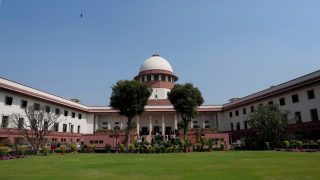
On the morning of Sunday, October 11, the Supreme Court sat to hear petitions on the detentions and the restrictions. Justice Bagchi said the Court was duty-bound under Article 32 to protect and enforce fundamental rights, and described the measures as of gargantuan scale. The bench directed that metro and rail services function normally subject to regulation needed for public order, called for barricades to be reviewed, said internet services should remain undisturbed, and directed that nobody be detained except through procedure established by law.
The Solicitor General gave the Court a different picture. He said metro services had not been curtailed, that two hundred and seventy-one trains ran over four thousand trips that day, that entry and exit had been restricted at forty-five of three hundred and three stations, and that services and connectivity had been restored by the evening. Restricting entry at some stations is not the same as shutting a network, and his account belongs on the record alongside the other.
Most of those detained were released. The three Cockroach Janta Party leaders taken off the aircraft were held for about a day, produced before a magistrate, and released on bonds requiring them not to breach the peace for a year. What happened to the rest has not yet been established.
The press was part of the operation
If July taught the State that images are the danger, October is where it acted on the lesson.
It began before the big day. On October 3, at an earlier Jantar Mantar protest over the same demand, three women journalists complained of sexual harassment by Delhi Police personnel. One of them alleged that Assistant Commissioner of Police Vivek Bhagat groped her while she was recording the detention of a student leader. She said she went to the Parliament Street police station and no immediate action followed.
No FIR had been registered as of October 4. Delhi Police confirmed receiving the complaints and transferred them to the Crime Branch, which the New Delhi district police said was to ensure a fair and impartial investigation. Officials said a preliminary inquiry was under way, including a review of CCTV footage, and cited an absence of evidence. One officer, unnamed, put it this way: "There were so many camera persons. There should be some proof of the incident if it happened."
Press bodies, including the Press Club of India, the Indian Women's Press Corps and the Delhi Union of Journalists, went on to demand an FIR and a judicial inquiry. These remain complaints and an inquiry. They are also the backdrop against which the operation of October 10 was planned.
Before that protest, Delhi Police issued guidelines for journalists covering it. Among other things, reporters on the ground were asked to display their press cards prominently.
They did. It made no difference.
Reporters Without Borders counted at least sixteen journalists detained on 10 October and about a dozen more the following day. The Wire has published a list running to thirty names.
This was not confined to small or independent outlets. Reporter TV's correspondents Rohini Rajan and Farsa TM were detained in the morning and were released only in the evening. Reuters correspondent Saurabh Sharma was detained near INA Market. Business Standard's Anushka Bhardwaj was released after showing her press card and then detained again by the same officers. India Today's Shivang Shukla was pushed into a bus while identifying himself as a journalist. Reporters from Hindustan Times, Navbharat Times, Indian Express Hindi, Scroll, Newslaundry, The Quint, BoomLive, Alt News, Peek TV and Caravan were taken as well.
Nor was it confined to Delhi. Scroll's Divya Aslesha was picked up at Shaniwar Wada in Pune, which police later described as a mistake. Alt News fact-checker Kinjal was held in Ahmedabad for more than three hours. Scroll's political editor Shoaib Daniyal was detained in south Delhi, roughly twenty kilometres from Jantar Mantar, while waiting for a taxi. His editor's comment was four words long: "He was not even in Central Delhi."
Three Newslaundry reporters had their phones taken. When they identified themselves as press, according to their outlet, they were told: "Koi media nahin hai." There is no media here.
The Committee to Protect Journalists, the Editors Guild of India, DIGIPUB and the National Alliance of Journalists all objected. DIGIPUB's statement was three words: "Journalism is not a crime."
A State that seals a protest site to avoid producing a martyr has already decided that the record of the day is the thing that matters. Detaining the people whose work is to make that record is the same decision applied to the people holding the cameras. Whether that was ordered or merely tolerated has not been established. The pattern ran across two days and three cities, which is wide enough that the question belongs on the record.
The right-wing counter protest
One other thing happened that day, away from the main confrontation. On DDU Marg, a video circulated appearing to show men hitting and pushing protesters, including women, on a public road. Four men were arrested. According to a senior police officer quoted by PTI, they claimed links to the right-wing group Hindu Raksha Dal. No complaint had been filed, and police acted after the footage spread. A police officer is reportedly visible in the video, and what he did is not on the record.
The question this raises is about the operation rather than about the four men. Entry was restricted at forty-five metro stations. People were taken off trains before they reached Delhi. Roughly two thousand were stopped from assembling. On a day organised around keeping people away from a confrontation, one group was in a position to start one. Nothing on the record explains how, and that is a question for the police to answer rather than one to answer on their behalf.
What is actually at stake
There is a reading of October that cuts against all of this. The method was built to deny the street a martyr and a photograph, and on that narrow measure it worked. But it generated a record of another kind. The Supreme Court sat within a day and called the measures gargantuan. Press organisations in India and abroad objected on the record. The number detained became the story, which is the reason this is being written at all. A government that set out to avoid images ended the weekend with a detention figure in the thousands and a judicial rebuke. Whether that was a cost it was prepared to pay, or a miscalculation, is not something the available record settles.
Nothing available now tells us what happens in 2029. A protest can expose a failure and force an institution to answer. It can change what a country argues about. Turning that into lasting change needs an organised constituency and a political vehicle able to carry the demand past the point where the crowd goes home.
And then they closed the ground
On 11 October, the day after the crackdown and the day the Supreme Court sat to hear petitions about it, Delhi Police Commissioner Anurag Kumar signed an order de-notifying Jantar Mantar as a designated venue for protests.
Three grounds replace it: Ramlila Maidan, Burari Ground and CBD Ground. The order says the change follows the recommendations of a Home Ministry committee set up to examine alternative venues where citizens could exercise their right to demonstrate. A revised standard operating procedure for the three sites is to be issued separately.
What makes Jantar Mantar matter is not the ground. It is the distance. It sits a short walk from Parliament, in a part of the city that people pass through. Of the three sites replacing it, one is central and two are not. A demonstration at Burari is a demonstration nobody walks past.
That is the logic of October 10 carried to its conclusion. First, deny the venue for a day. Then remove the venue.
(In Makes Sense, Sajesh Mohan explores the politics, ideas and cultural forces that shape the stories and conversations around us — from public affairs to popular culture. Opinions expressed are personal.)