



New Delhi: The Municipal Corporation of Delhi (MCD) has set October 31 as the deadline to introduce automated, barrier-free toll collection at 20 major plazas, including national highway entry points, and December 31 for the remaining entry points into the national capital.
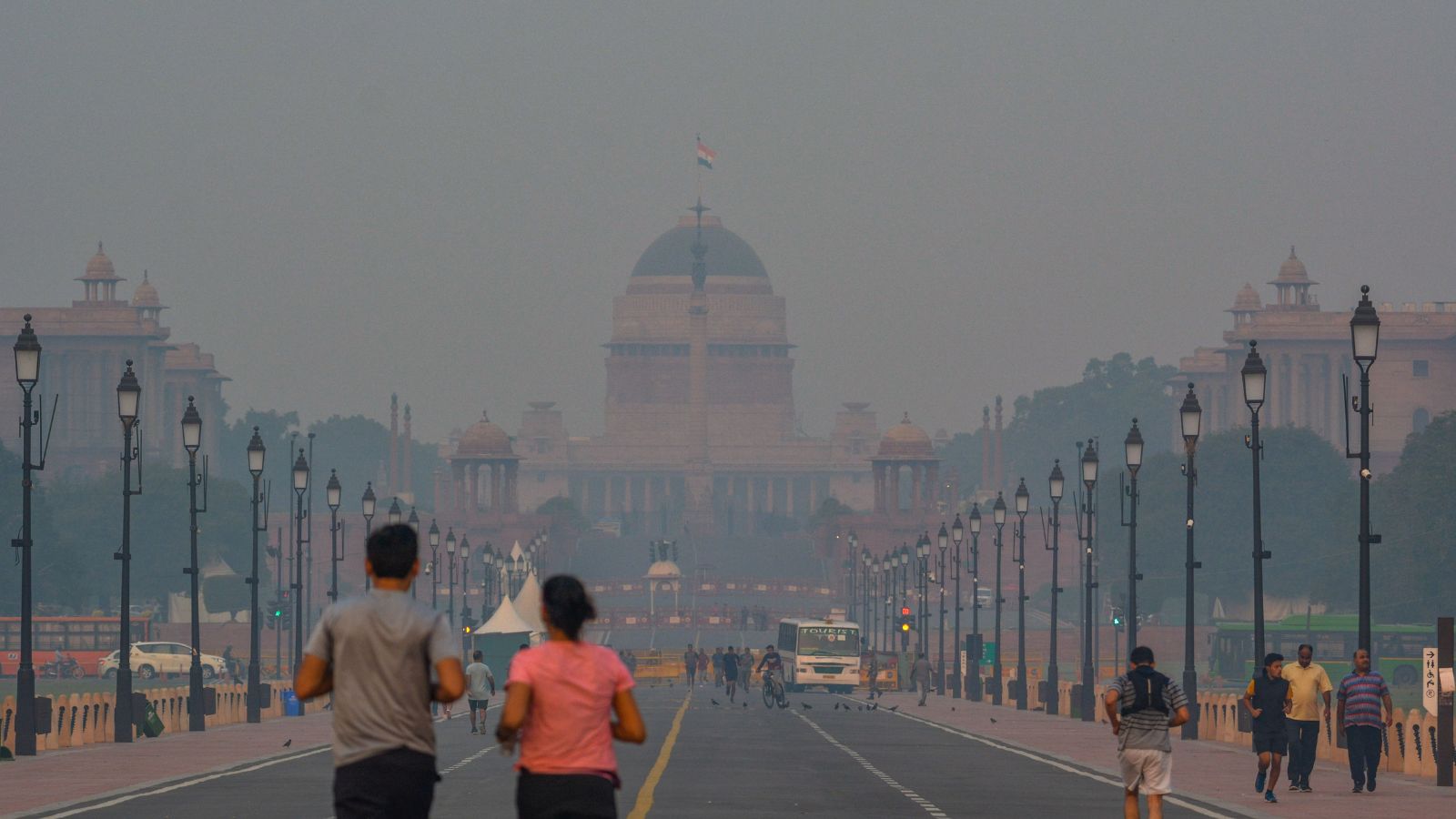
Under its winter action plan, the civic body's move is one of several measures to tackle air pollution, alongside road repairs, mechanical sweeping, dust control, action against polluting industries, and the removal of waste from roads and railway tracks.
According to its plan, the system will use automated number plate recognition (ANPR) cameras and radio-frequency identification (RFID) readers mounted on overhead gantries, allowing toll tax and environmental compensation charge collection without physical barriers, reducing traffic jams and their subsequent impact on air pollution.
The MCD has awarded a fresh tender for the system at all 154 entry points in compliance with a Supreme Court order dated January 21, according to the civic body.
Further, the MCD plans to improve 1,202 km of roads this year. Although it has missed its intended deadline to resurface the road before peak pollution season, it has completed work on 745 km between January and September, while funding for another 240 km is awaited from the Delhi government. Resurfacing refers to adding a top layer of concrete on a road.
The civic body has also reported 8,343 potholes between April and September.
It has deployed 66 mechanical road sweepers on Public Works Department roads, which would cover about 4,000 km on alternate days and collect around 180 tonnes of dust daily.

Officials said 70 additional sweepers would be added, but their deployment has been delayed by transportation problems linked to the Middle East crisis. They are expected to be deployed from mid-November.
“The corporation has also issued a tender to hire 40 sweepers as a backup. A separate order has been placed for 1,000 litter-picking machines, with about 400 expected to be deployed from mid-October,” they said.
The MCD has deployed 167 water sprinklers and 28 mobile anti-smog guns, while 12 additional sprinklers and anti-smog guns have been procured. Twenty anti-smog guns are being used at construction and demolition waste plants, dumpsites and waste-to-energy facilities.
Officials said that enforcement against polluting industries has also been stepped up. Between December 1, 2025, and September 23 this year, the MCD surveyed 11,273 industries across 250 wards in non-conforming areas.
Of these, 630 were identified as water-polluting units, of which 446 were sealed and 180 vacated. The civic body also identified 1,669 air-polluting industries, sealing 1,111 and getting 525 vacated. Showcause notices were issued to one water-polluting unit and 33 air-polluting units.
The MCD has also begun rolling out new waste collection and transportation arrangements in parts of the city under concession agreements signed on June 11 for the Central, South and West zones. The new contracts were scheduled to start this week.
Work has begun in 12 wards of the West Zone, where the concessionaire has deployed 225 e-rickshaws, 550 mini-tippers, 52 compactors, 41 hook loaders, 28 mini-trucks, 10 dumpers, six bin washers and 123 fixed compactor transfer station bins.
In the South Zone, work has begun in five wards, with 176 electric sanitation vehicles deployed. The fleet includes 150 vehicles for primary collection and 26 for secondary collection and waste transportation.

The MCD has also deployed 678 additional vehicles and machines across other zones to clear garbage-vulnerable points. These include 200 auto-tippers, 108 heavy vehicles, 124 e-rickshaws, 52 JCB machines and 194 Tata-407 (light commercial vehicle) vehicles.
To tackle construction and demolition waste, the MCD has registered 982 sites on the Delhi Pollution Control Committee portal for monitoring. Delhi generates an estimated 5,000 to 6,000 tonnes of such waste daily.
The Delhi Malba App, launched on March 9, has received 143 requests, leading to the removal of 10,463.9 tonnes of waste. The civic body has also mapped 125 secondary collection centres for construction waste.
Four processing plants at Bakkarwala, Burari, Ranikhera and Shastri Park have a combined capacity of 5,000 tonnes per day. Another facility with a capacity of 1,000 tonnes per day is being developed on reclaimed land at Okhla, with operations expected to begin in December.
A special drive to clear waste along railway tracks from March to September covered 49.74 km at 123 locations and removed 44,016 tonnes of legacy waste.
The MCD has bio-mined 220.06 lakh tonnes of legacy waste at the Okhla, Bhalswa and Ghazipur dumpsites since July 2022.
However, the MCD stated that 102.16 lakh tonnes remained as of September 12, including 66.95 lakh tonnes at Ghazipur, 19.54 lakh tonnes at Bhalswa and 15.67 lakh tonnes at Okhla.
The corporation said it aims to complete remediation at Okhla by October this year, Bhalswa by December and Ghazipur by December 2027. Around 100 acres of land have been reclaimed through the process, it said.
The civic body has installed 530 electric vehicle charging stations at various locations till August, while proposing 79 new parking sites with a combined capacity of 6,453 equivalent car spaces, it added.