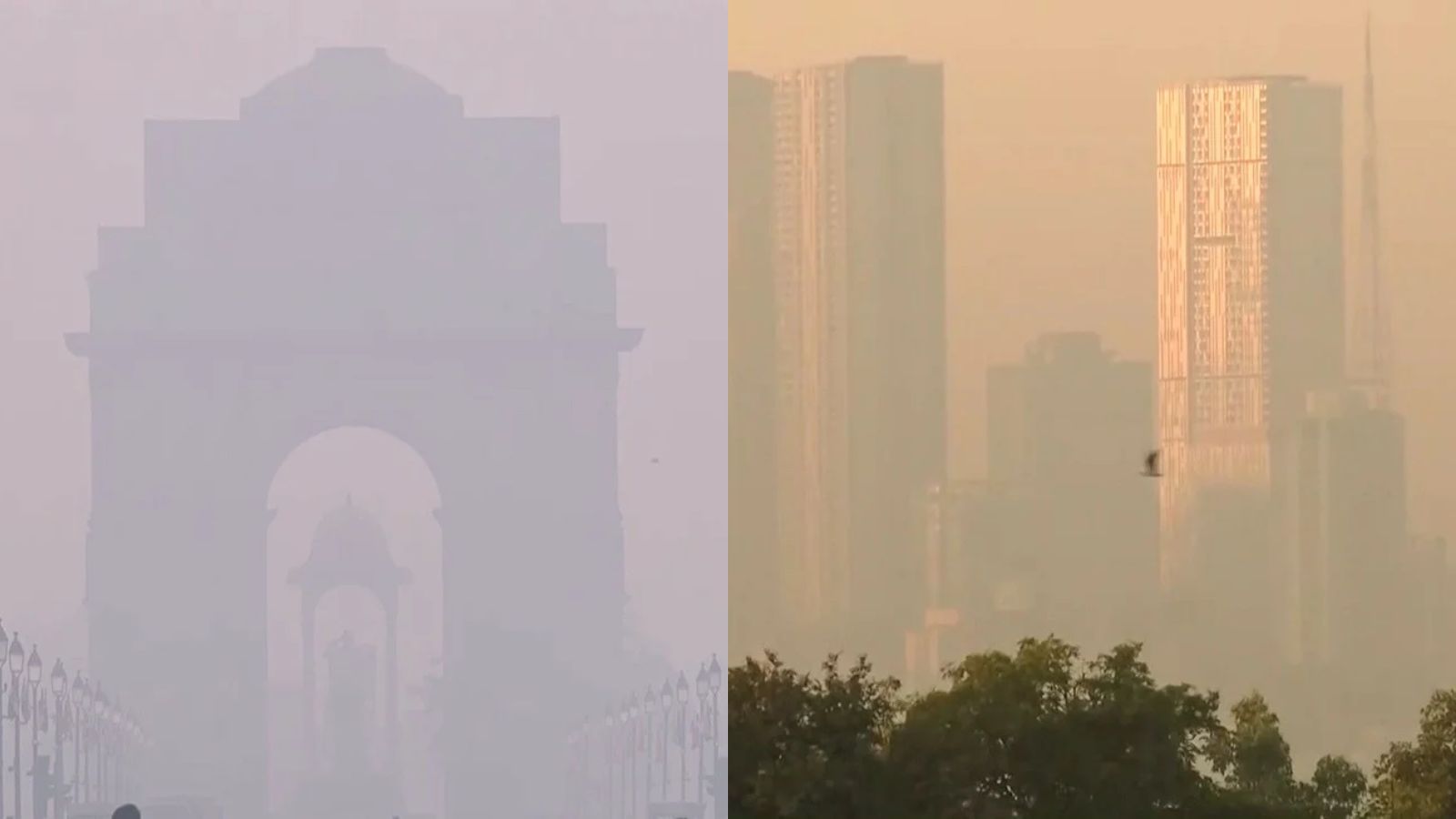


New Delhi: Delhi recorded an Air Quality Index (AQI) of 223 at 8 am on Friday, placing the national capital in the 'poor' category, according to the Central Pollution Control Board (CPCB).
A day earlier, the national capital recorded an AQI of 226 at 7 am on Thursday, also falling in the 'poor' category, indicating a marginal improvement in air quality.
According to CPCB data, Jahangirpuri recorded an AQI of 284, followed by Rohini at 281 and Punjabi Bagh at 275, all falling in the 'poor' category. Bawana recorded an AQI of 269, Patparganj 263, Alipur 257, Chandni Chowk 245, and Aya Nagar 231, all in the 'poor' category.
Wazirpur recorded an AQI of 222 and Anand Vihar 219, both in the 'poor' category, while Ashok Vihar recorded an AQI of 192, falling in the 'moderate' category.
The Commission for Air Quality Management (CAQM) on Wednesday invoked Stage-I of the Graded Response Action Plan (GRAP) across Delhi-NCR as air quality remained in the 'poor' category.
The decision was taken after the GRAP sub-committee reviewed the air quality situation across the region at a meeting and assessed the need for preventive measures to curb further deterioration.
Meanwhile, the Delhi Traffic Police held an inter-state coordination meeting to review measures under GRAP Stage-I.
During the meeting, authorities discussed diverting non-compliant buses at Delhi's borders, enforcing vehicle entry restrictions from November 1 to January 31, checking pollution certificates, and curbing road dust and construction-related pollution.
Agencies were directed to ensure the time-bound implementation of CAQM guidelines and strengthen real-time coordination to improve enforcement and prevent further deterioration in air quality.
On Thursday, Jahangirpuri recorded an AQI of 309 and Chandni Chowk 307, both falling in the 'very poor' category, according to CPCB data. Alipur recorded an AQI of 273, Anand Vihar 237, Ashok Vihar 223, Bawana 275, Patparganj 298, Rohini 291, Wazirpur 253, Akshardham 237 and ITO 280, all falling in the 'poor' category.
Under CPCB guidelines, an AQI between 0 and 50 is categorised as 'good', 51 to 100 as 'satisfactory', 101 to 200 as 'moderate', 201 to 300 as 'poor', 301 to 400 as 'very poor', and 401 to 500 as 'severe'.
On the other hand, Mumbai has recorded 231 days in the 'Good' and 'Satisfactory' Air Quality Index (AQI) categories as of October 22 this year, compared with 218 days in 2025, 216 days in 2024 and 185 days in 2023, the Brihanmumbai Municipal Corporation (BMC) said.
According to the civic body, data from the PRANA portal of the Union Ministry of Environment, Forest and Climate Change showed that Mumbai's PM10 concentration declined by approximately 48 per cent between 2017-18 and 2025-26.
The BMC said it has undertaken several measures to mitigate air pollution, including inspections at construction sites, road cleaning, monitoring of construction and demolition waste, and enforcement against activities contributing to pollution.
The civic body has issued 28-point air-pollution mitigation guidelines for construction sites. It has deployed 76 ward-level mitigation squads to conduct random and surprise inspections, with each squad required to inspect at least two construction sites daily and follow up on compliance at identified pollution hotspots.
Non-compliance with the guidelines can invite enforcement action, including show-cause notices, stop-work notices and sealing of sites, supported by inspection reports, photographs and videographs, the release stated.
The BMC also said sensor-based air-quality monitors are mandatory at construction sites. A total of 3,166 construction sites have installed these monitors and integrated them with a central dashboard through which the civic body tracks readings.
To control road dust, the BMC undertakes deep cleaning and routine sweeping, deploying 29 multipurpose vehicles. Developers and contractors are also required to clean adjoining roads based on the size of their construction sites.
The civic body is enforcing rules requiring construction and demolition waste vehicles to remain covered and have their wheels washed before entering public roads. Waste transportation and authorised disposal are tracked through the Mumbai Debris Control and Tracking System (MDCTS), which covers project proponents, developers and other planning authorities.
On emissions from bakeries, the BMC said they contribute approximately 3.5 per cent of Mumbai's particulate matter emissions. Of the city's 593 bakeries, 209 were already using cleaner fuels, while another 175 have converted. Sixty-nine are undergoing conversion, 87 remain non-compliant, and eight have closed, the release stated.
The BMC is also installing air-pollution control devices at 10 crematoria and maintaining surveillance at identified open-burning hotspots.
For the winter season, the civic body has issued its Winter Air Pollution Mitigation and Enforcement Action Plan 2026, covering construction-site compliance, road dust, open burning, pollution hotspots and vehicle checks.
The BMC said public awareness campaigns are also being conducted on the air and noise pollution caused by firecrackers, which are prohibited on public streets, roads, and other public places, including footpaths and silence zones.