

New Delhi: Flagging the ‘massive difference’ between the Maximum Retail Price (MRP) of medicines and the Price to Retailers (PTR), the Supreme Court on Tuesday questioned the Union government over whether it could justify the markup and whether manufacturers should be allowed to ‘run amok’.
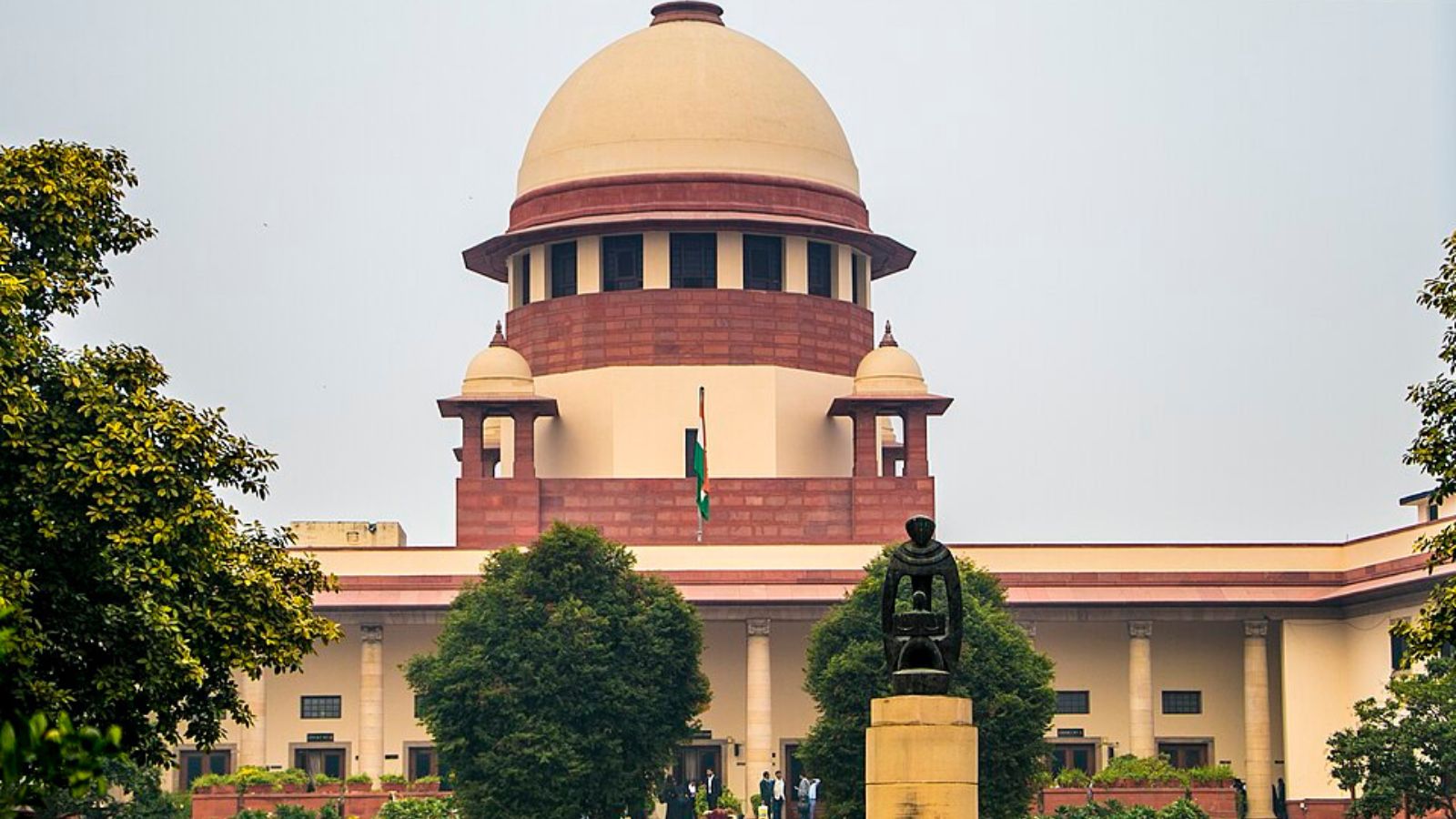
A bench of Justices Vikram Nath and Sandeep Mehta observed that the National Pharmaceutical Pricing Authority (NPPA) appeared to be a ‘totally defunct’ body and questioned why the system was working in favour of pharmaceutical manufacturers.
The top court reserved its verdict on two petitions raising issues related to medicine pricing, including stricter price control over drugs.
After the Union government informed the bench about its decision to cap the trade margin on anti-cancer drugs at 30 per cent of the MRP, the judges asked why there could not be a uniform 16 per cent margin for all medicines.
"The government policy is that the entire ecosystem is not to be controlled," Additional Solicitor General Aishwarya Bhati, appearing for the Union government, told the bench.
The court referred to medicines with a PTR of Rs 15 carrying an MRP of Rs 250.
"Can you show any justification for this loot?" the bench asked, adding that such pricing was taking place under the government's watch.
When Bhati referred to regulation, the judges asked, "Should it be allowed to run amok?"
Bhati argued that medicine prices in India were among the lowest in the world, but the bench questioned why there were markups of 300 per cent, 400 per cent or more between PTR and MRP.
"Why is the entire system working to help these people (manufacturers)?" the bench asked.
The court cited a recent case in which a hospital charged Rs 1.30 lakh for a cancer injection that was available to a medical distributor for Rs 11,000.
"It seems that the public at large is living in some daydream that some day they will be benefitted by the NPPA," the bench observed.
Bhati referred to the Union government's affidavit, which said India's drug market was highly competitive, with numerous pharmaceutical companies in every segment, resulting in some of the world's lowest medicine prices.
When she stressed the need for a calibrated approach, the judges said patients had no bargaining power and were forced to pay exorbitant prices.
"We wish every medicine is considered as generic medicine," the bench said.
The court also questioned why it had taken so long to cap the trade margin on anti-cancer drugs.
"Only after we started putting questions, the government has woken up and now you are saying we have done this," the bench told the law officer.
When Bhati referred to the pharmaceutical industry's growth, the bench responded, "You are talking about commerce and economic policy. Don't weigh patients against commerce."
"When we talk of patients and their lives, can we look at it with a capitalist view?" it asked.
While hearing the matter on October 12, the top court had said the Union government's response on capping the trade margin on anti-cancer drugs at 30 per cent of the MRP was "hardly anything to be happy about" and questioned why similar caps could not apply to other medicines.
The Union government had said the cap was expected to save patients around Rs 2,500 crore annually. The bench had then remarked that the response was insufficient, noting that a saline drip sold for Rs 270 despite costing Rs 11.
One petition sought directions to make drug formulations more affordable by preventing alleged overpricing of essential medicines by pharmaceutical companies and retailers. It also sought stricter enforcement of the Drugs (Prices Control) Order, 2013, to curb violations of the pricing mechanism and disproportionate profits by retailers.
The other petition sought disciplinary action against medical practitioners for not prescribing generic medicines.