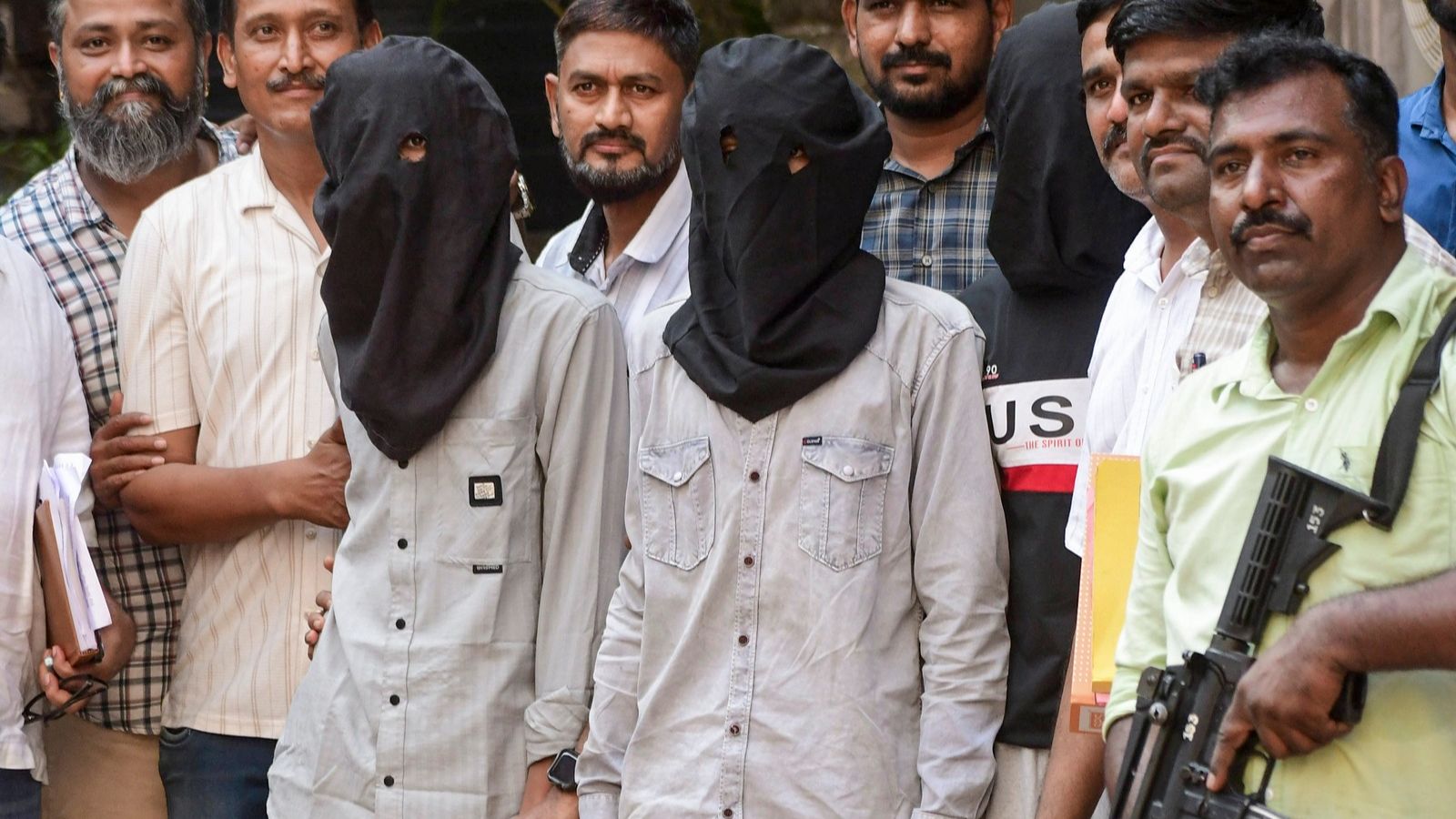


Mumbai: All 11 accused in the firing case involving actor Tiger Shroff were re-arrested by Mumbai Police under the Maharashtra Control of Organised Crime Act (MCOCA) on Wednesday, a day after the stringent law was invoked against them.
The accused were produced before a special court in Mumbai designated to hear MCOCA cases, where the police sought their re-arrest under the 1999 Act. The court allowed the plea. The accused will be produced before the court for police remand on Thursday.
Police invoked MCOCA provisions against all 11 accused on Tuesday after receiving permission from the competent authority under Section 23(1)(a) of the Act on October 27.
“Accordingly, Sections 3(1)(ii), 3(2) and 3(4) of MCOCA have been added to the said case against all accused. Further investigation is ongoing,” Mumbai Police said.
The case was registered by the Detection of Crime Branch, Criminal Investigation Department (DCB-CID), on October 19 under Sections 109(1) and 3(5) of the Bharatiya Nyaya Sanhita (BNS), along with Sections 3 and 25 of the Arms Act.
The firing took place around 7 pm on October 18 in Mumbai's Juhu area, when Shroff was leaving a football ground. Two shooters allegedly fired five rounds at his car. The 36-year-old actor, known for films such as 'Baaghi', escaped largely unhurt, while his driver and a bystander, a vlogger, sustained injuries.
Members of the Lawrence Bishnoi gang claimed responsibility for the firing. Police have named Anil Pandit, an aide to jailed gangster Lawrence Bishnoi, as a wanted accused in the case.
Of the 11 accused arrested so far, three were apprehended in Kota, Rajasthan, while the others were held at different locations in Delhi and Haryana.
MCOCA makes it more difficult for accused to obtain bail. Under the Act, a court can grant bail only if it is satisfied that there are reasonable grounds to believe the accused is not guilty. The police can get up to 180 days, instead of 90 days under ordinary criminal law, to file a chargesheet and can seek longer custody of the accused.
The Act also makes confessions recorded before an officer of the rank of Deputy Commissioner of Police (DCP) admissible as evidence in court. Under ordinary criminal law, only confessions recorded before a magistrate are admissible as evidence.
(With agency inputs from ANI, PTI)
(With agency inputs from ANI, PTI)