

New Delhi: Delhi continued to grapple with poor air quality on Monday, with the overall Air Quality Index (AQI) ranging from 385 to 428, spanning the 'Very Poor' to 'Severe' categories. Several areas across the national capital also recorded high pollution levels.
According to the Central Pollution Control Board (CPCB), the AQI around Akshardham Temple and ITO stood at 349 each, falling in the 'Very Poor' category. India Gate and Janpath recorded an AQI of 335, while Rohini registered 396, followed by Alipur at 375, Vivek Vihar at 370 and Narela at 363.
Chandni Chowk recorded an AQI of 358, while Jawaharlal Nehru Stadium registered 343. Burari stood at 308, Aya Nagar at 276 and Indira Gandhi International Airport's Terminal 3 at 263. Anand Vihar recorded an AQI of 242, with these locations falling in the 'Very Poor' or 'Poor' categories, according to the supplied readings.
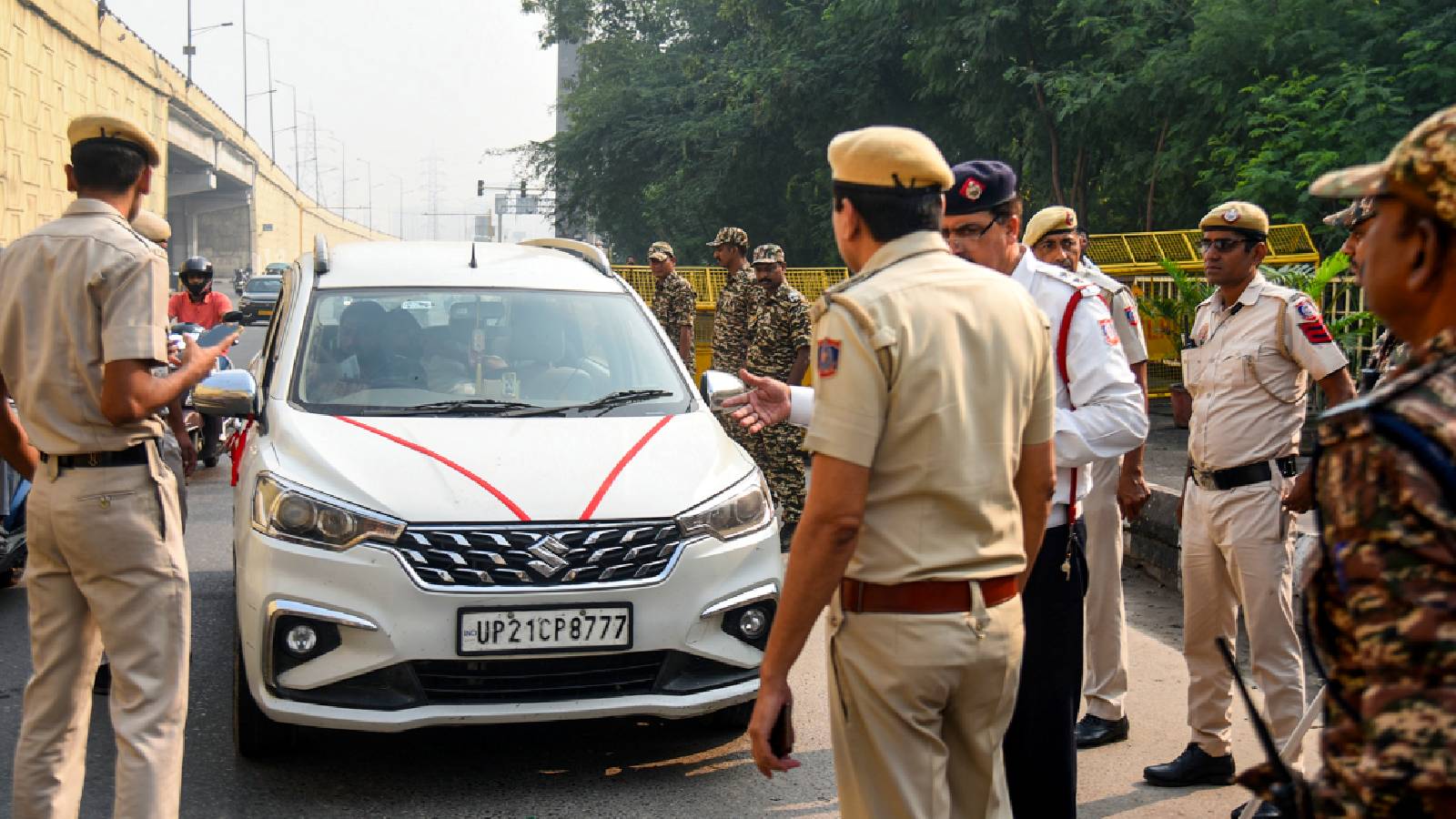
Amid the deteriorating air quality, Delhi authorities have stepped up enforcement under the Winter Action Plan, checking vehicles, penalising violations and inspecting construction sites to curb pollution.
Delhi Environment Minister Manjinder Singh Sirsa said enforcement teams were checking compliance with vehicle entry restrictions and Pollution Under Control Certificate (PUCC) norms, besides inspecting construction sites for dust control violations.
Authorities imposed penalties and environmental compensation totalling Rs 68.4 lakh on the first day of the Winter Action Plan. Nearly 15,000 vehicles were checked, 1,539 were turned back at border points and 566 challans were issued for PUCC violations.
According to official data available till 5 pm on Sunday, the total amount included Rs 56.6 lakh in penalties for PUCC violations, Rs 2 lakh in fines for breaches of border entry restrictions and Rs 9.8 lakh in environmental compensation for construction and demolition-related violations.
Under the restrictions on non-Delhi pre-BS-VI vehicles, the Delhi Traffic Police and Transport Department checked 14,930 vehicles, with approximately 10.31 per cent turned back. A total of 127 challans were issued and 62 vehicles were impounded, while fines of Rs 2 lakh were imposed for entry restriction violations.
The reported breakdown included 140 light motor vehicles (LMVs), 54 light commercial vehicles (LCVs), 95 heavy goods vehicles and 34 buses among those turned back. Of 1,423 two-wheelers, three-wheelers and other vehicles checked, 789 were turned back and 38 impounded.
Additionally, 7,279 non-destined vehicles were checked, of which 314 were turned back. No challans were issued in this category, according to the environment department's data.
Vehicles running on compressed natural gas (CNG), electric vehicles (EVs) and those involved in essential services were exempted from the restrictions. A total of 740 such vehicles were verified and allowed entry.
In a separate drive against vehicles operating without valid PUCCs, authorities issued 566 challans and imposed penalties amounting to Rs 56.6 lakh. The Delhi Traffic Police issued 493 challans, imposing fines of Rs 49.3 lakh, while the Transport Department issued 73 challans worth Rs 7.3 lakh.
Enforcement against dust pollution at construction and demolition sites resulted in environmental compensation of Rs 9.8 lakh. Authorities inspected 300 construction sites, of which 32 were reported to be in violation of dust control norms.
The inspections covered 91 large sites with plot areas exceeding 500 square metres, of which 16 were found violating the norms. Two closure directions and four show-cause notices were issued to these sites, while environmental compensation of Rs 4 lakh was imposed.
Among 209 smaller sites, 17 were found to be violating dust control norms. Authorities issued 15 closure directions and 15 show-cause notices, imposing environmental compensation of Rs 5.8 lakh.
In all, 17 closure directions and 19 show-cause notices were issued, with environmental compensation of Rs 9.8 lakh imposed across the inspected sites. No violations of dust control norms were reported at exempted infrastructure projects.
In a post on X, Sirsa said 14,930 vehicles had been checked on November 1, 566 PUCC challans had been issued, and 300 construction sites had been inspected. He urged residents to keep their pollution certificates valid and follow vehicle entry restrictions and dust control norms.
The restrictions under the Winter Action Plan will remain in force for varying periods between November 1 and February 28 to combat air pollution.
Non-Delhi pre-BS-VI vehicles registered outside the national capital will not be allowed to enter Delhi until January 31. Dust-generating demolition and outdoor civil construction activities have also been prohibited, except for specified essential public infrastructure projects.
A broader ban on construction and demolition activities, with certain exemptions, will be in force from December 10 to January 20.
Parking fees at authorised parking lots across Delhi have been doubled until February 28. Government and private offices are also required to limit physical attendance to 50 per cent between November 1 and January 31, with the remaining employees working from home. Essential and emergency services have been exempted.
(With inputs from ANI and PTI)