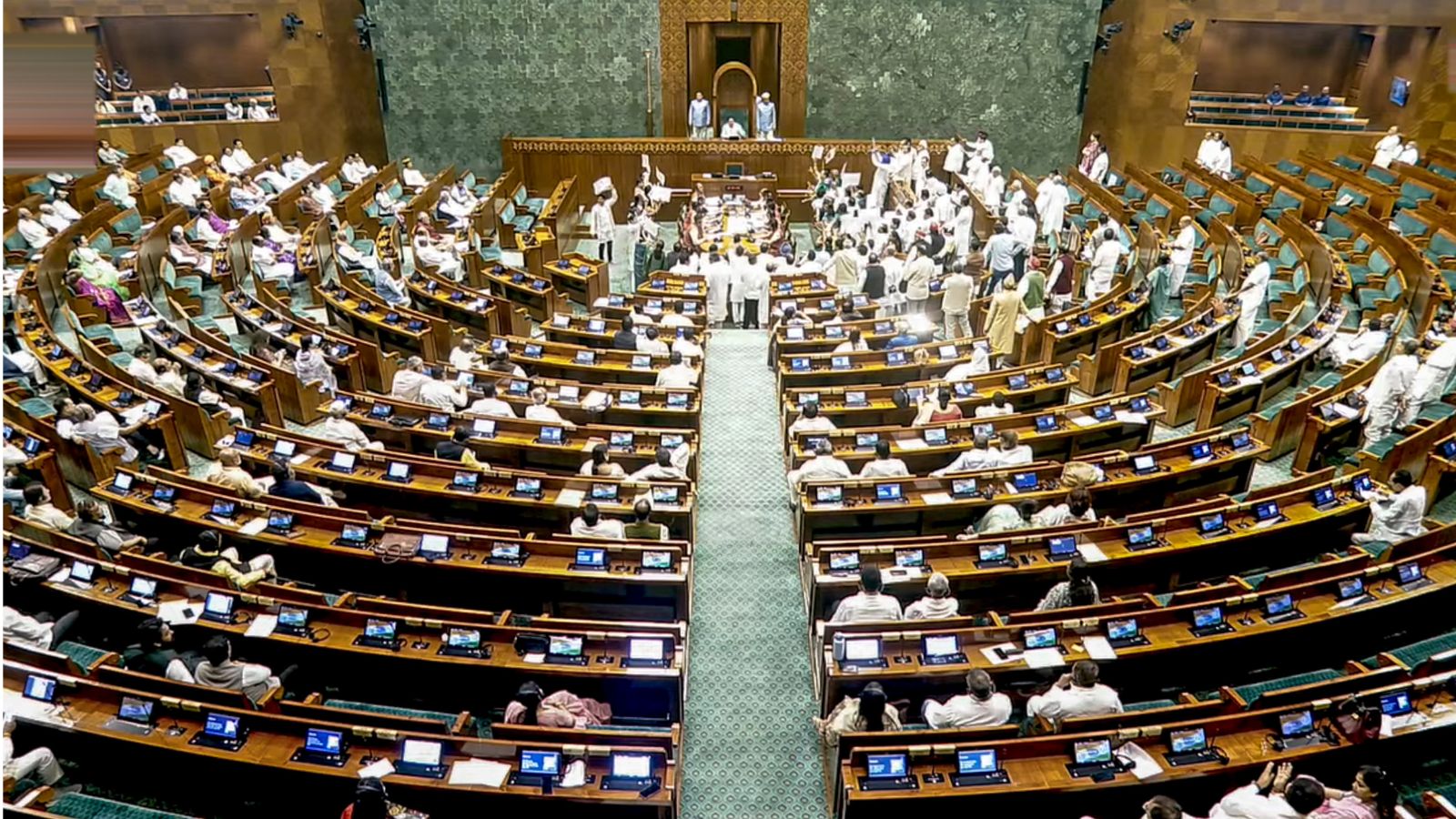


New Delhi: Southern India could get more MPs in an expanded Lok Sabha. But will that translate into greater political representation, or will the region risk losing its relative influence in national decision-making?
That is the central question confronting Tamil Nadu, Kerala, Karnataka, Andhra Pradesh and Telangana as India prepares for a potentially significant redrawing of its parliamentary map.
The union government has proposed increasing the Lok Sabha's elected strength from 543 to 816, with Union Home Minister Amit Shah maintaining that the expansion would protect the southern states' share of representation. Under the government's illustrative model, the five states would collectively gain 66 seats, taking their tally from 129 to 195.
Also Read:
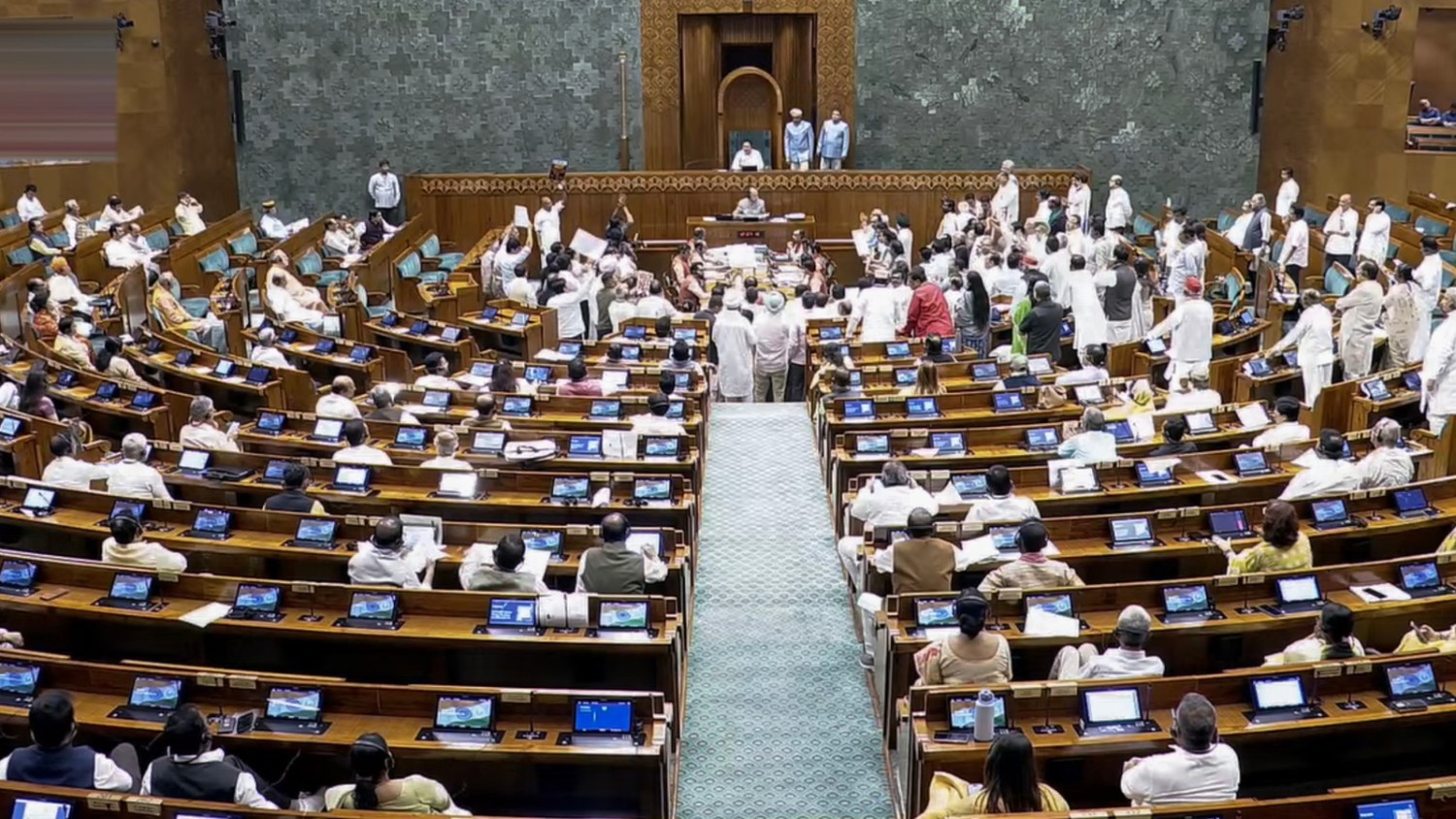
However, the proposed expansion has not resolved the larger concern: how will parliamentary seats be redistributed, and what safeguards will prevent states with slower population growth from losing their relative political influence?
The debate over delimitation has acquired renewed significance following the defeat of the Narendra Modi government's legislative proposals in April 2026. What was presented as an exercise to expand Parliament and accelerate women's reservation also triggered questions about demographic performance, political representation and the balance of power between India's states.
Why is delimitation a concern for southern India?
The concerns of southern states stem from India's changing demographic profile.
Tamil Nadu, Kerala, Karnataka, Andhra Pradesh and Telangana have experienced different demographic and developmental trajectories from several states in northern India. Their relatively slower population growth and lower fertility rates have become central to the debate over how parliamentary representation should be redistributed.
The underlying concern is that states which successfully implemented population-control measures should not be politically disadvantaged because of their demographic performance.
India's allocation of Lok Sabha seats among states has remained largely frozen on the basis of the 1971 Census. The freeze was introduced in 1976 and subsequently extended until the publication of figures from the first census conducted after 2026.
One of its central objectives was to ensure that states implementing population-stabilisation measures did not lose parliamentary representation as a consequence.
Over the past five decades, however, India's population distribution has changed considerably. A fresh delimitation based strictly on more recent population figures could alter the relative parliamentary strength of individual states.
This creates a fundamental tension between two principles: ensuring representation broadly proportional to population and maintaining political balance within India's federal structure.
What is the union government proposing under delimitation?
On April 16, 2026, the Union government introduced three related legislative proposals: the Constitution (131st Amendment) Bill, the Delimitation Bill and the Union Territories Laws (Amendment) Bill.
The proposals sought to expand the Lok Sabha, enable a fresh delimitation exercise and accelerate the implementation of women's reservation.
The constitutional amendment envisaged raising the maximum permissible strength of the Lok Sabha to 850 members. Amit Shah, however, presented an illustrative expansion model involving 816 elected seats, compared with the existing 543.
According to the Home Ministry's official figures, the five southern states would collectively gain 66 additional seats, taking their combined representation from 129 to 195.
South India's projected Lok Sabha representation
Figures from the Ministry of Home Affairs' April 16, 2026 release, based on the proposed 50 per cent expansion model.
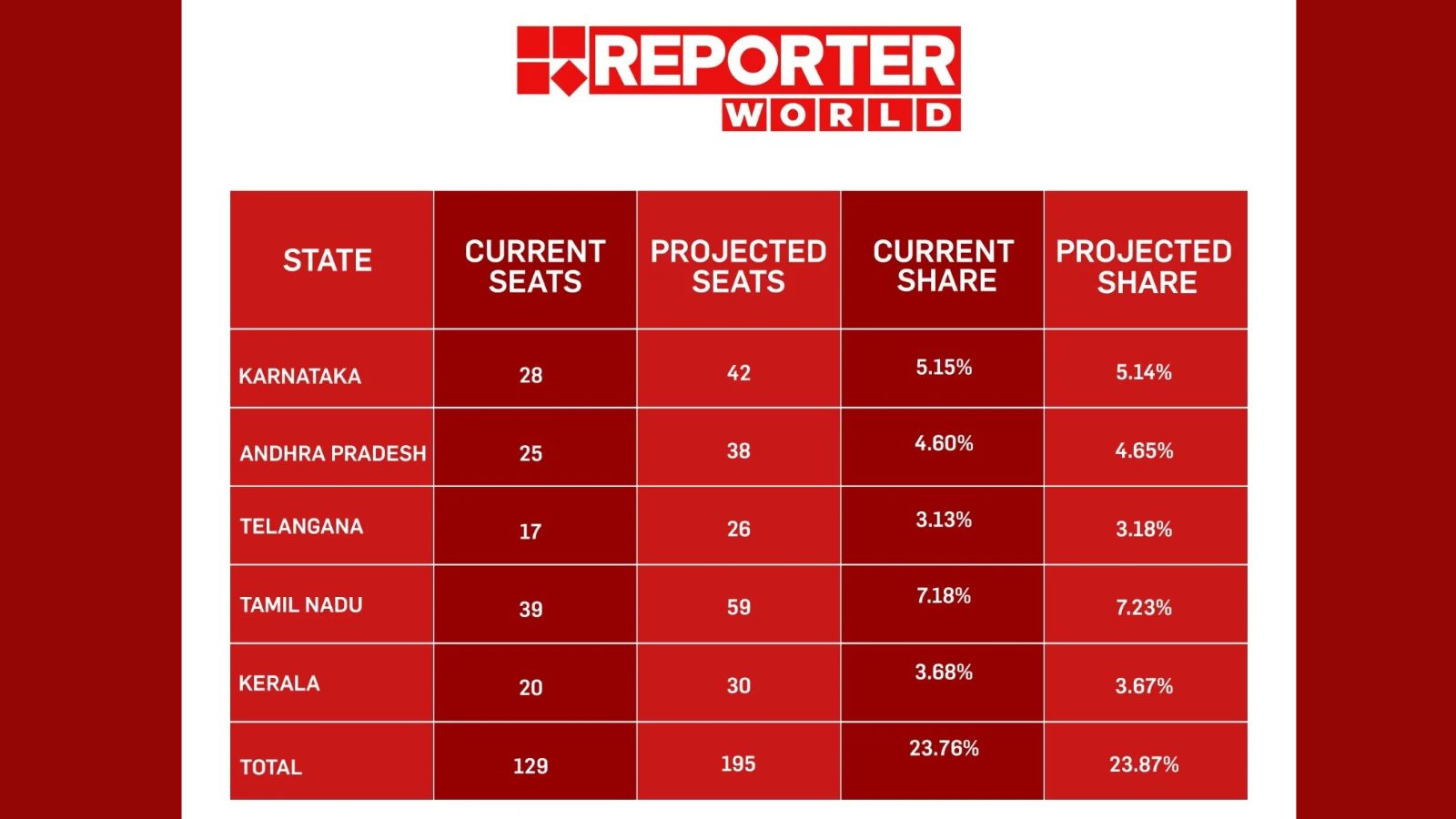
Under the proposed model, the five states' combined share of the Lok Sabha would increase marginally from 23.76 per cent to 23.87 per cent.
The figures form the basis of union government's argument that an expansion proportionate to existing representation can increase the number of MPs from southern India without reducing the region's collective share.
However, these are projections under an illustrative model and not final allocations approved through a delimitation exercise.
Why are union government's assurances facing scrutiny?
The central issue is whether the proposed expansion model would be reflected in the eventual constitutional and legal framework governing delimitation.
During the April parliamentary debate, Amit Shah maintained that the proposed legislation would benefit southern states and protect their representation.
However, an analysis by PRS Legislative Research identified a potential concern with the proposed constitutional amendment, which would have enabled fresh delimitation based on the 2011 Census.
PRS observed that a population-based redistribution could produce outcomes different from those projected in the government's illustrative model.
For instance, its analysis indicated that if the Lok Sabha's overall strength remained at 543 and seats were reallocated according to the 2011 population, Tamil Nadu's representation could fall from 39 to 32 seats, while Kerala's could decline from 20 to 15.
These were analytical projections and not government-approved allocations. Nevertheless, they underline the distinction between an assurance of increased representation and a legally established mechanism to protect a state's proportional share.
The size of the expanded Lok Sabha is only one part of the equation. The formula used to distribute seats among states will determine the eventual outcome.
Why are Tamil Nadu and Kerala particularly concerned?
The concerns across southern India are rooted in a shared debate over demographic performance and political representation, although the positions of individual states and political parties are not identical.
Tamil Nadu and Kerala are particularly sensitive to the possibility of losing parliamentary representation under a population-based redistribution.
Also Read:
Karnataka, Andhra Pradesh and Telangana also have a direct stake in the criteria used to determine future parliamentary allocations.
Some political parties favour extending the existing freeze on seat allocation. Others have proposed alternative allocation formulas or sought assurances that an expanded Lok Sabha will not reduce their states' relative influence.
The debate has also exposed differences within the ruling National Democratic Alliance.
Andhra Pradesh Chief Minister N Chandrababu Naidu's Telugu Desam Party, an important NDA constituent, sought assurances on the protection of southern representation before supporting the government's April proposals.
This demonstrated that the delimitation question extends beyond a conventional confrontation between the Centre and opposition-governed states. It also has implications for political alignments within the ruling coalition.
How is women's reservation linked to delimitation?
The proposed parliamentary expansion is closely linked to the implementation of women's reservation.
In 2023, Parliament passed the Constitution (106th Amendment) Act, providing for one-third reservation for women in the Lok Sabha and state legislative assemblies.
However, the law linked implementation to a census and a subsequent delimitation exercise.
The government's April 2026 proposals sought to modify this framework to enable women's reservation through an earlier delimitation process, potentially before the 2029 general election.
The union government presented the move as a way to accelerate a long-awaited reform. Opposition parties, however, questioned the decision to link women's reservation with a substantial expansion and redistribution of parliamentary seats.
The distinction is important. Support for greater representation of women does not necessarily imply support for the specific delimitation framework proposed by the government.
The disagreement centres on how the reform should be implemented and whether it should be accompanied by a wider restructuring of Parliament.
Why did the delimitation legislation fail in Parliament?
The government's constitutional amendment was defeated in the Lok Sabha on April 17, 2026.
The Constitution (131st Amendment) Bill received 298 votes in favour and 230 against, failing to secure the special majority required for a constitutional amendment.
Under Article 368, a constitutional amendment requires the support of a majority of the total membership of each House and at least two-thirds of members present and voting.
Also Read:
Following the defeat of the constitutional amendment, the related delimitation and Union Territories legislation could not proceed as proposed.
The outcome highlighted the political difficulty of implementing changes that affect both parliamentary representation and India's federal balance.
Any renewed constitutional amendment would require sufficient support in both Houses of Parliament.
What could delimitation mean for India's federal structure?
The implications of delimitation extend beyond the number of constituencies or the electoral prospects of individual political parties.
An expanded Lok Sabha could reduce the average population represented by each MP, potentially improving access to elected representatives. It could also create additional opportunities for women's political participation if the reservation framework is implemented.
However, the expansion would have wider institutional implications.
The Rajya Sabha's constitutional maximum strength would remain unchanged under the earlier proposal, potentially altering the relative weight of the two Houses in certain parliamentary and constitutional processes.
The future Delimitation Commission's approach to constituency boundaries and the allocation of seats among states would also be consequential.
The census used for the exercise, the statutory criteria applied and the safeguards provided would all influence the eventual outcome. These decisions could shape India's parliamentary representation for decades.
What happens next?
Theunion government faces two distinct challenges: securing the constitutional majority necessary to enact a revised legislative framework and establishing an allocation formula that reconciles population-based representation with concerns over fairness among states.
The government's April figures indicate that a substantial expansion of the Lok Sabha could be designed to broadly preserve southern India's collective parliamentary share.
But the unresolved question is whether the eventual legal framework will guarantee that outcome.
For Tamil Nadu, Kerala, Karnataka, Andhra Pradesh and Telangana, the concern is not simply whether they will receive more MPs. It is whether their relative influence in
Parliament will remain protected as India's demographic balance changes.
For the union government, the challenge is to pursue electoral reforms while maintaining confidence in India's federal arrangements.
Ultimately, delimitation is not merely about redrawing constituency boundaries or increasing the size of Parliament. It is about how political representation - and the power that comes with it - will be distributed across India's states for generations to come.