

New Delhi: The Government of India has notified revised guidelines for assessing specified disabilities under the Rights of Persons with Disabilities (RPwD) Act, 2016, replacing the norms issued in March 2024.
The guidelines issued by the Department of Empowerment of Persons with Disabilities on November 18, cover locomotor disability, visual impairment, hearing impairment, speech and language disability, specific learning disability, intellectual disability, autism spectrum disorder, mental illness, blood disorders, multiple disabilities and chronic neurological disorders.
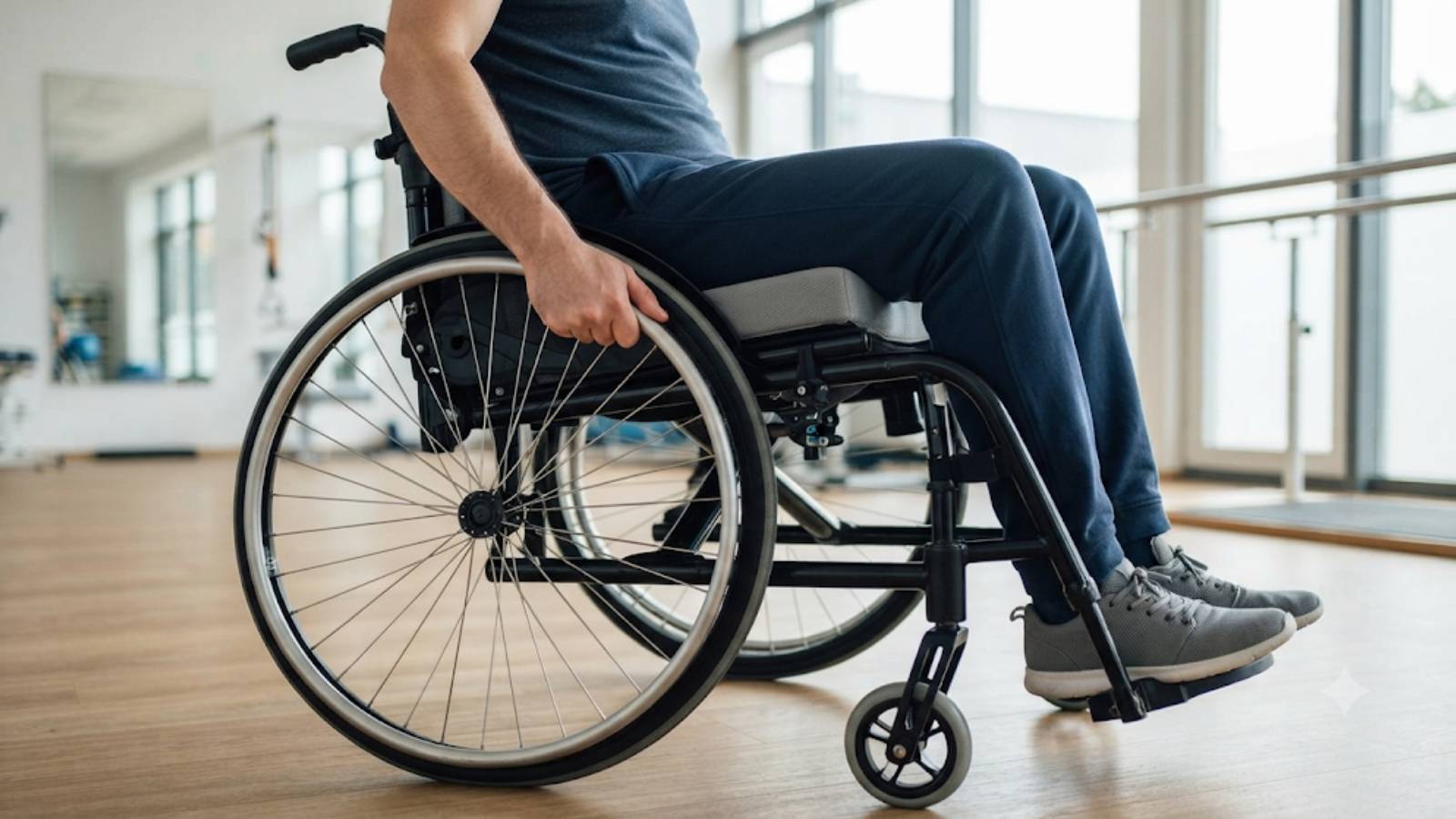
Locomotor disability
For locomotor disabilities, the assessment of upper extremities covers the arm and hand, including range of motion, muscle strength, coordinated activities, prehension and sensation.
The conditions covered include amputation, cerebral palsy, leprosy-cured persons, dwarfism, muscular dystrophy and spinal deformities.
Except in cases of amputation, temporary disability certificates will be issued after six months of symptoms. Permanent certificates will be issued after the age of 18. Reassessment will be carried out every 10 years if requested by the person with disability or recommended by a subject expert.
Dwarfism is defined as an adult height of less than 147 cm (4 feet 8 inches). Every one-inch reduction in vertical height attracts 4 per cent permanent physical impairment, while associated skeletal deformities will be assessed separately.
Visual, hearing and speech disabilities
Blindness includes the total absence of sight, visual acuity below 3/60 in the better eye after the best possible correction, or a field of vision of less than 10 degrees.
Low vision covers visual acuity below 6/18 up to 3/60, or a field of vision below 40 degrees up to 10 degrees.
Hearing impairment is assessed through Pure Tone Audiometry, with hearing thresholds measured at 500, 1,000, 2,000 and 4,000 Hz.
The assessment of speech and language disabilities covers conditions such as laryngectomy, glossectomy, bilateral vocal cord paralysis, dysarthria and apraxia of speech.
Dysarthria and apraxia of speech are assessed after one year of regular, documented speech therapy by registered speech-language pathologists.
Intellectual and specific learning disabilities
The assessment of intellectual disability considers intellectual functioning and adaptive behaviour. The prescribed disability percentages are:
- Borderline: 25 per cent
- Mild: 50 per cent
- Moderate: 75 per cent
- Severe: 90 per cent
- Profound: 100 per cent
The minimum age for certification is one completed year. Children above one year and up to five years will be diagnosed with Global Developmental Delay, while those above five years will be assessed for intellectual disability.
Specific learning disability covers difficulties in reading, written expression and mathematics. These difficulties must persist for at least six months despite targeted, evidence-based intervention. Assessment requires an IQ score of 85 or above.
The NIMHANS battery and the NIEPID Grade Level Assessment Instrument for Schools are prescribed for children up to 18 years. The NIEPID Adult Assessment Tool for Specific Learning Disability is prescribed for adults.
Autism spectrum disorder
Autism spectrum disorder will be diagnosed using the AIIMS-modified INCLEN tool.
Children below six years will receive a diagnosis of moderate autism and a temporary certificate, with reassessment at six years or above.
For individuals aged six years and above, the disability percentage will be determined by their Indian Scale for Assessment of Autism (ISAA) score:
- Score of 70: 40 per cent
- Scores between 71 and 88: 50 per cent
- Scores between 89 and 106: 60 per cent
- Scores between 107 and 123: 70 per cent
- Scores between 124 and 140: 80 per cent
- Scores between 141 and 153: 90 per cent
- Scores above 153: 100 per cent
A score below 70 indicates no autism.
Mental illness
Mental illness will be assessed through a psychiatrist's clinical examination and the Indian Disability Evaluation and Assessment Scale. The scale covers self-care, interpersonal activities, communication and understanding, and work.
The prescribed disability percentages are 25 per cent for mild, 55 per cent for moderate, 85 per cent for severe and 100 per cent for profound disability.
A minimum illness duration of two years is required for permanent certification. For illnesses lasting less than two years, a time-valid certificate may be issued. However, severe or profound cases may be considered for permanent certification.
Blood disorders
The blood disorders covered under the guidelines are haemophilia, thalassemia and sickle cell disorders.
A benchmark disability of 40 per cent is prescribed for patients meeting the criteria for severe haemophilia, thalassemia major or intermedia, transfusion-dependent thalassemia intermedia, homozygous sickle cell disease and severe compound heterozygous sickle cell syndromes, including sickle-beta thalassemia and sickle-HbD.
For haemophilia, the criteria include factor VIII or IX levels below 5 per cent, along with a history of two or more bleeds in major joints, one intracranial bleed or one muscle bleed.
Multiple disabilities
For multiple disabilities, two or more specified conditions will be assessed individually. Only disabilities assessed at 25 per cent or above will be included in the composite calculation.
The prescribed formula combines the higher and lower disability percentages. For instance, a person with 40 per cent hearing disability and 30 per cent visual disability will have a composite disability of 58 per cent.
The combined disability percentage cannot exceed 100.
Chronic neurological disorders
Chronic neurological disorders, including Parkinson's disease and multiple sclerosis, will be assessed across locomotor, visual, hearing, speech, cognitive and psychosocial impairments.
For epilepsy, the prescribed disability percentage will be determined by the frequency of convulsions:
- Single convulsion: Nil
- One to five convulsions a month: 25 per cent
- Six to 10 convulsions a month: 50 per cent
- More than 10 convulsions a month: 75 per cent
Certifying authorities
State governments and Union Territory administrations will designate persons with the requisite qualifications and experience as certifying authorities for issuing disability certificates and Unique Disability Identity (UDID) cards.
The Director General of Health Services under the Union Health Ministry will decide cases involving doubts over the interpretation of definitions, classifications or evaluation procedures.
(With PTI inputs)