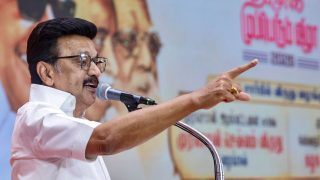




A day before Parliament’s crucial special sitting, DMK chief MK Stalin has asserted that Tamil Nadu’s interests remain non-negotiable, even as a high-powered INDIA bloc delegation heads to Chennai to persuade him to withdraw his party’s support for the Union government’s revised delimitation legislation.
Responding to Rahul Gandhi’s appeal on Sunday, Stalin invoked Tamil resistance icon Veerapandiya Kattabomman and Ettappan, remembered in Tamil popular history as a symbol of betrayal, signalling his determination to protect Tamil Nadu’s interests.
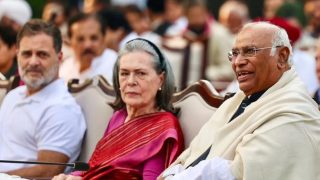
The delegation is expected to include Sonia Gandhi, Rahul Gandhi, Congress president Mallikarjun Kharge, TMC chief Mamata Banerjee, CPI(M) general secretary MA Baby and three southern Congress chief ministers — Kerala’s VD Satheesan, Karnataka’s DK Shivakumar and Telangana’s Revanth Reddy.
The scale of the mobilisation reflects the political urgency confronting the Opposition.
From political rupture to parliamentary necessity
The Chennai meeting comes months after the Congress ended its longstanding alliance with the DMK and backed Vijay’s Tamilaga Vettri Kazhagam (TVK) in Tamil Nadu.
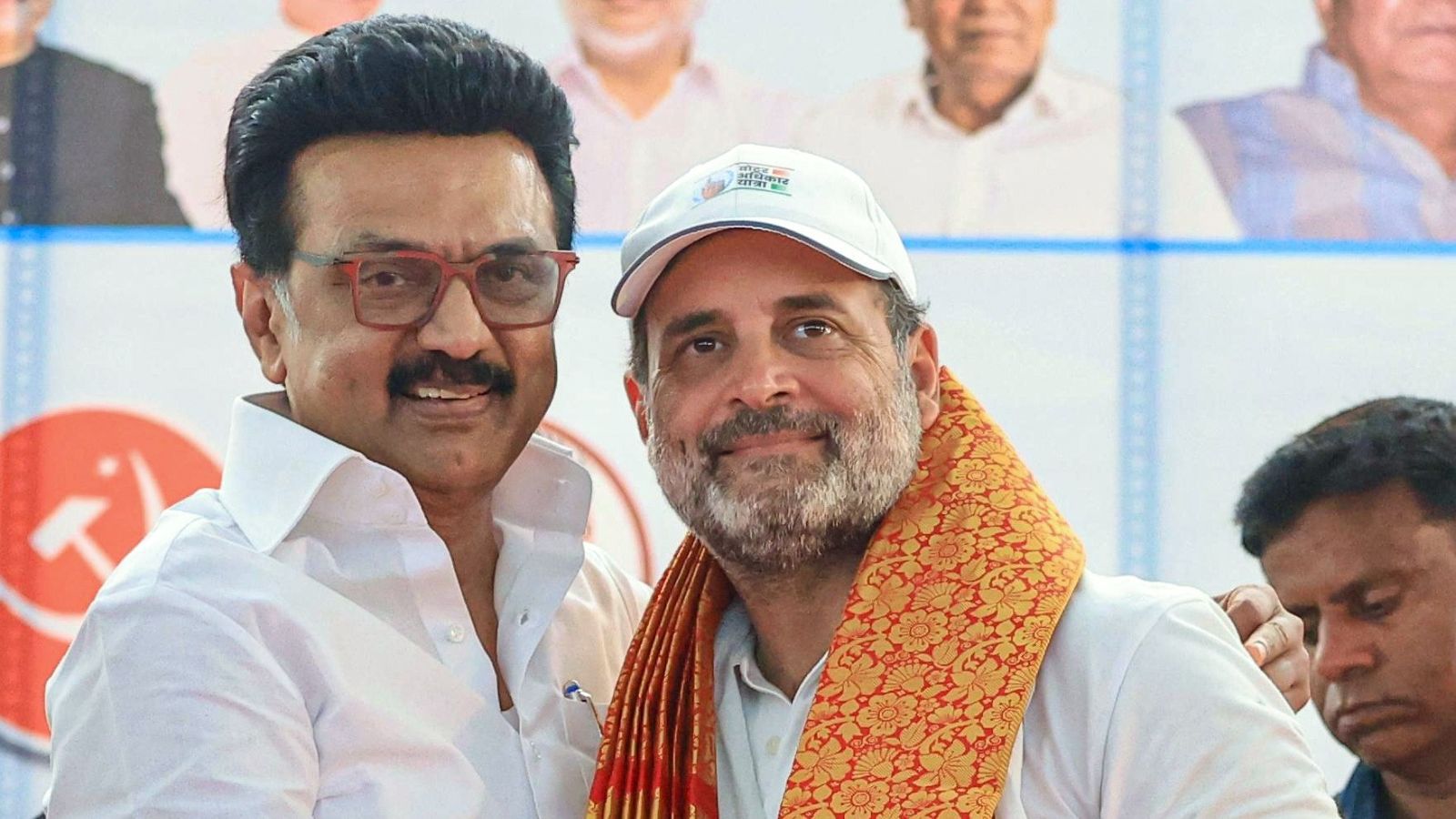
Rahul Gandhi’s renewed invocation of “Brother Stalin” assumes particular significance against this backdrop.
For the Congress, securing the support of its former ally has become a parliamentary priority. For Stalin, the meeting presents an opportunity to demonstrate the DMK’s independent political standing and national bargaining power.
Why Stalin stands firm?
The DMK, which spearheaded southern resistance against unfair delimitation, announced its support for the revised legislation on Saturday, maintaining that its principal demands had been accommodated.
These include protecting Tamil Nadu’s existing share of parliamentary representation and preserving the relative distribution of seats among states until 2051.
Stalin has projected the development as a victory for the DMK’s sustained campaign rather than a reversal of its position.
The Congress, however, sees a larger constitutional battle. Rahul Gandhi has warned that raising the maximum strength of the Lok Sabha to 850 could enable the BJP-RSS to reshape India’s electoral landscape to its political advantage.
The Opposition also wants women’s reservation implemented within the existing Lok Sabha strength, while the Union government’s proposal links its implementation to delimitation and parliamentary expansion.
The numbers behind the urgency
With 22 Lok Sabha MPs, the DMK could play a crucial role in determining the fate of the constitutional amendment.
Opposition leaders are also scheduled to meet Sharad Pawar in Mumbai, with his NCP faction, which has eight Lok Sabha MPs, indicating conditional support for the revised proposal.
For the BJP, securing the backing of regional parties offers both a legislative advantage and an opportunity to counter allegations that delimitation threatens southern representation.
For the Congress, the immediate challenge is preventing regional political priorities from undermining its national strategy.
A defining test for INDIA bloc
The Chennai meeting exposes a fundamental contradiction within the Opposition: parties united against the BJP do not necessarily share identical political interests.
The irony is unmistakable. The leader who once spearheaded southern resistance against unfair delimitation is now the man the national Opposition is trying to persuade to reject the Union government’s revised framework.
What began as a battle over India’s future electoral map has now become a battle over the future of Opposition unity itself.