



On November 12, 2023, a massive flag in black, white and green, with a red triangle on the hoist side and the unmistakable political slogan 'Free Palestine' spread along it, was unfurled from the top of the Grand Hotel in Pristina before the national team of Kosovo played Israel in a Euro qualifier in the capital city.
A few hours later, the Kosovar loudly booed the Hatikvah inside the Fadil Vokrri Stadium, and some accounts say they jeered every time an Israeli touched the ball. That was the first documented incident of foreign hostility toward Israeli sports teams in the wake of the devastation in Gaza.
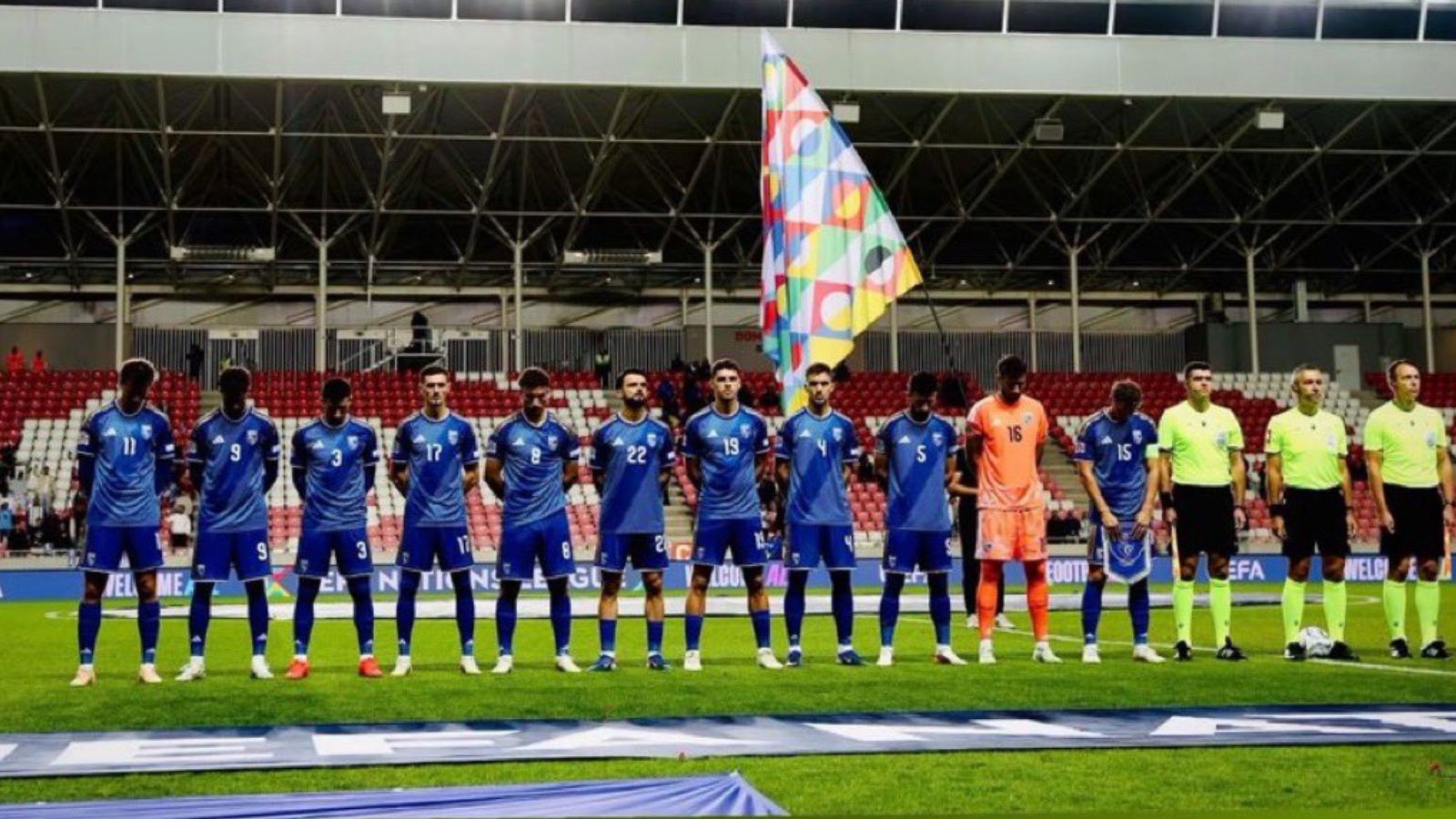
On October 1, 2026, three years and 63,000 more killings later in Gaza, Kosovo and Israel met again. The UEFA Nations League group match at the Nagyerdei Stadion in Debrecen, Hungary, which is the adopted home ground of Israel, was conspicuous for the lack of elaborate support for the Palestinian cause, as there was in the previous meeting between the sides. The Football Federation of Kosovo (FFK) had imposed restrictions on ticket purchases, limiting sales to those who provided photo identification and contact details, which may explain why fewer than 500 were in attendance.
There was no visible pro-Palestine sentiment on the particular occasion, and any semblance of dissent was reportedly restricted to half of the Kosovo starting XI that kept their heads bowed during the Israeli national anthem.
Had that been the only fixture for the Israeli national team in the September-October international window, it would have served as a great advert for Tel Aviv, in claiming a change of perception toward its policies.
But the narrative around the Kosovo match pales in comparison to two other fixtures that sandwiched it, both featuring the Republic of Ireland and Israel, and it has exacerbated the politics of Israel's continued participation in international football. Like the Israel-Kosovo match, the two featuring Ireland were also played on neutral grounds. The first was again played in Debrecen, Hungary, while the other, on October 5, took place behind closed doors in the small town of Backa Topola in northern Serbia.
Hungary and Serbia wouldn’t object to hosting Israel because of strong diplomatic ties. Serbia is a buyer of Israeli weapons and recently opened a drone factory with the support of Elbit Systems, a Haifa-based defence technology firm, reported the Times of Israel. But Ireland is different; it is arguably the loudest opposition to Israel in Europe. Last year, the Republic of Ireland filed a declaration of intervention under a statute of the International Court of Justice to join a genocide case against Israel brought by South Africa.
The Irish supporters reportedly felt betrayed by the decision of the Football Association of Ireland (FAI) not to boycott the matches against Israel. They displayed their ire by throwing tennis balls painted in Palestine colours during Ireland’s Nations League match at the Aviva Stadium in Dublin, held on the same day as the Israel-Kosovo match in Hungary.
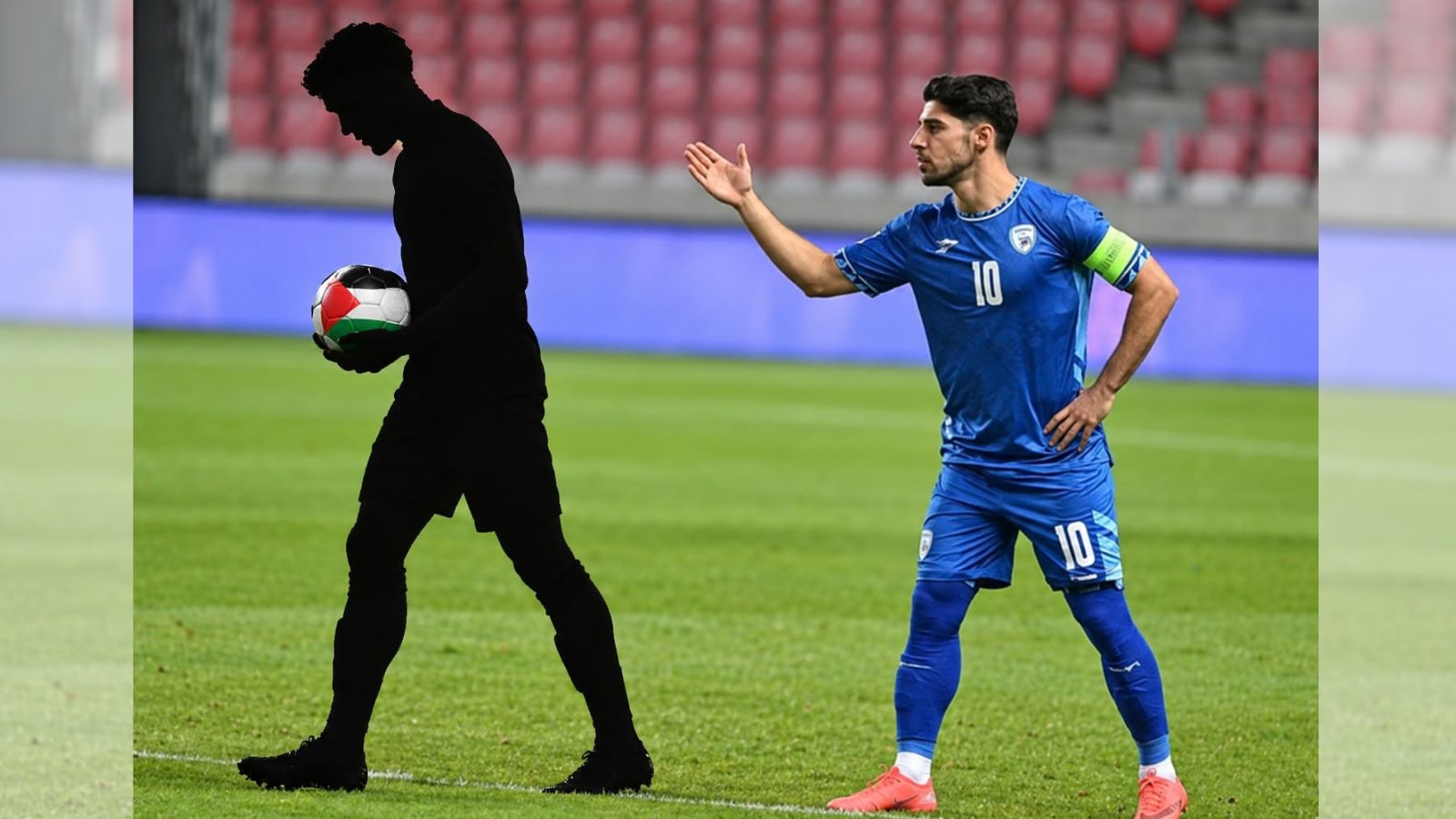
Many Irish supporters, who have subscribed to the ‘Stop The Game’ campaign that urges the FAI to boycott all footballing activities with Israel, did not seem to care that their national team took four points out of a possible six from the two encounters (3-0 and 1-1). For them, the matches should not have been played in the first place. The supporters felt more connected to Goalkeeper Gavin Bazunu, who boycotted the matches against Israel. The fans were not convinced by their players wearing black armbands and keeping their heads bowed to the sound of the Hatikvah, nor by the refusal of their two captains, Dara O'Shea and Caoimhin Kelleher, to shake hands with the Israeli skippers.
In its defence, the FAI said that not playing the matches against Israel could have harmed Irish football in the long run. The national associations of Belgium, Spain, Scotland, Slovenia and Norway, among others, have found themselves in a similar dilemma when paired with Israel in recent times.
UEFA has repeatedly refused to heed the demand from various corners to ban Israel, arguing that players should not be held accountable for the actions of the government. The European football governing body’s position on Israel is in stark contrast to the stance it adopted on Russia, which was banned within days of the start of the full-scale invasion of Ukraine in 2022. When asked about the double standards regarding Russia and Israel, UEFA General Secretary Theodore Theodoridis said in 2024 that those were "two completely different situations".
Human rights organisations such as Amnesty International and UN Human Rights experts have urged UEFA and FIFA to suspend Israel from international football over statutory violations. Last September, UN Human Rights experts said: "Sports must reject the perception that it is business as usual. Sporting bodies must not turn a blind eye to grave human rights violations, especially when their platforms are used to normalise injustices.”
Ireland’s head coach Heimir Hallgrimsson said he does not want the two teams to play each other again. "They shouldn’t (play). That’s not ours to decide; that’s UEFA." "I wouldn’t want or wish any national team to go through what we have gone through these two weeks. UEFA needs to step in and do something.”
Israel has dodged one international fixture at a time by playing on friendly neutral grounds, with little to no objection from opposing teams, and Ireland cut too close to comfort. But the next international window will open into a different test, one that won't be held in a controlled environment. Israel's next match, on November 14, is scheduled to be held in Pristina, the same city where, three years ago, a giant Palestinian flag was raised and where the Hatikvah was booed.
In recent years, the government of Kosovo has moved closer to Israel, even opening its embassy in Jerusalem. But the question is whether the people of Kosovo - with a 90% Muslim population - share the views of their government. If Pristina stays quiet, Israel might claim that hostility to its teams is going down. If it erupts again, then the game changes, and UEFA might not be able to pretend that everything is normal.