


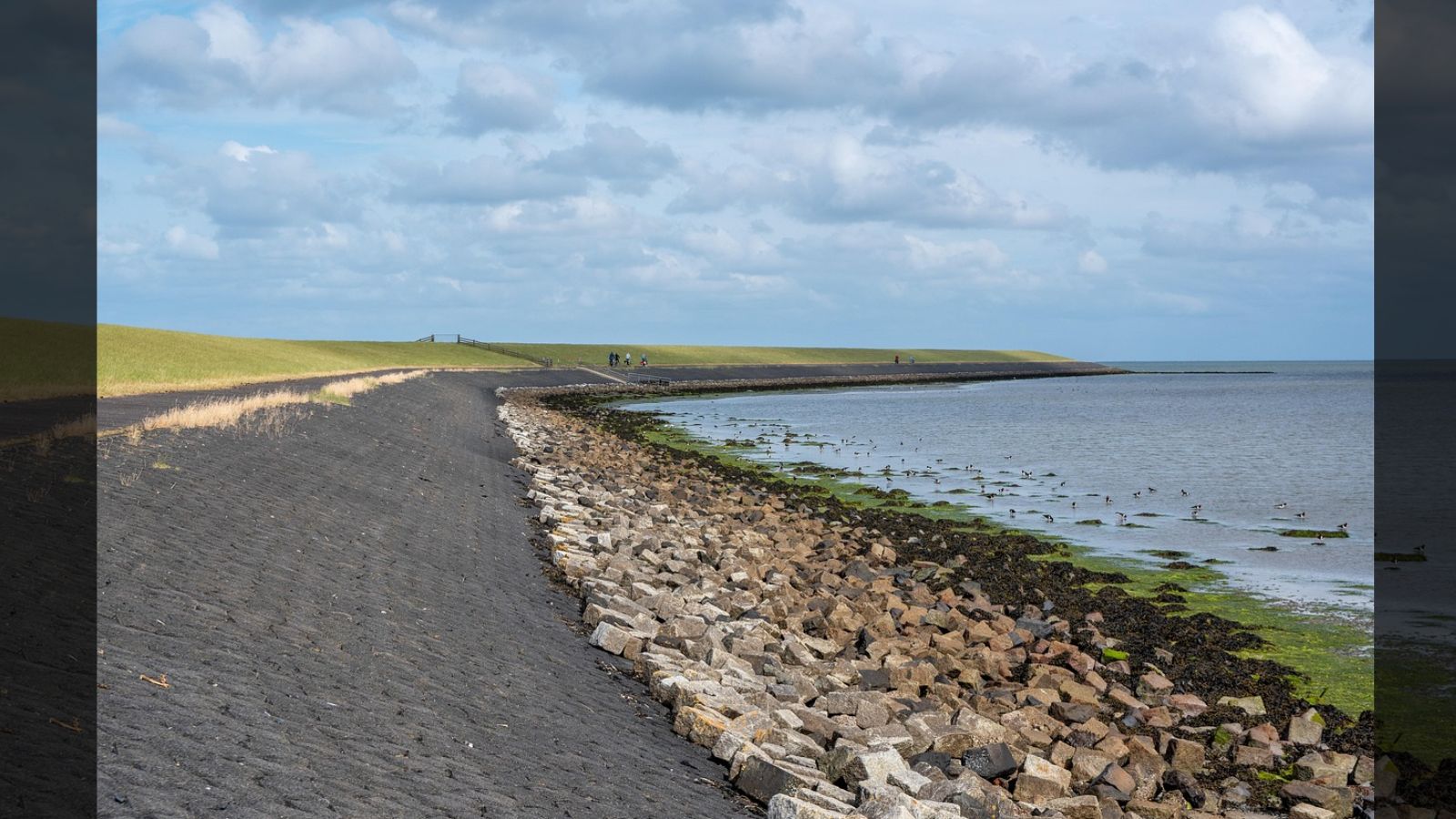


Waddinxveen, Netherlands: Persistent hot and dry weather is weakening Dutch dikes, disrupting cargo transport along the Rhine River and creating challenges for farmers in the Netherlands and neighbouring Germany as drought conditions continue across Europe.
Jeroen Wouda and Dirk Boom walk slowly along a Dutch dike, probing the dry surface with metal rods and scanning the parched grass for patches of green that could indicate a leak.
The scene recalls the fictional Dutch boy who plugged a leaking dike with his finger. However, modern dike patrols use mobile applications to record potential problems caused by drought and immediately alert authorities so repairs can be carried out quickly.
The drought gripping Europe has fuelled wildfires in France and Spain, while pushing water levels in the Danube and Rhine rivers to record lows.
In the Netherlands and neighbouring Germany, cargo vessels navigating the Rhine and its tributaries have been forced to carry significantly lighter loads to avoid running aground in shallow waterways. Farmers facing restrictions on irrigation have warned of smaller fruit harvests and higher prices this season.
For some houseboat owners, receding water levels have left their floating homes resting on sandy riverbeds.
Checking dikes for damage
Peter van Duijvendijk, flood defence manager at Schieland en de Krimpenerwaard Water Authority, said his organisation oversees a network of 140 volunteers responsible for monitoring about 100 kilometres of dikes.
The volunteers inspect the flood defences and report any signs of damage. Although no major problems have been detected so far this summer, inspections are expected to continue into autumn.
"They are our eyes and ears on the dike," Van Duijvendijk told The Associated Press.
Many inland Dutch dikes are built from peat, which needs to remain moist to retain its strength. The dike near Waddinxveen, east of The Hague, protects land lying about 5 metres below sea level.
"Because it is so dry right now the peat loses moisture, and because of that it becomes weaker," Van Duijvendijk said.
"If that peat becomes weaker, then there is a chance that water will flow through the dike and that waterway will drain into the polder," he added, referring to reclaimed land.
Low river levels disrupt cargo transport
Europe's major rivers are experiencing exceptionally low water levels.
In Cologne, Germany, people have been walking across parts of the exposed riverbed of the Rhine, one of Europe's busiest freight corridors.
On Saturday, the Rhine's water level in Cologne fell below the previous record low set in October 2018.
Marcel Beck, manager of the western German ports of Neuss, Düsseldorf and Cologne at RheinCargo, described the impact on shipping as "devastating".
"A ship that would normally carry 2,000 to 2,500 metric tons of cargo can now only transport 400, perhaps 600, metric tons depending on the ship's design," he said.
"This places an enormous burden on the entire transport chain to reorganise everything in order to still get the goods inland."
In the Dutch city of Nijmegen, a rusted bicycle and shopping trolley have emerged from the dried riverbed of the Waal, the Rhine's main branch in the Netherlands. Falling water levels have also left houseboats nearly stranded.
Houseboat owner Frans Schilte said periods of low water have become much longer in recent years.
"They used to last a month, but now it's like three months," he said.
His steel-bottomed houseboat is now resting on the sandy riverbed.
"It's a little out of level, it's not a big problem," Schilte said, describing the drought as "the negative effect of climate change."
Balancing floods and drought
Around one-third of the Netherlands lies below sea level, forcing authorities to balance flood prevention during winter with maintaining sufficient water supplies during summer.
Vince Kaandorp, a groundwater hydrologist at the independent Dutch research institute Deltares, said the country receives enough water overall, but not at the right times of the year.
"Throughout the year, we have enough water in the Netherlands, there's no shortage," Kaandorp said.
"But, of course, it is not evenly distributed over the seasons."
He said simple measures, such as planting hedgerows along rivers, can slow water flow and allow more water to seep into the ground. Researchers are also studying ways to make soil act more like a sponge so it can retain water for longer periods.
Low-lying reclaimed areas in the western Netherlands are increasingly affected by saltwater intrusion during droughts, creating additional challenges for fruit and vegetable growers.
To conserve freshwater supplies, water authorities have banned farmers in some areas from pumping water from canals to irrigate crops.
"It is an extremely challenging year for growers," John Kusters, chair of the Netherlands Fruit Growers' Organisation, said in a statement.