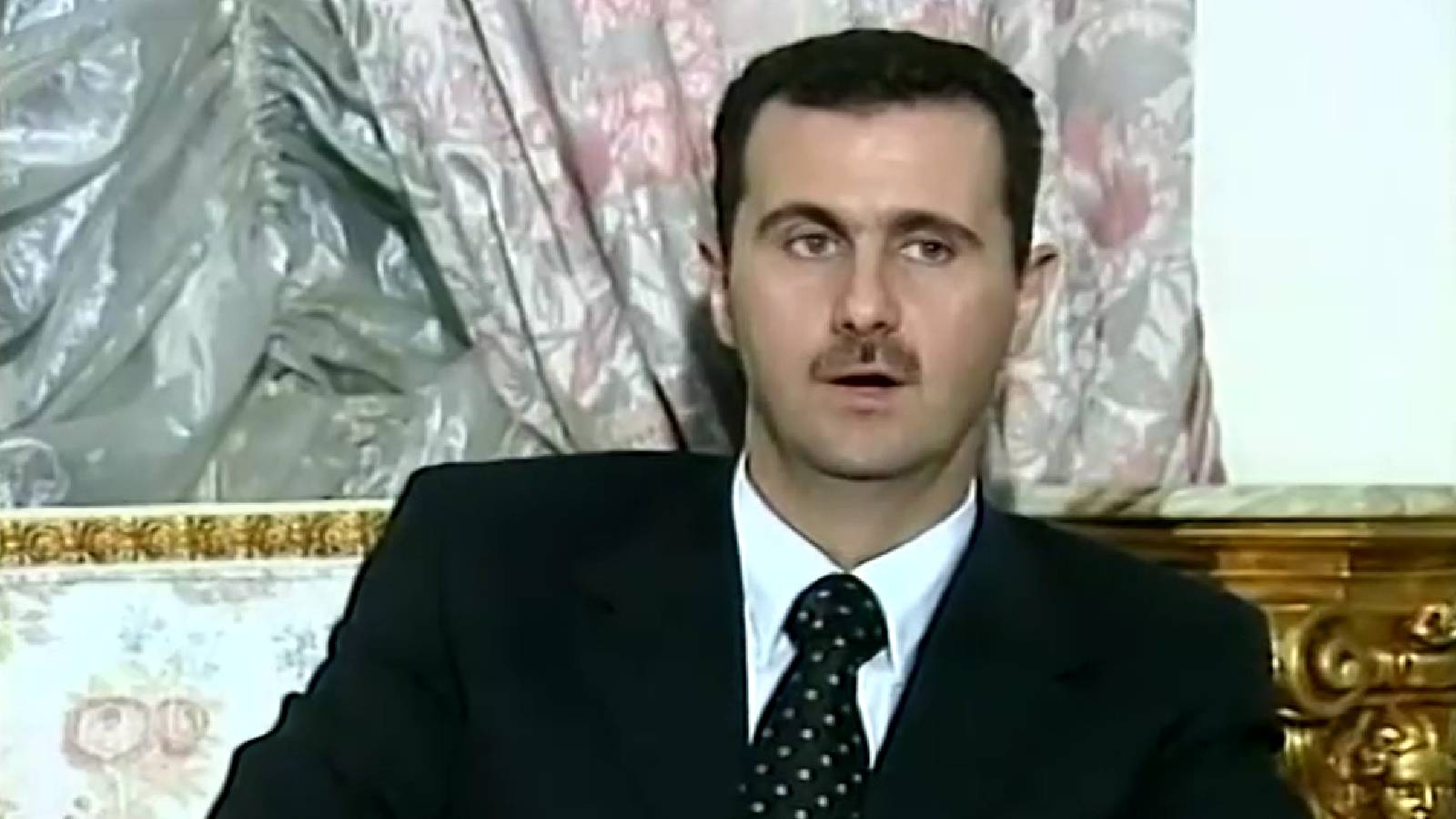


Syrian President Hafez al-Assad died in Damascus at the age of 69. The parliament almost immediately amended the constitution to allow his then 34-year-old son Bashar to succeed him.
Even though he was never meant to be president of Syria, the nation was hopeful about its young successor but, instead it witnessed the downfall none was really ready for.
The making of Bashar al-Assad
In March 2011, people in the southern city of Daraa took to the streets to object to what they called systemic corruption within the Syrian government, marching upon the headquarters of Assad's Baath Party.
Assad, fighting a then 10 months of pro-democracy protests, greeted thousands of rapturous supporters in a Damascus square in January 2012, only a day after breaking a six-month public silence.
Then UN peace envoy and former UN Secretary-General Kofi Annan travelled to Damascus in July 2012 to hold peace talks with Assad.The United Nations said in March 2013 that the number of refugees fleeing Syria has then reached a million.
An alleged chemical attack in the then rebel-held Damascus suburb of Eastern Ghouta killed over 200 people in August 2013, with activists holding the government responsible.Assad visited in December 2014 a district on the outskirts of Damascus and thanked soldiers fighting "in the face of terrorism", his office then said on its Twitter account.
A thank you note to president Putin
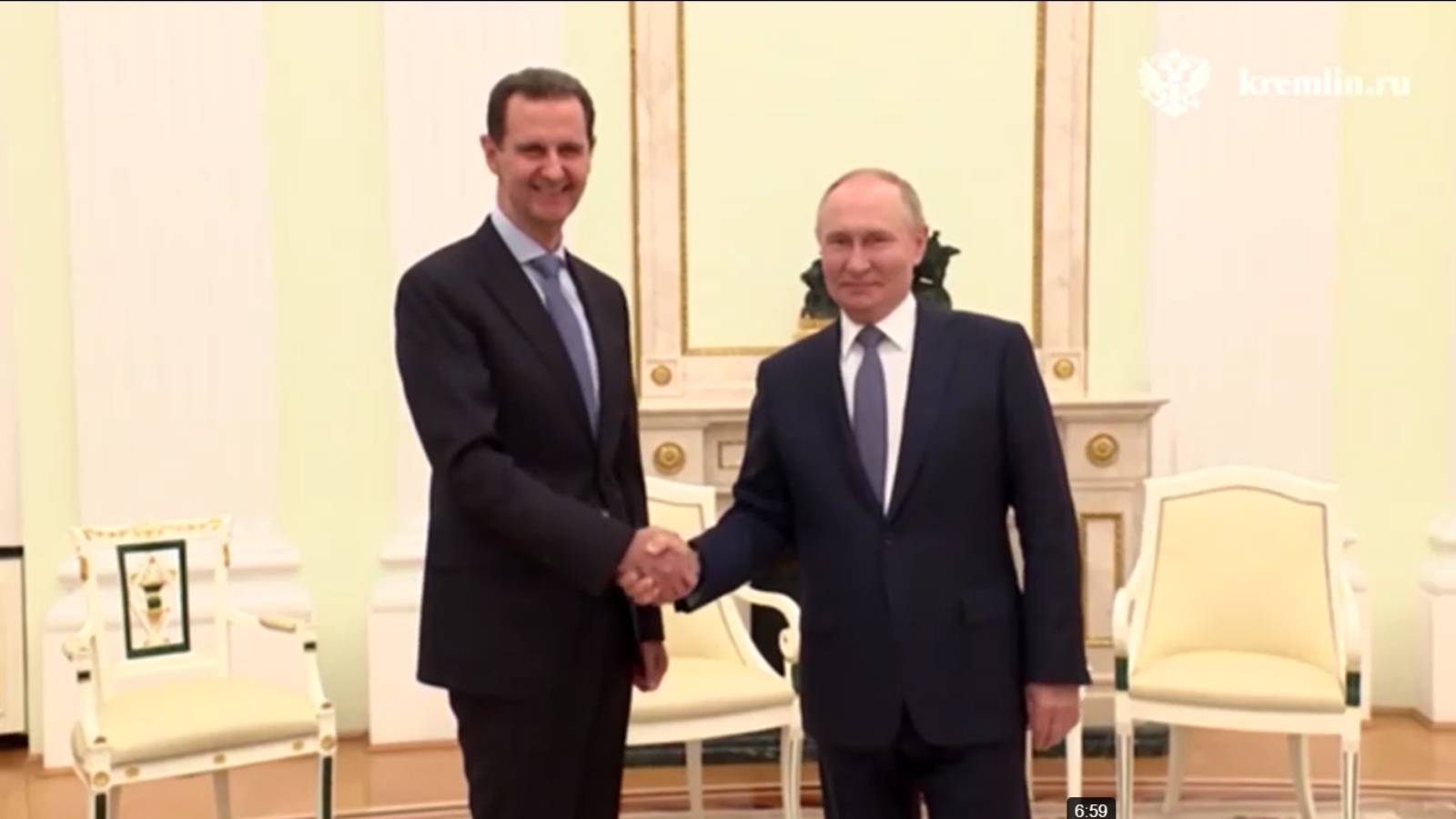
In October 2015, Russian forces launched assaults on Islamic State targets in Syria. Then Assad unexpectedly flew to Moscow to thank Russia's President Vladimir Putin for the air strikes, "Thank you, Mr. President. First of all, I would like to thank you and the state of Russia and the Russian officials and of course the Russian people, for their support of the Syrian people," he said.
Even as footage emerged from devastated cities such as Aleppo and Eastern Ghouta, Assad maintained his grip on power.
In 2017, when asked whether Syria could exist without an Assad in power, he insisted that his family did not "own" the country.
The fourth time
Four years later, he won a fourth presidential term with 95% of the vote in an election widely criticised by Western governments as neither free nor fair.
Assad inspected in March 2018 his troops in eastern Ghouta in a marked departure from his usual media appearances.
Assad said the Arab League summit was a "historic opportunity" to address crises across the region, during his speech at the bloc's summit in Jeddah in May 2023. It then marked the first time Assad addressed the bloc since Syria was suspended from the Arab League in 2011 following his crackdown on protests against him within Syria.
Anti government slogans echoed
Demonstrators filled the streets of the southern Syrian city of Sweida in September 2023, as anti-government protests swelled. Criticism of Assad had then been growing in Sweida since demonstrations began the previous month over the lifting of fuel subsidies.
A man was killed by gunshot sustained during a protest in Sweida on February 28, 2024, a medical source and two local monitors said. Video footage showed what local media reported was the moment the 52-year-old man was shot.
Syrian state news agency reported in December 2024 that Assad remained in the capital city Damascus, as rebel forces seized land across the country. Assad held a public engagement in the city on December 1, 2024 when he met Iranian Foreign Minister Abbas Araqchi to discuss the crisis.
The flight to Russia
Assad said on December 16, 2024 he was evacuated to Russia from the Hmeimim base in Syria on the evening of Dec. 8 as it came under drone attacks, after leaving Damascus that morning with opposition fighters closing in.
The fall and the death sentence
A Syrian court sentenced ousted leader Bashar al-Assad to death on Tuesday (August 11) after a trial in absentia, convicting him of crimes including killings, torture, and arbitrary arrest during the country's nearly 14-year war.
It was the first conviction against Assad, who was ousted in a rebel offensive in December 2024 that ended decades of his family's iron-fisted rule over Syria, and the brutal war that killed hundreds of thousands of Syrians.
Assad fled the capital Damascus as rebel fighters approached nearly two years ago, and is currently in Moscow.
In a trial of former government officials on Tuesday, a judge handed down a death sentence to Assad over the crimes of "premeditated and intentional murder of more than one person and of children, torture, arbitrary arrest and crimes against humanity."
Atef Najib, a security official under Assad, was also sentenced to death.
(With agency inputs from Reuters)