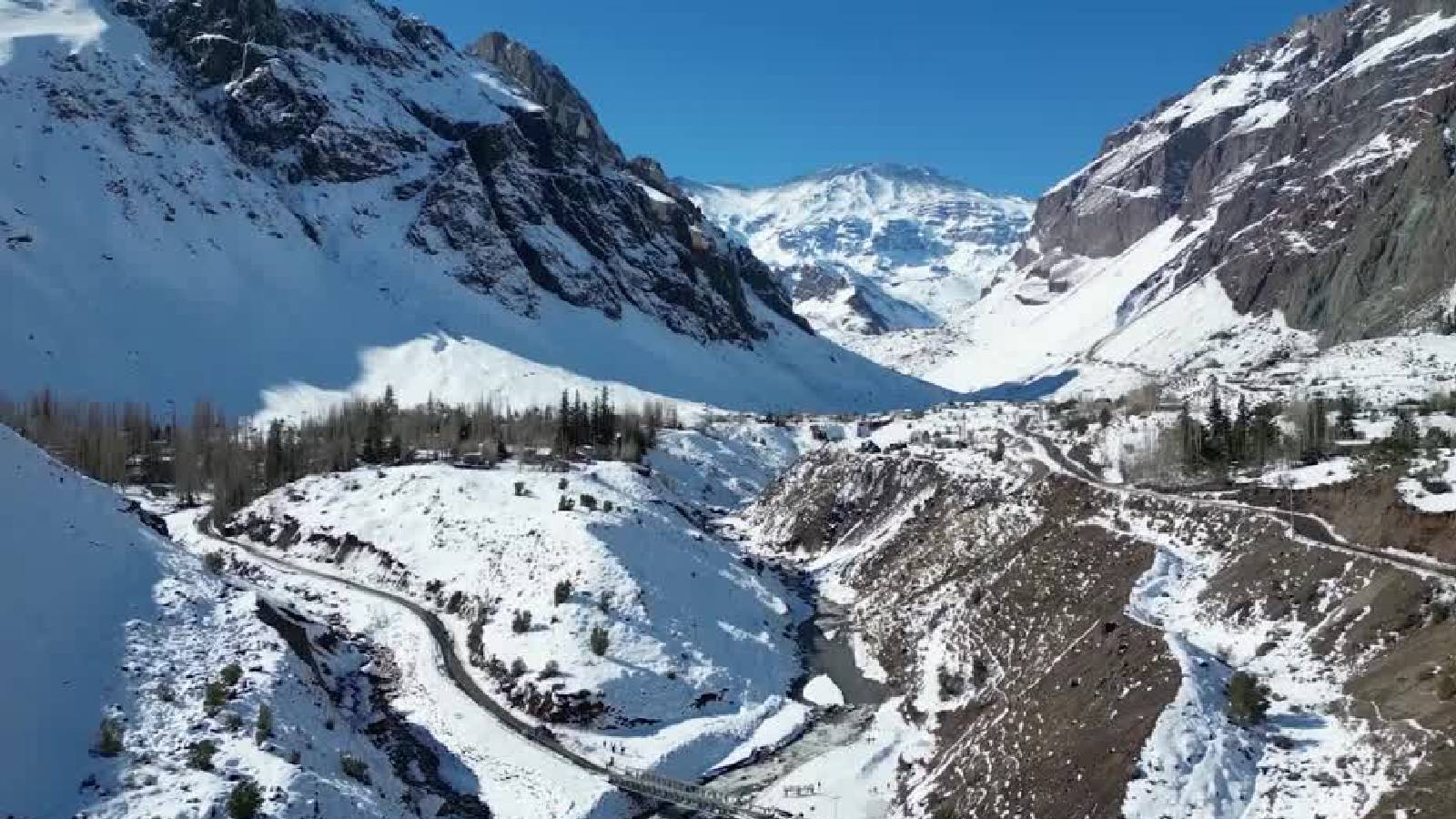


Chilean glaciologists and geologists warn that accelerating glacier retreat in the Andes could increase the risk of sudden floods, landslides, and avalanches, highlighting vulnerabilities similar to those exposed by recent disasters in the Himalayas.
Felipe Ugalde, a geologist and University of Chile professor, said rising temperatures are making glaciers increasingly unstable and could contribute to the formation or sudden drainage of glacial lakes, known as glacial lake outburst floods (GLOFs).
“The Andean region, from Venezuela to Tierra del Fuego, is truly not immune to what is happening globally,” Ugalde said, adding that researchers are seeking to determine whether retreating glaciers disappear gradually or trigger dangerous processes along the way.
University of Chile glaciologist Andres Rivera said warmer atmospheric temperatures increase melting within glaciers, leading to greater cracking and movement that can trigger landslides, avalanches or large ice detachments, particularly on steep slopes.
Chile has experienced major glacier-related events in the past. In 1989, the collapse of the moraine dam at Laguna del Cerro Largo released about 229 million cubic meters of water and triggered a large debris flow. Lake Cachet II in Patagonia has repeatedly drained through subglacial tunnels since 2008, while in 2020 Lake Greve released nearly 4 billion cubic meters of water through the Pio XI Glacier.
The Chamoli disaster in India in 2021, last year's event in Blatten, Switzerland, and the recent disaster in Nepal have gained renewed attention and warnings for countries with vulnerable mountain environments.
Jose Araos, a geographer and University of Chile professor, said glacier retreat can set off a chain of processes in which reduced pressure on mountain valleys contributes to slope instability, while seismic activity can further increase the risk.
A study published last year in the Journal of South American Earth Sciences identified glaciers exposed to different risks, including ice avalanches, steep overhanging formations and changes in glacial lakes.
Others could be affected by volcanic eruptions in Chile, which lies along the Pacific "Ring of Fire," a region marked by frequent earthquakes and volcanic activity.
Researchers are calling for stronger monitoring of high-mountain areas, using satellite observations, drones, meteorological stations and hydrodynamic models to identify vulnerable glaciers and glacial lakes and improve early-warning systems.