

Dhaka: Bangladesh, which once came close to eliminating measles, is facing its worst outbreak on record, with 999 suspected and confirmed measles-related deaths reported since March as hospitals struggle with overcrowding, shortages and a continuing influx of sick children.
The prolonged outbreak, despite a nationwide emergency vaccination campaign launched in April, follows disruption to routine immunisation in 2024 and 2025, experts said, when the country was going through a political crisis following a deadly uprising against then Prime Minister Sheikh Hasina.
Bangladesh is currently experiencing the world's biggest measles outbreak, according to a list on the United States Centers for Disease Control and Prevention website.
Health officials and experts said missed vaccinations and vaccine supply problems as a result of the political upheaval had left children vulnerable, particularly infants under nine months who are too young to get routine vaccinations, helping fuel transmission across age groups.
Mohammad Ripon, a factory worker, said his eight-month-old daughter developed a rash and other measles-like symptoms days after being discharged from hospital, forcing the family to seek treatment at multiple facilities before turning to a dedicated measles hospital for answers.
"We are just hopping around from one hospital to another," Ripon said. "We are not getting the correct information at all."
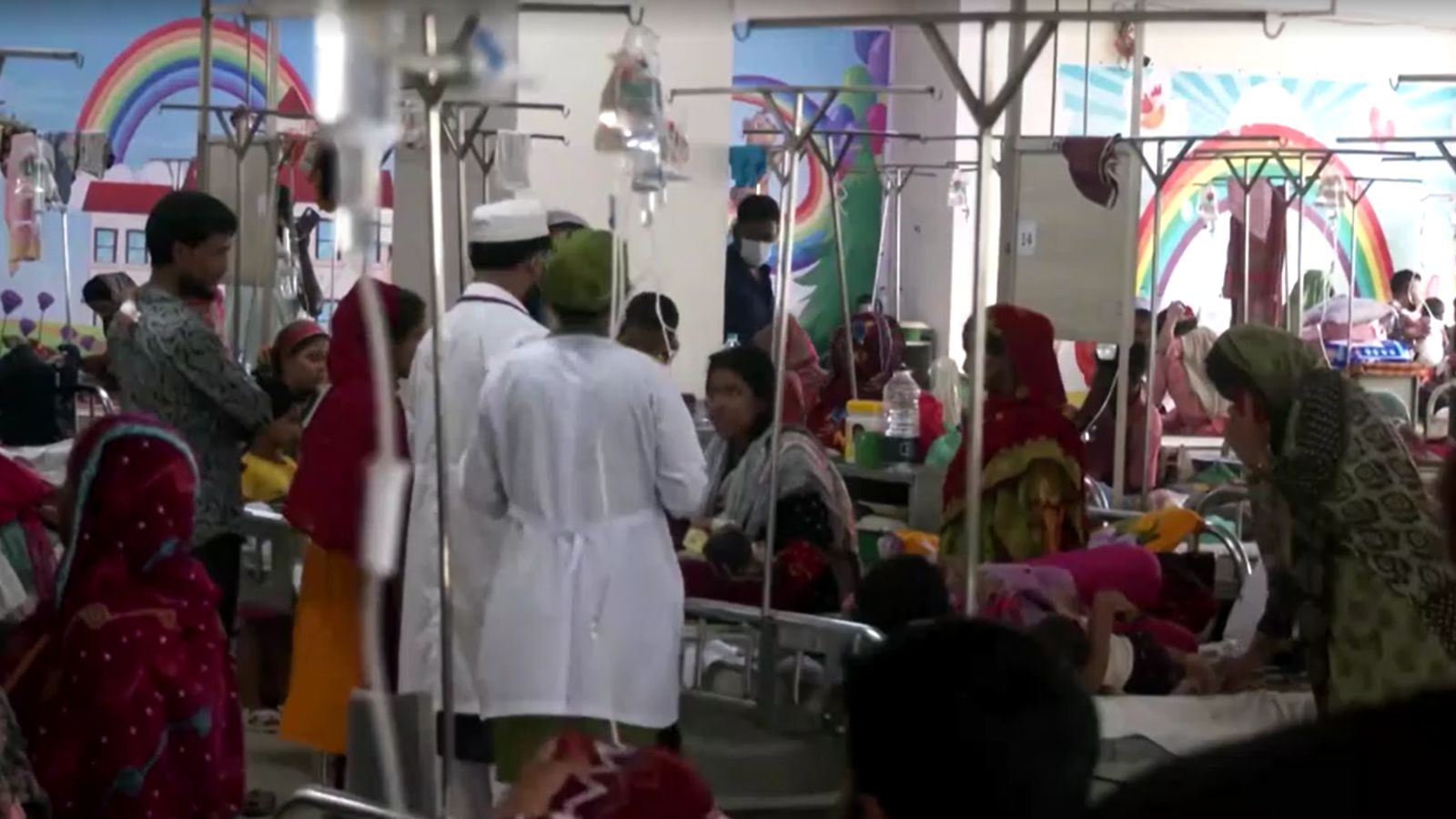
The outbreak has also placed additional pressure on hospitals, which are treating growing numbers of dengue patients. More than 45,000 people have been admitted to hospital for dengue this year, according to health ministry data. On Tuesday, dengue deaths rose to nine, while admissions climbed to 1,571, both daily highs for the year.
The situation was evident at Mugda Medical College Hospital in Dhaka, where beds have run out and patients are being treated on mattresses on the floor. Masuda Begum, a dengue patient, was turned away from a hospital in Munshiganj before travelling to Dhaka after doctors warned her condition was life-threatening.
Her daughter-in-law, Roksana Akter, said they were asked to sign a disclaimer releasing the hospital of responsibility before being referred onward.
Public health specialist Abu Jamil Faisel said the dual crises reflect a systemic breakdown that goes beyond government alone.
"It's a kind of a failure of all of us — it's a collective failure," Faisel said. "The private sector has not played their role. The CSOs, NGOs, the media — they have not played their role as well."