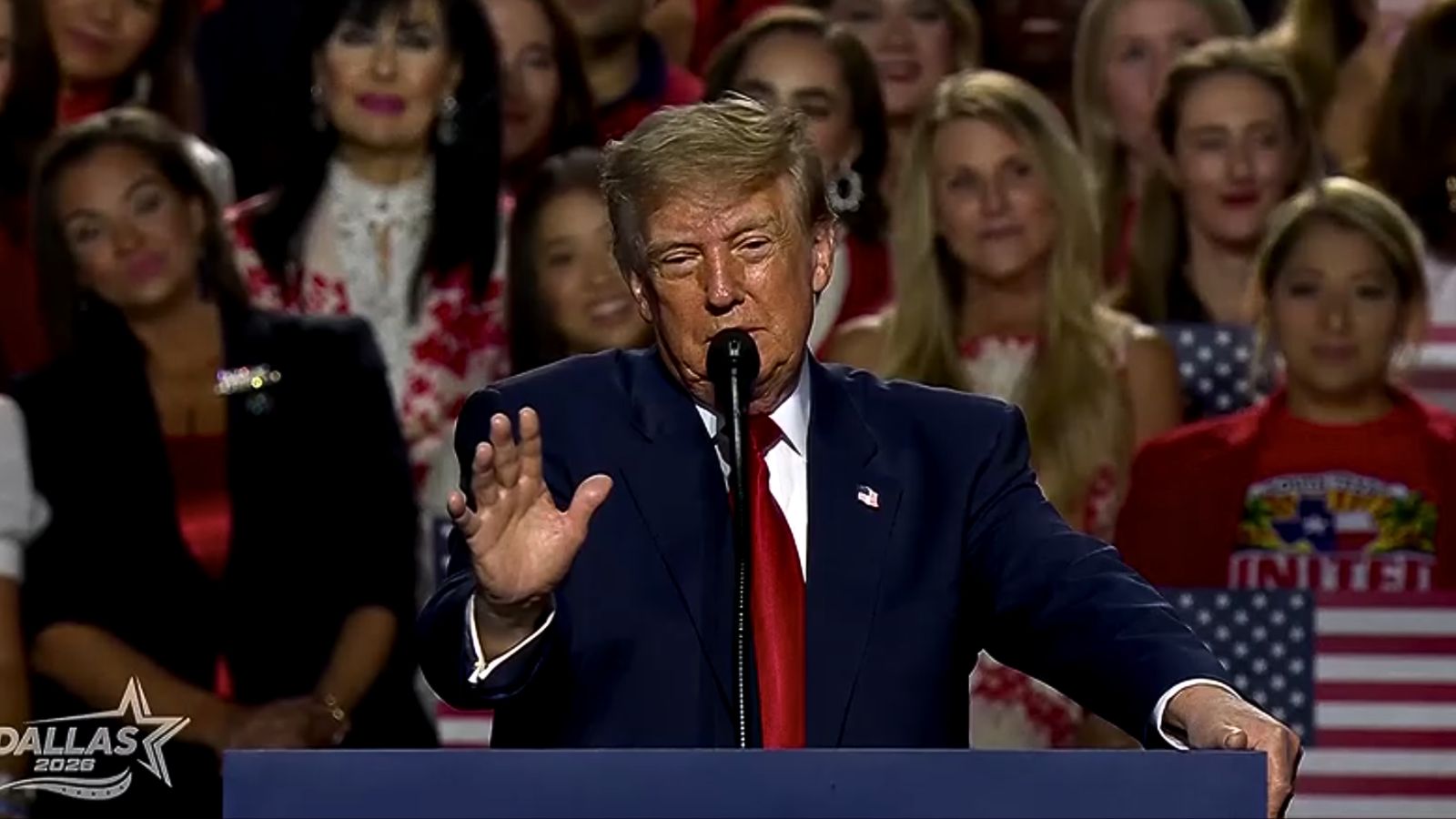


Doonbeg, Ireland: Dismissing recent calls from some AI industry leaders to slow down the pace of Artificial Intelligence (AI) development, US President Donald Trump on Sunday said the United States is leading China in AI and that ‘negative forces’ should not be raising such concerns.
Speaking to reporters during his visit to Ireland, Trump said safeguards could be considered but questioned the need to call for a slowdown in AI development.
"We're leading China in AI; we're the most sophisticated country in the world. And frankly, I want to keep it that way because whoever wins AI, wins," he said.
"We could put guardrails. We can do this and that. But I think you have a lot of very negative forces that are bringing it up that shouldn't be bringing it up, and they're bringing up things that won't happen," the US President added.
Trump's remarks come amid discussions among leading artificial intelligence developers over whether the industry should coordinate efforts to slow technological progress and address growing safety concerns as AI systems become more capable.
OpenAI Chief Executive Officer Sam Altman, in an interview with Fortune on Friday, indicated that major AI laboratory heads could eventually establish a collaborative framework focused on risk mitigation.
Addressing Fortune Editor-in-Chief Alyson Shontell on why major laboratory heads do not meet directly to establish risk-mitigation measures, Altman said, "I think that will happen."
Elaborating on the discussions, Altman said, "I’m not going to pre-announce private discussions that I think should be at some point shared as a group."
"But yeah, I think I think that will happen," he added.
The discussion gained further momentum after Anthropic CEO Dario Amodei announced an initiative providing permanent, employee-level access for independent evaluators as part of a wider effort to slow AI development.
Highlighting the need for industry-wide and international coordination, Amodei said, "We must slow the pace at which we improve the capabilities of AI models."
Altman, meanwhile, stressed the responsibility of AI companies to prioritise safety over commercial considerations.
"We all have a tremendous amount of responsibility, and cannot let egos or incentives for profit or anything else get in the way," Altman said.
While discussions over a potential formal industry moratorium remain undefined, regulatory hurdles such as federal antitrust statutes pose structural obstacles to direct coordination among commercial AI companies.