

Australia is tightening rules for temporary migrants as the government seeks to bring down net overseas migration and gain greater control over who enters, stays and leaves the country.
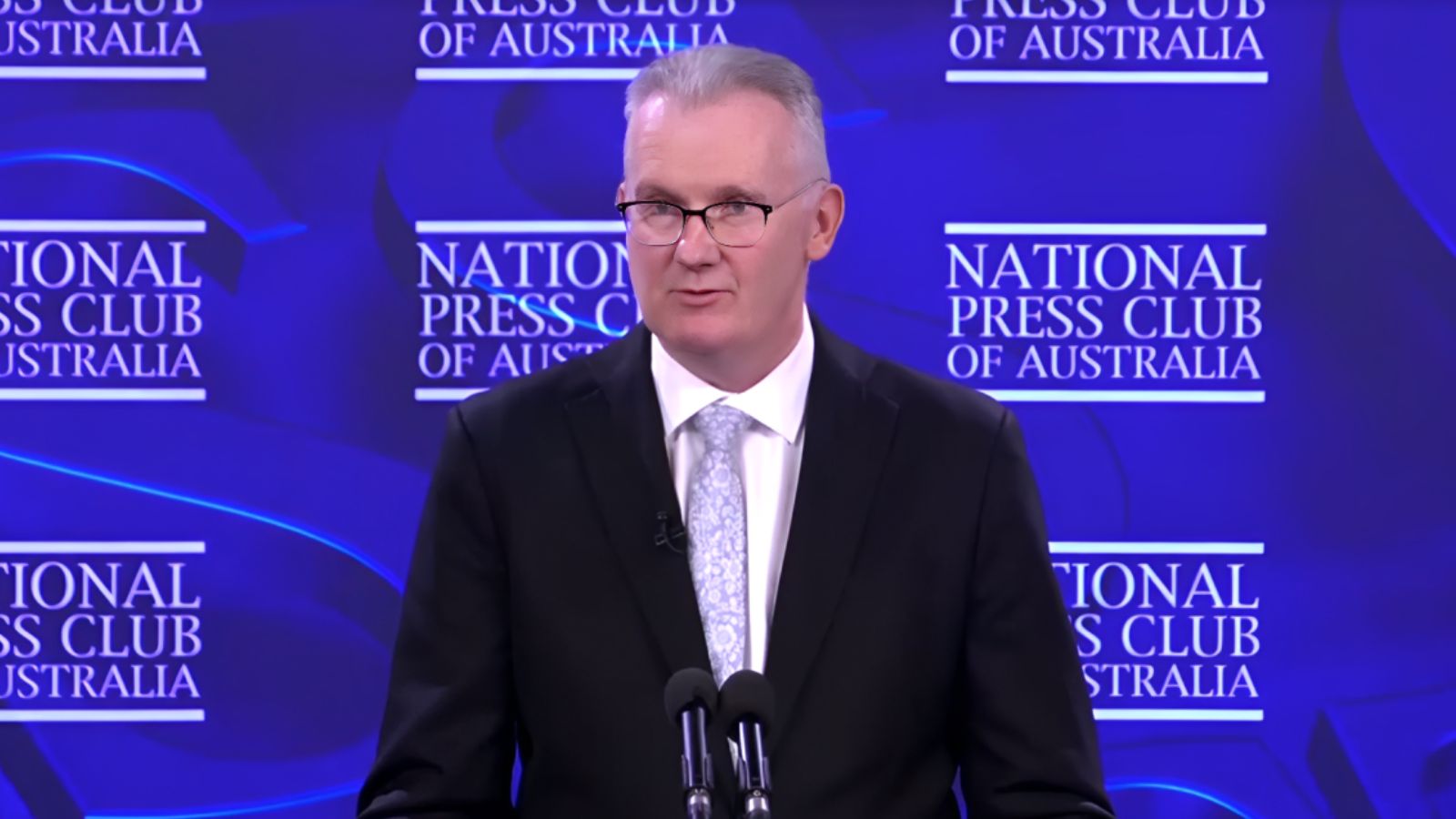
‘The work of managing the migration program: who arrives, who stays, who leaves' was the title of the speech delivered by Australian Home Affairs Minister Tony Burke.
He announced a package of changes on September 17, 2026, targeting international students, working holidaymakers, visitor-visa holders, visa overstayers and migration agents.
Accordingly, the government wants net overseas migration to fall to 225,000 in 2027-28, compared with about 292,000 in the year to March 2026.
Also Read:
Why is Australia changing its migration rules?
Australia experienced a sharp increase in migration after its borders reopened following the COVID-19 pandemic. Net overseas migration reached a record level in 2023 before beginning to decline.
The government now says migration needs to be better aligned with Australia's economic and workforce requirements. Its new measures are aimed particularly at temporary visa pathways that allow people to extend their stay, change visa categories or bring family members to Australia.
The issue has also become politically significant, with immigration and the cost of living ranking among Australians' major concerns.
The announcement comes shortly after the right-wing One Nation party proposed substantially larger reductions in temporary migration. Burke has rejected the suggestion that the government's measures are being driven by One Nation.
What changes for international students?
One of the biggest changes concerns family members of international students.
The government says it will restrict secondary applicants on most student visas, meaning the vast majority of international students will no longer be able to bring partners or children to Australia under the student-visa pathway.
There are exceptions, including arrangements for some students from Pacific and Southeast Asian countries and certain higher-level students. PhD students, for example, have been identified as having special arrangements.
The government is also targeting what it calls ‘visa hopping’ situations where people use a student visa as a pathway to repeatedly change to another visa or extend their stay.
International students will face tighter conditions around changing or extending their studies, with the government seeking to prevent the student-visa system from being used primarily as a way of remaining in Australia.
Why does this matter?
International education is a major part of Australia's economy. The sector was worth about A$53.6 billion in 2025, according to recent reporting, making it one of Australia's fourth-biggest export industries.
The move was followed even after such great turnover in the economy. Student visa application fees have also increased significantly in the past four years.
"It is chipping away the confidence in what has been a great national asset for this country, international education," Luke Sheehy, CEO of Universities Australia said in ABC radio interview regarding the subject.
Universities and education groups have therefore warned that tighter family restrictions could make Australia less attractive to some international students
At the same time, the government says it wants to maintain international education while ensuring the visa system is being used for genuine study.
What is the "No Further Stay" rule?
Visitor visas will also be affected in the new regime imposed.
The country plans to put a ‘No Further Stay’ condition on all visitor visas. This means visitors generally will not be able to use a visitor visa as a route to remain in Australia by applying for another visa category while they are already in the country.
The government says the measure is intended to ensure visitor visas are used by genuine short-term visitors rather than as a pathway to longer-term migration.
The government is also increasing enforcement against people who remain in Australia without a valid visa.
Will skilled migrants still be welcomed?
The reforms do not amount to an end to skilled migration.
Instead, the government says it will prioritise skilled migration in sectors where Australia has identified workforce needs.
These include: Healthcare, Construction, Education, Agriculture, Social Work, Engineering and many more.
The aim is to make the migration programme more closely aligned with Australia's labour-market requirements.
What does this mean for Indians?
The changes are particularly relevant to Indian students and workers because India is one of Australia's major sources of international students.
For an Indian student planning to study in Australia, the most significant change is the restriction on bringing a partner or children under the student-visa pathway, subject to exemptions.
Indian applicants seeking to extend a working holiday stay, where eligible, could also be affected by the new system. Visitor-visa holders will face the new ‘No Further Stay’ condition.
What does the public say?
The new policy has also received criticism, with many stating the move could affect the overall nation adversely in many sectors.
Just like Sheehy, many other prominent leaders have also raised concerns regarding the issue.
The National Farmers Federation’s Chief Executive, Mike Guerin, said the policy affecting the temporary migrants will affect the farmers, with them already struggling to find workers during harvest season.
“We will see a lift in the price of food. We will see emptier supermarkets and while it’s yet to play out directly for consumers, for people in the cities, it’s very close. We will not be able to finish the harvest this year, before Christmas,” said Guerin, as quoted by the Guardian.
Mike Guerin, as quoted by the Guardian.
Australian Restaurant and Cafe Association chief, Wes Lambert, also warned the hospitality sector would be affected due to the shortages in staff to fill up chef and other assistant roles.
Pakistan-born Australia’s first Muslim Senator Mehreen Faruqi also criticised the move, blaming One Nation’s leader Pauline Hanson, citing that the latter is being controlled by billionaire allies in order to bring in such laws targeting immigrants. She also stated the Labour party’s new move as a “soulless mimicry”.
Some critics also compared the latest move with that of US President Donald Trump’s hardcore immigration policies, which was completely denied by Burke, stating the country’s imposition is less stronger than those of other countries.
While many others like the Australian Chamber of Commerce and Industry and the Minerals Council of Australia, welcomed the reforms praising the government for enforcing such policies which could boost public confidence.
(This news was compiled by Aaron Philip Keechireth)