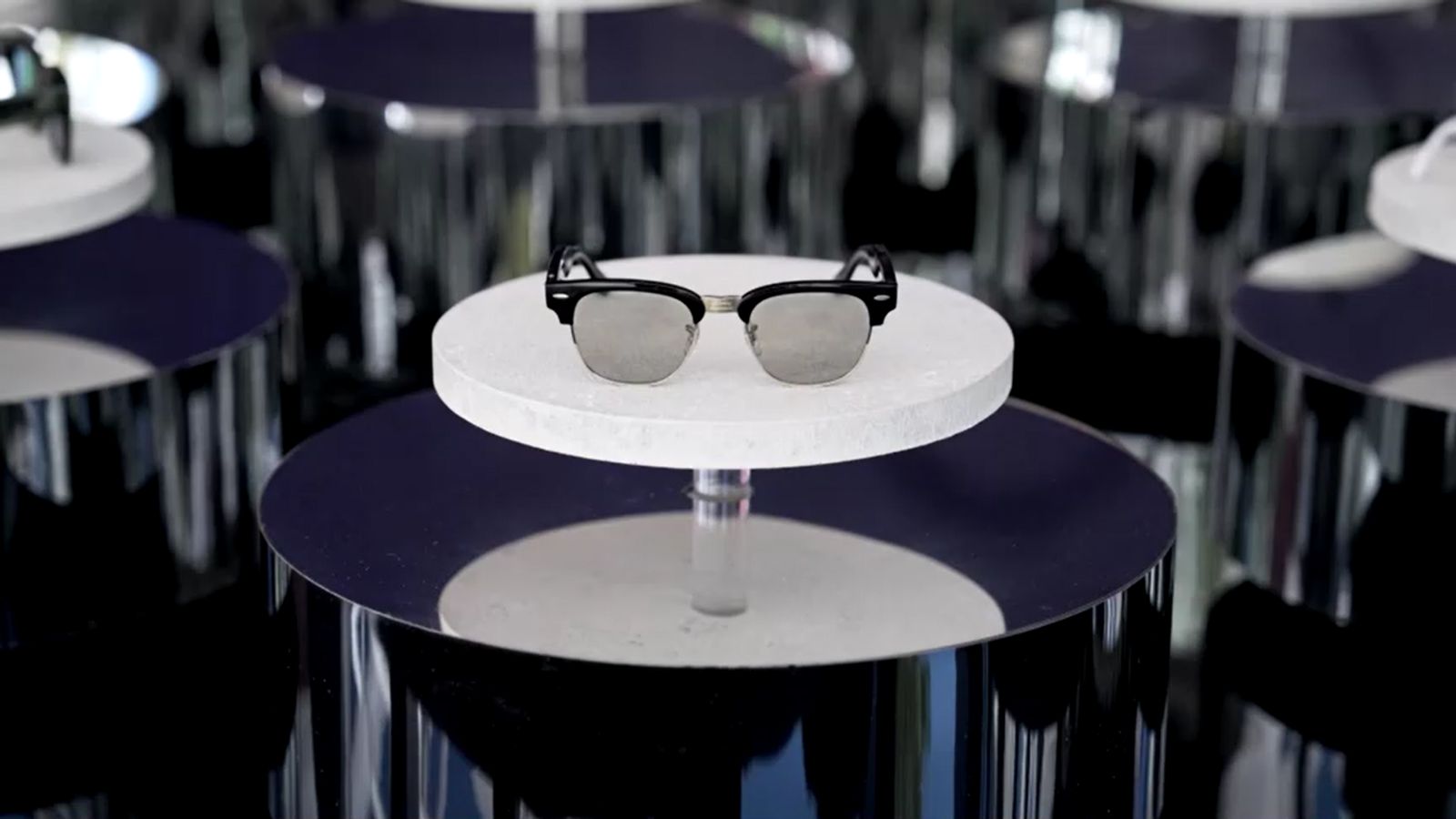


Menlo Park, California: Meta unveiled a pair of camera-free smart glasses for daily use on Wednesday, designed to ease growing privacy concerns around AI devices that can record videos and pictures of people without consent.
The new glasses, called Ray-Ban Meta Audio, will still record audio and offer no clear signal to bystanders that recording is underway, unlike its smart glasses with a camera, which flash a light while filming. Critics say dropping the cameras alone may not be enough to ease privacy concerns.
The Meta Audio glasses are the latest made through the company's EssilorLuxottica tie-up and will ship from October 13 at a starting price of $349, Meta announced at its Connect conference in Menlo Park, California. That is $100 cheaper than the latest version of its Ray-Ban glasses, which continue to have cameras and will come in two new styles, the iconic Aviator and cat-eyed Zena.
Pairing its technology with Luxottica's trendy designs has allowed Meta to take an early lead in the AI device race, where it faces competition from a range of new form factors including pendants, pins and recorders that magnetically attach to phones.
But it has also made the company the focal point of growing concerns about devices that work better the more they see and hear, prompting privacy lawsuits and bans at some UK venues. The outcome of the privacy debate could shape a market that technology firms, including Meta, see as the next major computing platform and a potential replacement for smartphones.
Losing the cameras may also blunt demand as capturing photos and videos ranks among the most popular features for smart glasses.
Meta, however, said privacy was not the only reason for the audio-only design and that a market exists for smart glasses without cameras.
Losing the cameras has let Meta build its thinnest pair yet, weighing as much as a golf ball, and opened up new designs such as the browline Clubmaster and the squared, retro Burbank. It also stretched battery life to 12 hours on a single charge, compared with nine hours on the latest, third-generation Ray-Ban glasses.