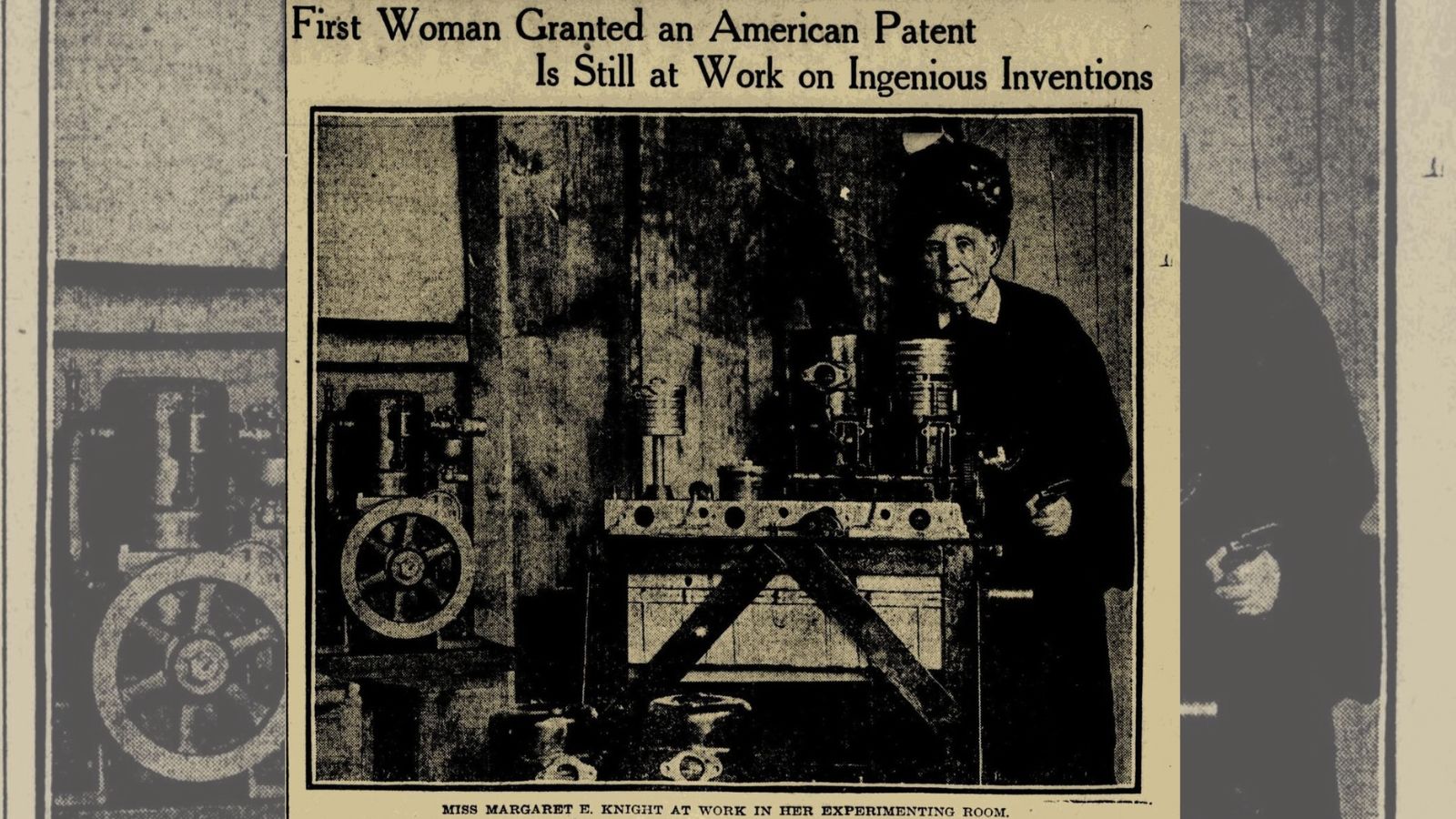


Imagine spending years working on an invention, only to discover that someone else has claimed it as their own. Then imagine having to fight in court to defend your work and finally secure a patent in your own name. That is the story of Margaret Eloise Knight.
Knight was an inventor and engineer who fought to prevent someone else from taking credit for her work.
The curious pair of eyes fascinated by machines
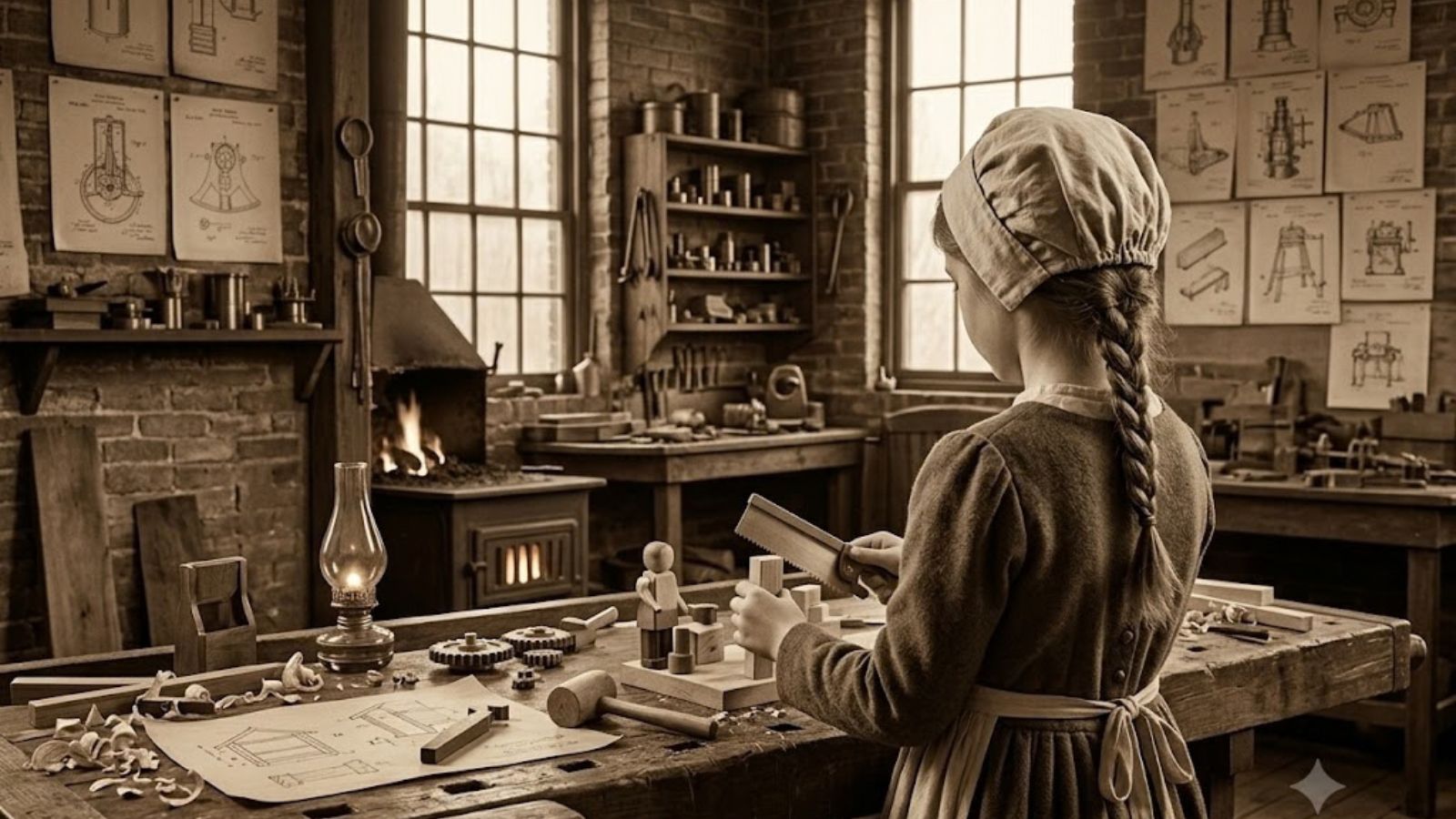
Margaret Knight was born on February 14, 1838, in York, Maine, in the United States. Mattie, as her family and friends called her, preferred woodworking tools to toys from a very young age. As a child, she was known for making kites and sledges. She attended school until the age of 12. After her father died, her family moved to Manchester, New Hampshire, where she began working in the cotton mills.
During the mid-19th century, factories were expanding, and Knight grew fascinated by their gears and levers. When she was 12, she witnessed an accident in which a shuttle flew out of a loom and severely injured a factory worker.
While others accepted such accidents as part of factory life, Knight designed a safety device to prevent the shuttle from flying out. The device was later adopted by other mills, although she did not patent it.
Eventually, poor health forced Knight to leave the mills. She then took up various jobs, including daguerreotype photography, home repair, furniture upholstery and engraving.
A persevering inventor
Years later, Knight moved to Massachusetts and began working at the Columbia Paper Bag Company. By then, paper bags were mass-produced in factories. However, machine-made bags had pointed bottoms, which meant they could not stand upright and were less convenient for carrying everyday essentials. Producing flat-bottomed bags was labour-intensive. They had to be folded by hand, making the process slow and expensive.
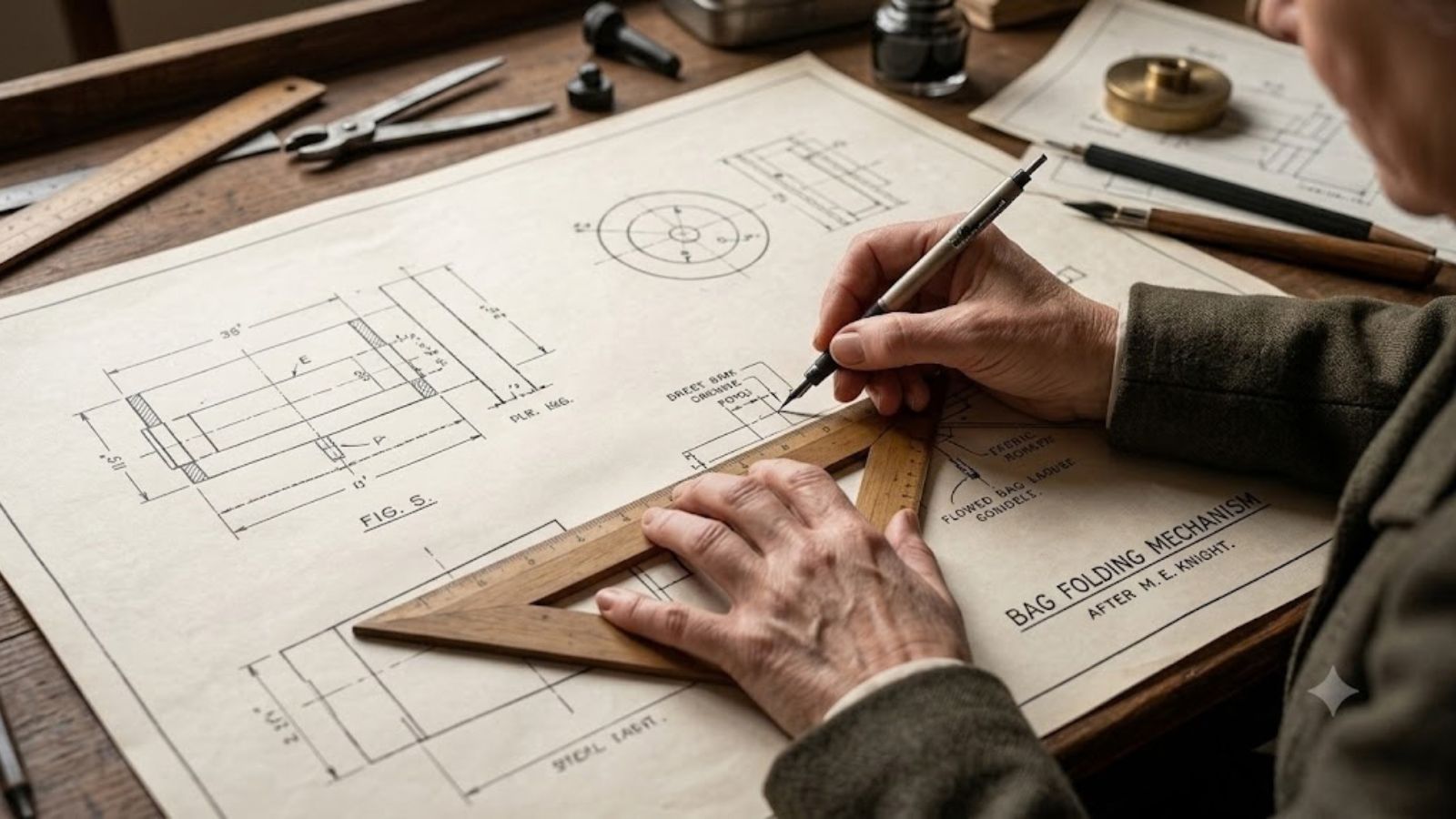
Knight saw an opportunity to solve this problem. She spent months drawing designs, making wooden prototypes and experimenting with different mechanisms. The main challenge was to make a machine that could perform multiple tasks. Eventually, she built a successful wooden prototype.
To obtain a patent, she needed a working metal model of the machine. While the machine was in production, another machinist, Charles Annan, copied her design and applied for a patent in his own name.
When Knight applied for her patent, she discovered that Annan had already filed a claim for the same invention. She decided to challenge it, and the dispute went to court.
Annan argued that a woman could not understand the mechanical complexities of the machine. Knight countered his claim by producing her drawings, prototypes and notes, along with testimony from people who had seen her working on the invention. She was not just fighting for a patent; she was also challenging the assumption that women could not make significant contributions to engineering and technology.
In 1871, Knight was awarded the patent for her paper-bag machine. She was also reportedly honoured by Queen Victoria of the United Kingdom that year for the invention.
A spark to the flame
Knight went on to co-found the Eastern Paper Bag Company, helping make the flat-bottomed paper bag a part of everyday life. But her story did not end with paper bags. She continued to invent.
In the 1880s, Knight developed several domestic inventions. She patented a dress and skirt shield in 1883, a clasp for robes in 1884 and a cooking spit in 1885. In 1894, she received patents for a numbering mechanism and a window frame and sash.
During the 1880s and 1890s, Knight also worked on machines used in shoemaking. In the early 1900s, she developed components for rotary engines and motors, some of which were patented after her death.
In total, Knight was credited with more than 25 patents, in addition to inventions for which she did not seek patents.
So, the next time you pick up a paper bag, remember Margaret Knight. She did not just invent a machine that changed how paper bags were made; she also challenged the belief that only men could make significant contributions to engineering and innovation.