


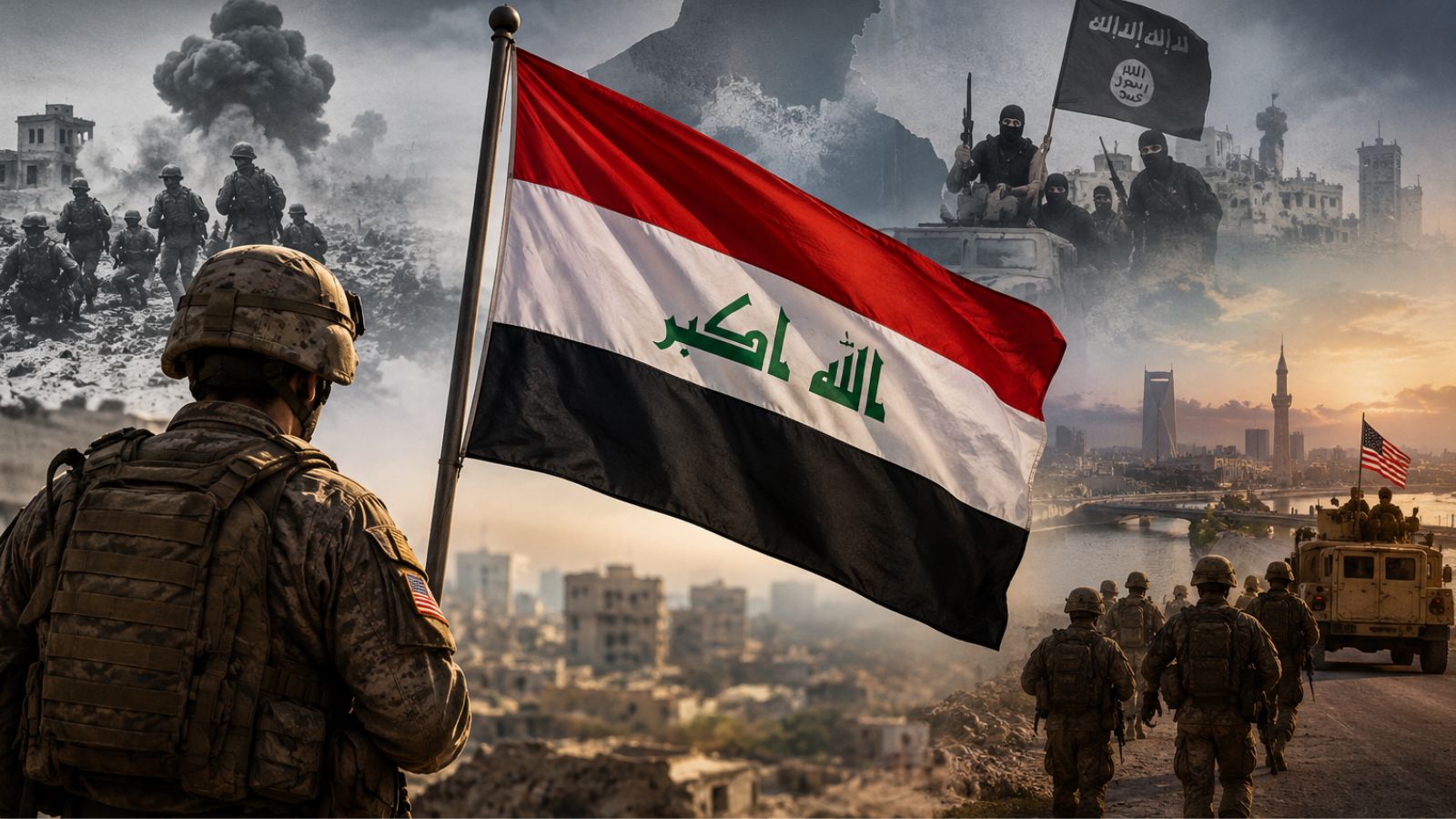


The last US troops have left Iraq, ending more than two decades of American military involvement in the country. The Pentagon said the US and its coalition partners formally concluded Operation Inherent Resolve on Wednesday, September 30, 2026, as the last forces and equipment left Erbil Air Base in the Kurdish north. The withdrawal ends the US-led coalition's military mission, although Washington will keep providing "targeted training and intelligence support," the Pentagon said. It is the second time the US has withdrawn its military forces from Iraq.
Why did the US invade Iraq?
The US-led invasion began on March 20, 2003, with American and allied forces entering Iraq to topple Saddam Hussein. The Bush Presidential Library says Iraq had defied weapons inspections required after the 1991 Gulf War, and the CIA initially reported it was seeking weapons of mass destruction. After failing to secure a new UN Security Council resolution authorising military action, the US and allies launched the invasion. No stockpiles were found, and the library says the allegations rested on unreliable or misinterpreted intelligence.
A Defense Department study says coalition forces had defeated the Iraqi army by early May 2003, but an insurgency and years of upheaval followed. More than 4,500 US troops died there, Reuters reports, and the Iraq Body Count project says more than 200,000 Iraqi civilians were killed.
Why did the US leave in 2011?
After nearly nine years of war and occupation, US troops withdrew at the end of 2011. A 2008 security agreement had set that deadline. The US sought to keep some trainers, but talks reached an impasse over legal immunity for US troops, according to a November 2011 Senate Armed Services Committee hearing record.
Why did US troops return?
Less than three years after the US withdrawal, the security situation in Iraq changed dramatically. In 2014, Islamic State (ISIS) fighters seized large parts of the country, including about a third of Iraq, Reuters reports. Iraqi authorities then invited the US and its partners to help fight the group.
The new mission was different from the 2003 invasion: instead of occupying Iraq or removing its government, the US-led coalition supported Iraqi forces in their fight against ISIS. The Pentagon says the 12-year campaign defeated ISIS as an organised military threat in Iraq, though ‘ISIS remnants’ remain.
Why is the US leaving now?
A joint US-Iraq statement released by the State Department on September 27, 2024, set the end of the coalition's mission inside Iraq for September 2025, with support for Syria operations from Iraq continuing until September 2026. US forces left most Iraqi bases last year, AP reports. The pullout was agreed under President Joe Biden and carried out by President Donald Trump's administration, Reuters says.
The exit comes during the US-Israeli war on Iran, launched on February 28 and now nearing its seventh month, AP reports. Iran-backed militias have fired on US troops, and the US has struck militia strongholds. Iraq's Kurdish region has faced more than 1,000 drone and missile attacks during the conflict, its Peshmerga Ministry said.
What happens next?
Iraqi Prime Minister Ali al-Zaidi called the exit ‘a new phase’ defined by sovereignty and stronger institutions. The Pentagon said the transition is to an Iraqi-led security effort. But AP reports powerful Iran-aligned groups rejected disarmament or set conditions, and al-Zaidi has moved the militia disarmament deadline to June 2027. Iran and its allies hailed the withdrawal as a victory, Reuters says. Many Iraqis celebrated, though some fear a security vacuum, and Kurdish officials have voiced concern over the loss of US air defence systems.
The withdrawal closes a major chapter that began with the 2003 invasion, but it does not mean Iraq's security challenges are over. For Washington, the military mission has ended; for Baghdad, the task now is to maintain security with greater responsibility of its own.