

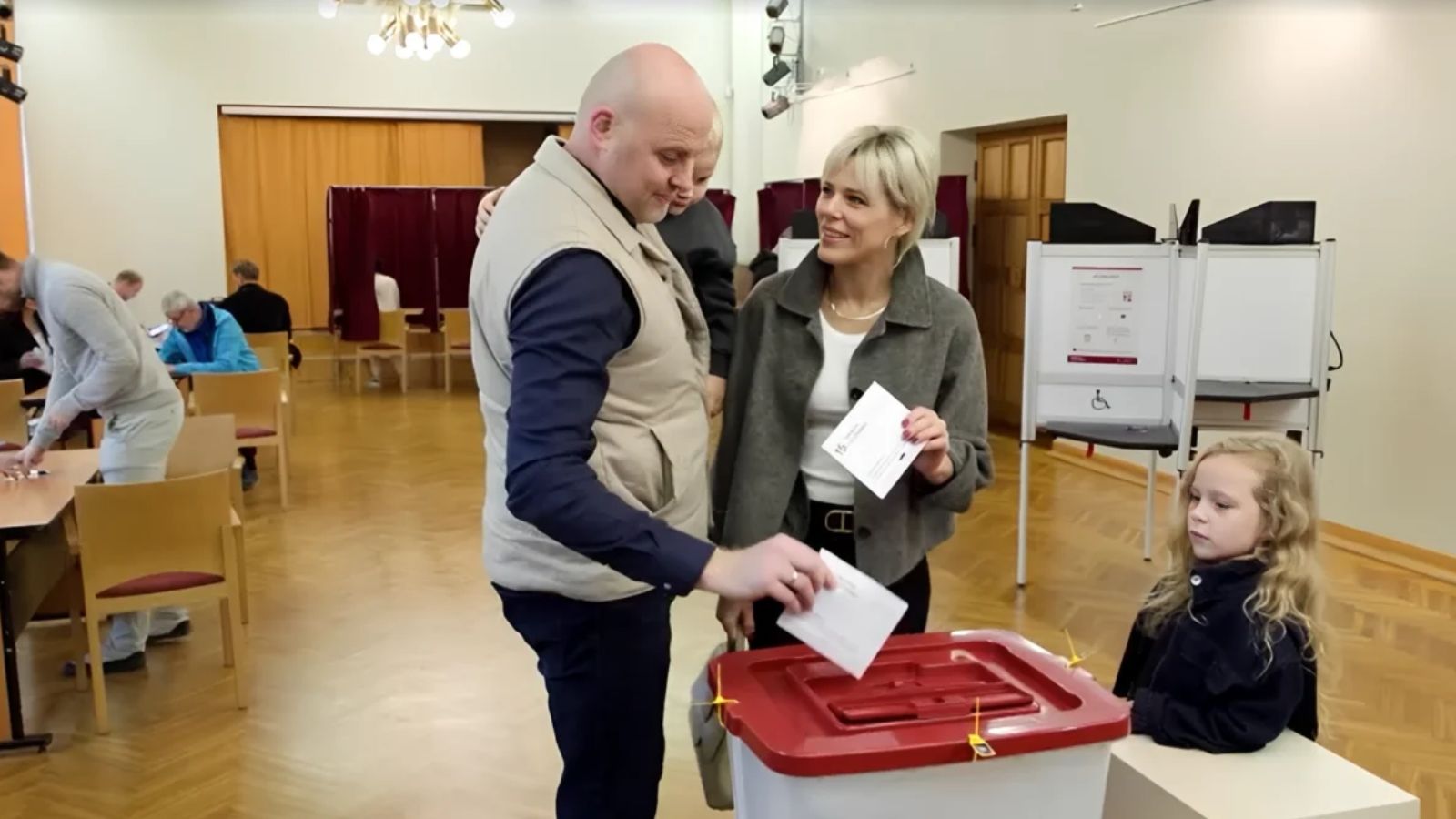


Riga, Latvia: Latvians are voting for a new parliament on Saturday as pro-Ukraine Prime Minister Andris Kulbergs seeks a full term amid growing concern about potential Russian aggression against the small republic on NATO’s eastern flank.
A political crisis in May over the handling of stray drones suspected to have come from Ukraine brought down the governing coalition, which had already been under pressure over several other issues. Parliament, or Saeima, subsequently approved a four-party coalition led by Kulbergs of the centrist United List party, which had previously been in opposition.
Latvia, like its Baltic neighbours Lithuania and Estonia, strongly supports Ukraine in its fight against Moscow’s invasion. The country borders both Russia and Moscow-allied Belarus.
Also Read:

Kulbergs, 47, is now seeking his own mandate from voters.
A multiparty coalition will almost certainly be required to govern in Latvia’s fragmented political landscape. Parties must secure at least 5 per cent of the vote to win parliamentary seats.
Nearly 1.56 million people in the country of more than 1.8 million are eligible to elect the 100 members of the single-chamber Saeima for a four-year term.
Concern over potential Russian hybrid attacks has been mounting across parts of Europe in recent months. The term refers to non-conventional hostile acts such as sabotage, cyberattacks, disinformation and an array of other methods. Latvia, along with other countries on NATO’s eastern edge, is particularly exposed.
NATO has reinforced protection of Latvian airspace for the election period, with Germany sending four Eurofighter jets to Latvia for about a week.
The Latvian State Security Service said last week that it had not detected any significant or systematic efforts by Russia or others to influence the election in favour of any party or candidate, the LETA news agency reported.
Polls are expected to close at 1700 GMT.