

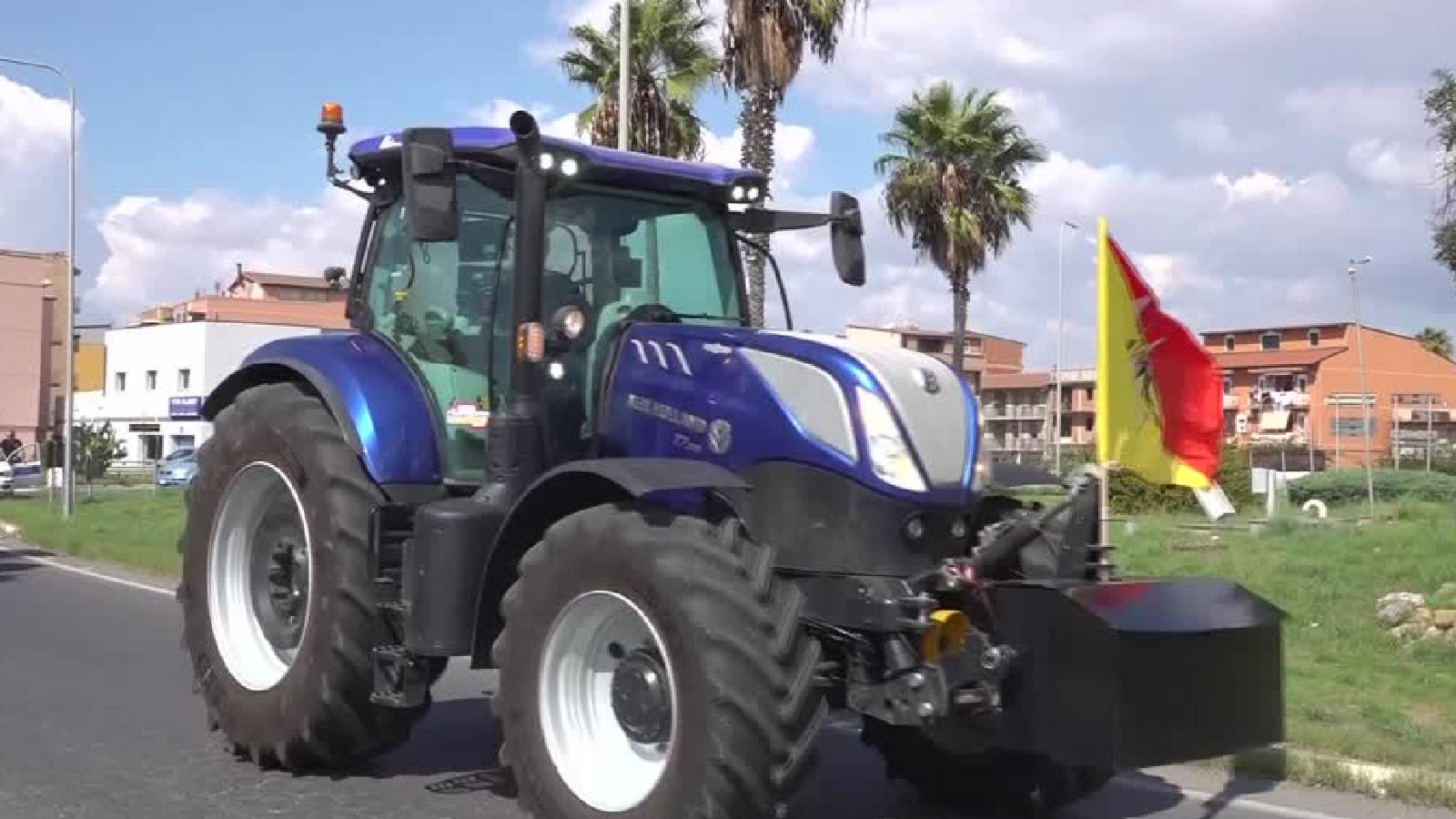


Farmers in Sicily staged a tractor protest on Saturday, saying soaring fuel costs had brought agricultural activity to a standstill just as the autumn sowing season approaches.
Tractors were stationed at a protest site in Gela, where farmers gathered to demand government action over rising production costs.
“We are completely at a standstill,” said Arcangelo Gambino, a farmer and representative of farmers in Caltanissetta province. “By now we should already have our fields and farms ready and prepared for sowing.”
Gambino said fuel prices had more than doubled despite subsidised rates for the agricultural sector, making it difficult for farmers to prepare their fields.
He said larger farms and machinery could incur daily fuel costs of between €350 ($410) and €600 ($702), leaving many producers unable to continue operations.
“We will remain here day and night for as long as it takes, until something changes,” Gambino said, adding that farmers were no longer willing to accept temporary measures that failed to address structural problems facing the sector.
The protest comes as Italy takes steps to ease pressure from rising fuel prices.
Italian energy group Eni announced last week that it would cap pump prices at €2.19 per litre for diesel and €1.99 for petrol, prompting similar moves by other fuel companies, including Q8, SOCAR’s IP and Tamoil.
Eni said on Friday that it would extend fuel price discounts to the agricultural and fishing sectors. The discounts will remain in place until October 31 and could be extended through the end of the year, depending on market conditions and product availability.
The fuel price pressures come amid wider efforts to contain the impact of the Iran war on global energy markets.
Group of Seven (G7) countries agreed on Friday to release 100 million barrels of diesel and crude oil from emergency reserves, a move welcomed by US President Donald Trump as he seeks to ease surging fuel prices linked to the conflict.
The war had already triggered the largest emergency release of oil stocks in history in March, coordinated by the International Energy Agency.