


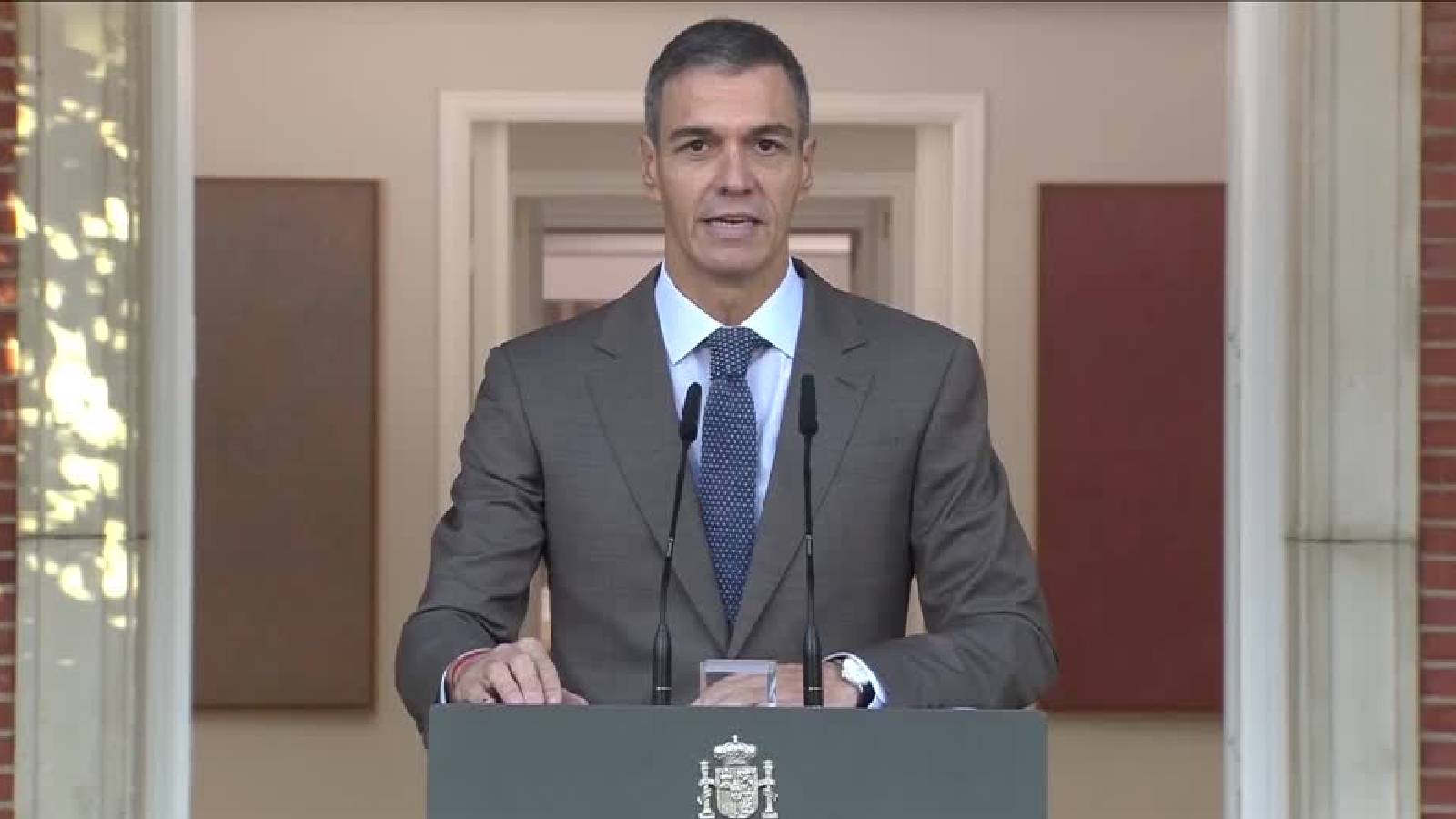


Madrid: Spanish Prime Minister Pedro Sanchez announced snap elections on Monday after a fragmented parliament rejected the government's key housing decrees last week amid widespread protests.
The vote will be held on November 29.
The Spanish housing crisis
In recent weeks, Spaniards have demanded solutions from the government over housing affordability, holding protests in cities across the country after public outrage grew over the televised eviction of an 87-year-old woman in Madrid last month.
Right-wing opposition parties joined forces to scuttle two emergency decrees in Parliament that included measures to reduce evictions and real estate speculation. The setback sparked wide speculation that Sanchez could consider moving up a national election from next year.
Facing the electorate now is a risky move as Sanchez's Socialist Party is trailing in opinion polls. An election defeat would spell the end of one of Europe's last few left-leaning governments at a time when the far-right is making unprecedented gains across the region as a growing swathe of European voters desert the centre ground.
Opinion polls suggest a coalition led by the conservative People's Party (PP) with the support of Vox is the most likely outcome in Spain, ushering a far-right party into central government for the first time since the return of democracy after the death of dictator Francisco Franco.
Pedro Sanchez, the progressive prime minister
In a televised address, Sanchez argued that a broader progressive coalition in Parliament would allow Spaniards to tackle the biggest issues facing the country today.
“The time has come, therefore, for the Spanish people to decide what future you want for yourselves and for your country,” Sanchez said.
Sanchez, 54, has been Spain's prime minister since 2018, making him one of Europe's longest-standing leaders.
He has become one of the leading international progressive heads of government thanks to his defense of migration, his diplomatic efforts to defend Palestinians and his criticism of the American and Israeli war against Iran.
He has also enjoyed one of the fastest growing economies in the developed world in recent years.
But back home, the Spanish leader has been hemmed in by a series of legal cases involving his Socialist party as well as his wife and brother, who both deny wrongdoing.
He has also struggled to account for this summer's border crossing by tens of thousands of mostly Moroccans into Spain's North African territory of Ceuta, where a humanitarian crisis remains two months after the initial crisis.
He has led a coalition minority government along with the left-wing junior partner Sumar since 2023. But his reliance on several smaller parties to get anything done has hamstrung his legislative ability.
Throughout his political career, Sanchez has earned a reputation as a political escape artist capable of winning elections he looked set to lose.
The Socialist leader appears set to face another tough election against the conservative Popular Party that holds the most seats in Parliament already and will aim to retake control of the government.
The formal dissolution of parliament will need to be approved by the Cabinet, which Sanchez has convened for later Monday.
(With inputs from AP via PTI & Reuters)