




“You have everything,” Abel said. “Everything I ever wanted.”
Kane looked at him.
“And yet,” Abel continued, “you still want more.”
The two men had spent a lifetime trying to destroy each other. Just like the names in the Bible, they were bound to each other by rivalry, ambition, and greed. The more they had, the more they wanted.
Money, power, ambition none of it was ever enough. They were not just random rivals we see in a city street. Rather, they were two men who could never stop competing with each other, never stop being rivals with each other.
Living in a world doesn’t make everyone human beings; it doesn't naturally make them social beings. And society alone doesn’t make them a civilized people. William Lowell Kane and Abel Rosnovski may look polished, but deep inside, their ‘cave persona’ is still open to appear.
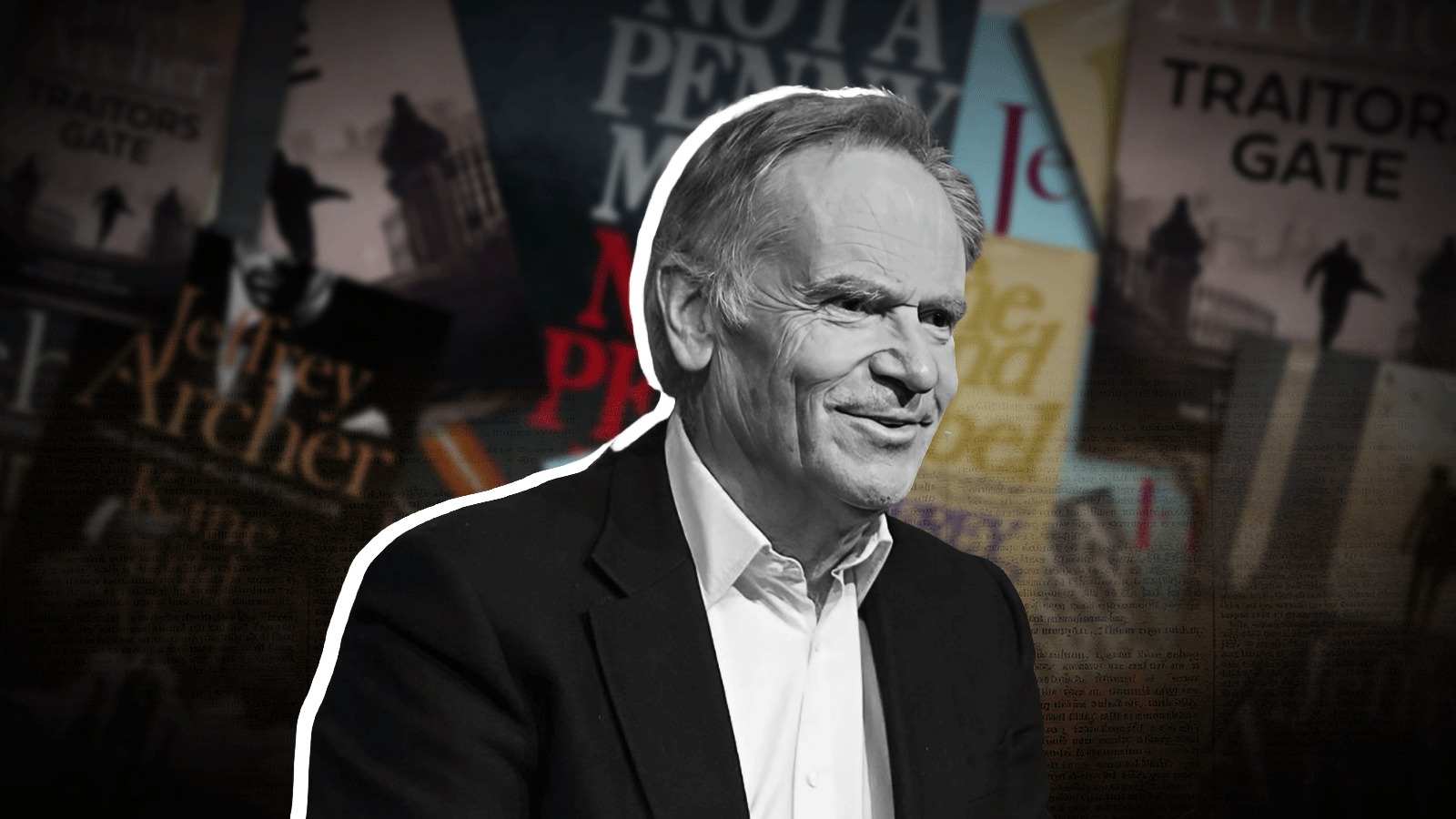
And Jeffrey Archer wrote about them. And made them unforgettable.
Adventure, revenge, intrigue, elaborate plots, and relentless momentum - Archer knew exactly what to do with all of them. Kane and Abel was not trying to be a quiet literary experiment, nor was he following their psychological turmoil. They were placed in modern society, well-versed people, but with stories for readers, Archer gave the perfect amount of adrenaline.
He wanted to tell you a big story, make you care about its characters, and then keep turning the page.
Years later, The Washington Post would describe Archer as “a storyteller in the class of Alexandre Dumas.” And that describes everything; he didn’t chase literariness, he didn’t wait for perfect metre to appear. There was no experimentation that common readers don't care for and no complicated prose. Just big, addictive, plot-first storytelling.
To understand why Archer’s novels had a place in a big literature market, we must look into his way of storytelling. It was always about a clash. Something vs. something.
Privilege vs. poverty, America vs. Poland, inheritance vs. self-made wealth, establishment vs. outsider, so goes the list.
They talked. Rarely
Archer’s stories are always about the conflicts, but when exploring him, his dialogue stands out too.
Rarely do his characters speak, and that is because two people have to say something when they meet; they meet for a purpose, and therefore their conversation carries the story. They don't carry Zen philosophy or the teachings of the Catholic Church. They speak because someone is going to win and the other is going to lose.
Someone wants something. Someone is hiding something. Someone is testing the other person. Sometimes, someone already knows the answer but wants to hear what the other person will say.
That is where Archer’s dialogue becomes interesting. His dialogue is primarily the battlefield.
William Warwick may be talking to a suspect. Faulkner may be talking to someone he wants to manipulate. Kane may be speaking to Abel. The words are simple, but the intention underneath them is not.
And this is where Archer knows his readers. He doesn’t give readers homework. He gives them enough information to understand the situation, and then holds back just enough to make them want the next page.
But perhaps that is the point. Archer understood that storytelling does not always need to be complicated to be effective. Sometimes, all you need is two people sitting across from each other, both wanting something, and neither willing to give it away.
Again, they will search for an Archer book…
What makes a book readable? Is it the ‘High Valyrian’ kind of language? Or the order of the highest born? Or the story and the dialogues?
It can be anything; the interest changes from reader to reader.
But in a world where books are plenty, why are people returning to Archer’s novel?
What will make the reader turn the page? According to Archer, the answer is simple. He didn’t write every sentence beautifully. Not all of his characters were psychologically complicated. And he didn’t try to prove how clever he was in his stories.
The story simply had to make the reader want to know what happens next.
Who will win? Who is lying? Who will betray whom? Will Faulkner succeed? Will Warwick catch him? Will Kane and Abel ever stop fighting?
One question creates another. One answer creates another problem.
And dear reader, before you even realise, you would have turned the other page. Because he is a master craftsman who knows what you will love.
.