


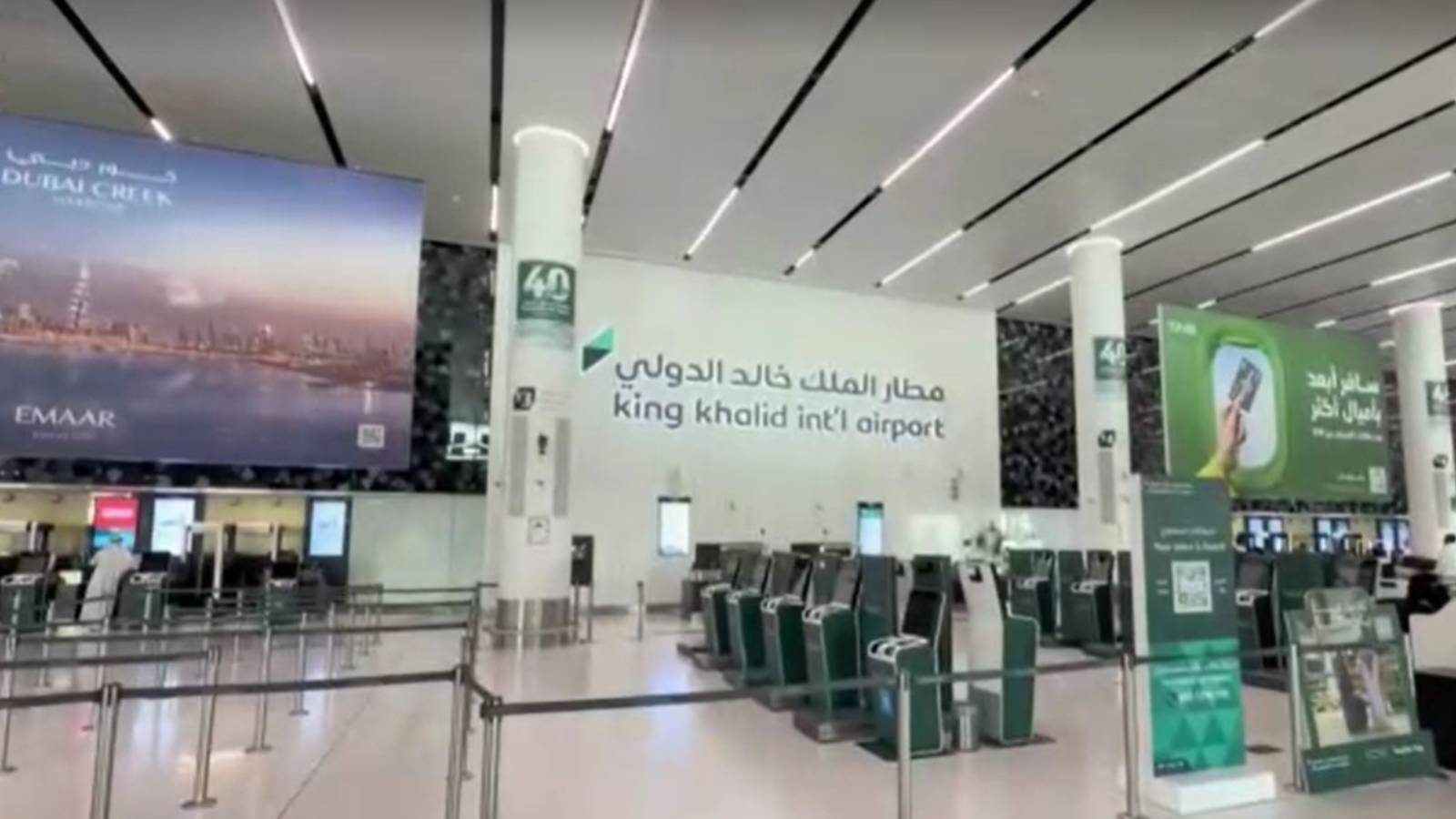


Cairo: At least 12 people were killed and 309 injured after a missile struck King Khalid International Airport in Riyadh on Saturday, Saudi authorities said.
According to the official statement, the deceased included four Saudi citizens, two Bangladeshi nationals and one person each from Palestine, the United States, Egypt, Jordan, Syria and Sudan.
Some of the injured were in critical condition, the authorities said.
The attack came as Saudi Arabia faced an extraordinary series of assaults amid the widening conflict involving Iran and the Tehran-backed Houthi rebels in neighbouring Yemen. US President Donald Trump said he was considering whether Washington should join Saudi strikes against the Houthis.
“We may. We’re going to look at it,” Trump said when asked about possible US intervention. “We just found out about the recent attack. So we’ll make a decision. We move very quickly.”
The Houthis had claimed responsibility for earlier attacks on King Khalid International Airport this week, in which three Saudis, including a pilot, were killed. Saturday’s strike hit a complex housing terminals 3 and 4, which handle domestic flights, and left hundreds wounded, according to reports.
The surge in attacks on Saudi airports, military facilities and oil infrastructure has followed the launch of a major military offensive against the Houthis by a Saudi-led coalition. Earlier on Saturday, the Houthis accused Saudi Arabia of striking Sanaa International Airport in the rebel-held Yemeni capital.
Riyadh airport operations suspended
Saudi Arabia’s civil aviation authority said airport operations had been suspended while officials assessed the extent of the injuries and damage. An official notice to aviators said the suspension would remain in place until midnight.
The airport was heavily guarded, with all entrances blocked and lights around the complex dimmed.
Flights were diverted to other airports, flight-tracking service Flightradar24 said. The United States, Britain, Germany, Australia and Canada were among the countries that warned their citizens to avoid the airport.
The attacks on Saudi Arabia, the world’s largest oil exporter, have rattled markets and heightened regional concerns. Hours after the latest strike, however, the Saudi energy ministry continued promoting a major international energy conference scheduled to begin in Riyadh on Sunday.
Fighting in Yemen between the Houthis and Saudi-backed government forces has intensified, with the Saudi-led coalition providing air support to government forces seeking to reverse recent Houthi gains along the Red Sea coast.
Those gains have given the rebels greater surveillance capabilities over a shipping corridor that serves as a crucial alternative to the Strait of Hormuz, where Iran has been attacking vessels.
The Houthis have told The Associated Press and other media outlets that they are targeting Saudi shipping as part of a blockade imposed in retaliation for restrictions against them. However, concerns persist about the risk of wider attacks.
The group had previously targeted ships following the outbreak of the war in Gaza, saying the attacks were in solidarity with Palestinians. A US bombing campaign sharply curtailed those operations.
Saudi Arabia running low on missile interceptors
Saudi Arabia is running low on missile interceptors and had asked France, Britain, Pakistan and Egypt to provide air-defence support to the region, regional officials told the AP last month. One official noted that the United States had also seen its interceptor stockpiles dwindle during the war with Iran.
Officials have said US assistance to the latest offensive against the Houthis has included intelligence sharing, target identification and planning.
On Saturday, Saudi Arabia said its foreign minister and his Omani counterpart had spoken by phone about the importance of “supporting diplomatic solutions to de-escalate tensions” in the region. Oman, which lies across the Strait of Hormuz from Iran, has periodically played a mediating role in regional disputes.
Meanwhile, Saudi authorities warned the public this week that “filming, publishing or sharing information related to countering missiles and drones and their impact sites exposes you to legal liability.”
Flight disruptions mount
The Houthis warned international airlines this week, for what they called the “last time”, about the potential consequences of operating in Saudi airspace, which they described as a theatre of military operations.
At least 291 flights at Riyadh airport had been cancelled over the previous 24 hours, according to flight-tracking website FlightAware.
Before Saturday’s attack, Air India, FlyDubai, Lufthansa Group and Pakistan International Airlines were among the carriers that had suspended flights to and from Riyadh and other Saudi airports for varying periods.
The European Union Aviation Safety Agency had expanded its guidance on Saudi airspace, citing the Houthis’ ability to strike targets deeper inside the kingdom, including Riyadh, and what it described as a “greater focus on aviation infrastructure”.
The missile and drone attacks, along with interception attempts, “create an increased risk of misidentification of civil aircraft”, the agency said.