




United States: US federal agents have arrested Abdulrahman Alfozan, a 35-year-old Saudi national employed as an engineer at OpenAI, and charged him with allegedly installing a covert audio recording device in an executive conference room at the artificial intelligence company, the US Justice Department and the Federal Bureau of Investigation (FBI) said on Tuesday.
The case has raised security concerns over sensitive AI research as companies and governments compete for talent and technology that could provide economic and strategic advantages. According to the FBI, Alfozan was arrested on October 9 and made his initial appearance in federal court on Tuesday. He has been charged with using or attempting to use an electronic, mechanical or other device to intercept oral communications.
Alfozan had worked at OpenAI since July 2025 and has been a legal permanent resident of the US since September 2020, the Justice Department said. He studied at the Massachusetts Institute of Technology and the University of California, Berkeley, and previously worked at Meta and Microsoft, according to his LinkedIn profile. Reuters could not independently verify the details listed on his profile.
Also Read:
Alleged recording device found at OpenAI
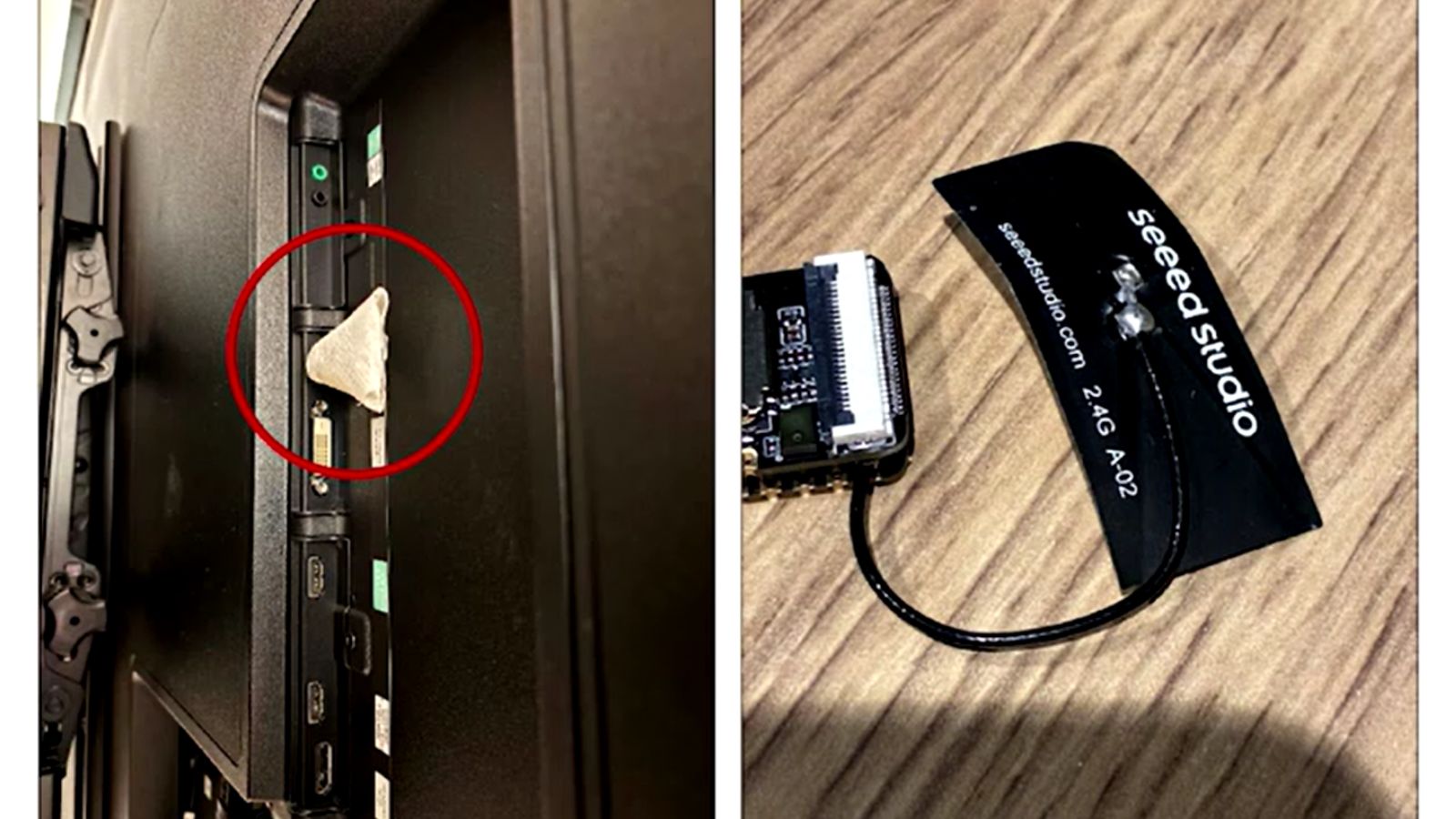
The complaint alleges that Alfozan concealed a thumb-sized recording device in a USB port on the back of a television in an executive conference room at an OpenAI building in San Francisco. The device, which had a microphone and could connect to a camera, was reportedly concealed in toilet paper and installed on or about September 28. OpenAI personnel discovered it on or about September 30, but its stored data was encrypted and inaccessible.
The FBI said the conference room was frequently used for discussions involving highly confidential technical, commercial and strategic information, including proprietary research, product plans, business-development opportunities, technical progress, government engagements and commercial relationships.
According to the complaint, CCTV footage showed Alfozan near the conference room on several occasions before the device was discovered, despite him having no authority to access or participate in meetings held there.
Investigators also alleged that, before September 28, Alfozan used a productivity tool to make multiple enquiries about OpenAI's building addresses, meeting rooms, room capacities and calendars, the locations of senior leadership and executive personnel, and meetings with external partners. The Justice Department separately said he had used an AI productivity agent to seek information about meeting-room calendars and capabilities for about a month, until September 16.
The complaint further alleges that a chatbot account associated with Alfozan's spouse shared multiple identifiers and attributes with his own account. Between September 24 and September 30, the account reportedly submitted prompts about constructing, customising, installing, testing, and concealing an audio recording device, as well as enabling remote access.

The prompts allegedly included requests about building a continuous audio recorder, customising Wi-Fi connectivity, improving audio and live listening, and encrypting an SD card. According to the complaint, the same account also submitted prompts relating specifically to the device found at OpenAI, including references to its custom header and unique MAC address, between September 27 and September 28.
The complaint additionally alleges that Alfozan entered the executive conference room on or about October 5 and appeared to look behind the television where the first device had been installed.
On or about the same date, OpenAI security personnel reportedly found a second recording device, similar to the first, inside a bag Alfozan had left unattended in another room in an OpenAI building. The bag also contained his wallet and identification, according to the complaint.
OpenAI said in a post on X that it used its internal AI models to identify the person responsible for planting the device and trace its origins.
Officials cite national security concerns
FBI Director Kash Patel said the device was allegedly intended to capture sensitive information about the company's advanced AI technology.
“According to the complaint unsealed today, Abdulrahman Alfozan allegedly concealed a covert recording device inside his employer’s executive conference room to secretly capture sensitive communications about the company’s super intelligence technology,” Patel said.
“Protecting American SI innovation is essential to safeguarding our nation’s economic strength and national security, and the FBI views that mission as one of our highest counterintelligence priorities. Thank you to Director of National Intelligence Jay Clayton and our law enforcement partners for their support, and we will continue working closely with our partners across the U.S. government and private sector to keep American businesses and citizens safe and to ensure our country maintains its competitive edge,” he added.
Director of National Intelligence Jay Clayton also linked the case to wider concerns about protecting advanced technology and national security.
“This serious situation underscores why winning the global super intelligence race is a national security prerogative, and why President Trump’s leadership in creating the Super Intelligence Force is so important,” Clayton said.
“I thank Director Patel and our FBI partners for their diligence and swift action. The intelligence community remains committed to safeguarding America’s cutting-edge intellectual property from foreign threats,” he added.
US Attorney Craig H. Missakian for the Northern District of California said the case underscored the importance of protecting technological innovation and prosecuting alleged attempts to steal sensitive information.
“The Bay Area and Silicon Valley lead the world in developing tomorrow’s technology, and our Office will continue to stand at the forefront of protecting that American innovation,” Missakian said.

“For us it is a matter of national security. This arrest highlights our relentless efforts in partnership with the FBI to identify and prosecute those who seek to steal our technology, as alleged in the complaint,” he added.
The FBI is investigating the case. Assistant US Attorney Nicolas Parker for the Northern District of California is prosecuting it, with assistance from Trial Attorney Kate Tagert of the National Security Division’s Counterintelligence and Export Control Section.
If convicted, Alfozan faces up to five years in prison, a fine of $250,000 and up to three years of supervised release, according to the FBI and the Justice Department.
Earlier OpenAI dismissals
The case follows OpenAI's announcement on Friday that it had fired three researchers after an investigation found they had violated company policies on handling sensitive information.
The researchers, Jasmine Wang, Tomek Korbak, and Mikita Balesni, later published a letter detailing the circumstances of their dismissal. They argued that the abrupt firings could create uncertainty among employees and undermine a workplace culture in which researchers could raise safety concerns.
-With inputs from Reuters and ANI