


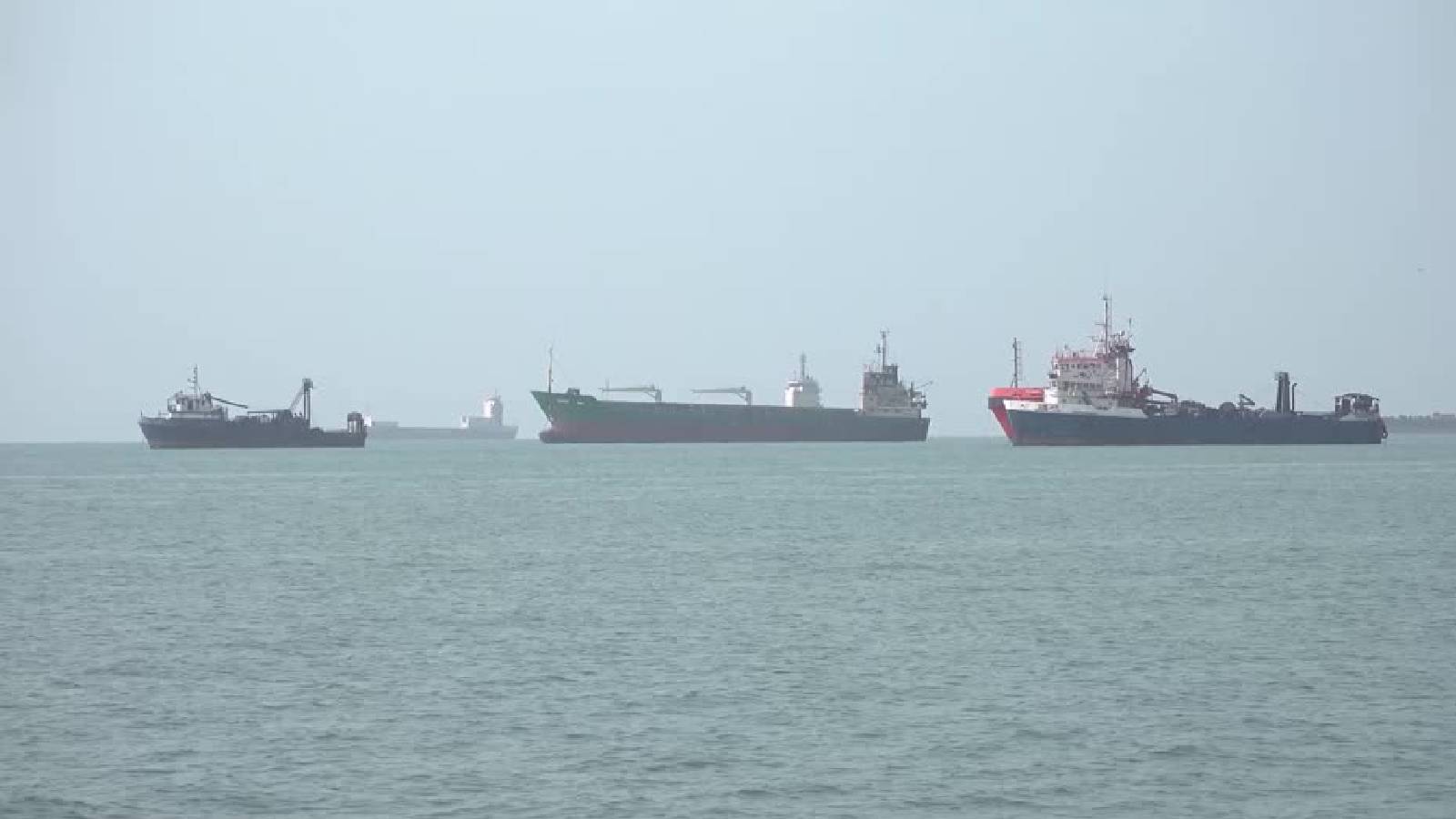


India has strongly condemned repeated attacks on commercial shipping, seafarers and civilian infrastructure across West Asia, calling for an immediate de-escalation of hostilities and urging all parties to resolve conflicts through dialogue and diplomacy.
Addressing the United Nations Security Council’s quarterly open debate on the situation in the Middle East on Thursday, India’s Permanent Representative to the UN, Ambassador Harish Parvathaneni, described the escalation as “deeply worrying” and said New Delhi had significant interests in the region’s safety, security and stability.
“The people of the Middle East need normalcy and lasting peace. Peace is not just the absence of war. It is imperative to strengthen stability and security for the people of the region,” Parvathaneni said, reaffirming India’s commitment to the region’s well-being.
India strongly condemned attacks on commercial vessels and maritime navigation, highlighting the risks to merchant mariners, including Indian nationals. It also stressed that freedom of navigation and the safe, unimpeded flow of maritime commerce through international waterways must be upheld in accordance with international law.
“We strongly condemn attacks on maritime navigation and on the seafarers, many of whom are Indian citizens. The protection of the Bab el-Mandab Strait and the Southern Red Sea is a shared international responsibility and is a global interest,” the ambassador said.
Citing recent attacks on vessels, Parvathaneni referred to the India-flagged MV DP World Cauvery earlier this week, MT Petro Dolphin and MT Valthera last week, and MT On Peace and MT Kazimah III the week before.
“All attacks on commercial shipping and merchant mariners are legally and morally indefensible. Several of these ships have Indian seafarers, and their safety and security is our direct responsibility,” he said, thanking Omani and UAE authorities for their support in ensuring the safety of Indian seafarers during the attacks.
“The safety and security of seafarers remain a priority for the Government of India, and these recurring attacks risk further aggravation of a very volatile situation,” he added.
India also reaffirmed its commitment to Yemen’s unity, sovereignty and territorial integrity, rejecting interference in the country’s internal affairs amid the conflict involving the Houthis and Yemen’s internationally recognised government.
India pushes for greater maritime coordination
Amid recurring attacks on merchant shipping, India and Liberia launched a Group of Friends on Safety and Security of Shipping and Seafarers on the sidelines of the UN General Assembly’s high-level week last month. Parvathaneni said 23 member states had joined the initiative.
Describing the group as an inclusive, voluntary and action-oriented platform, he said it aimed to deepen international cooperation, develop practical measures to prevent further attacks and safeguard seafarers’ rights.
The ambassador also referred to Prime Minister Narendra Modi’s proposal at the BRICS Summit in New Delhi last month to establish a Seafarers Emergency Support Network. The proposed network would connect maritime authorities and the embassies of concerned countries to facilitate distress alerts, medical assistance, communication with families and evacuation support when required.
Highlighting the global importance of maritime security, Parvathaneni noted that nearly two million seafarers operate the world’s merchant fleet and that maritime shipping accounts for four-fifths of global trade.
India’s interests in the region extend beyond maritime security. Annual trade between India and Gulf Cooperation Council (GCC) countries amounts to around $180 billion, while cumulative foreign direct investment stands at $31 billion and remittances exceed $52 billion.
Around 10 million Indians live in GCC countries, contributing to their economies. Parvathaneni said their safety, security and well-being remained a core Indian interest and an important element of New Delhi’s bilateral relations with the region.
Saudi Arabia, Gaza and Lebanon
India expressed deep concern over repeated attacks on civilian infrastructure across the region, including Saudi airports in recent days, which resulted in casualties, including the death of Indian citizen Mohammad Yousef Ali in Riyadh.
“India stands in complete solidarity with the Government and people of Saudi Arabia in defence of their sovereignty,” Parvathaneni said.
The ambassador also warned that the international focus on attacks affecting commercial shipping and the Strait of Hormuz must not divert attention from the continuing humanitarian crisis in the Gaza Strip.
“Terrorism anywhere has no justification, and India has condemned the attacks of 07 October 2023 unequivocally. Civilians, including women and children, have borne the highest cost of the conflict since,” he said.
India reiterated its support for humanitarian relief, dialogue and diplomacy, and a negotiated two-state solution. Parvathaneni called for coordinated international action to prevent further civilian casualties and the destruction of civilian infrastructure.
“India believes that a sovereign, independent and viable State of Palestine living side by side in peace with Israel, within secure and recognised borders, is essential to a comprehensive and lasting solution,” he said.
He also referred to the reaffirmation by BRICS leaders at the New Delhi Summit last month of their support for the State of Palestine’s full membership in the United Nations.
Outlining India’s assistance to Palestinians, Parvathaneni said New Delhi had provided humanitarian aid during the ongoing conflict, including medicines, medical supplies and other essential relief, alongside development assistance and contributions to the United Nations Relief and Works Agency for Palestine Refugees in the Near East (UNRWA).
India has contributed more than $52 million cumulatively to UNRWA, he said, describing the agency as having a distinct role in providing essential services, including education and healthcare, to Palestinians.
India’s development commitments include a 200-bed super-specialty hospital, the Palestinian Institute of Diplomacy, a women’s empowerment centre, an artificial limb fitment camp and a vocational training institute. New Delhi also supports Palestinian capacity-building and human resource development through the Indian Technical and Economic Cooperation programme and Indian Council for Cultural Relations scholarships.
In August, another 32 Palestinian students, all from Gaza, joined colleges in India under the ICCR scholarship programme.
On Lebanon, India strongly condemned attacks on United Nations Interim Force in Lebanon (UNIFIL) peacekeepers, stressing that personnel serving under UN Security Council mandates must not be targeted.
“Their safety and security remains a high priority. The sanctity and inviolability of UN premises must be fully respected,” Parvathaneni said, underlining the importance of preparing for a post-UNIFIL scenario and supporting the Lebanese Armed Forces.
On Syria, India reiterated its support for a Syrian-led and Syrian-owned political process in line with UN Security Council Resolution 2254, emphasising that the country’s sovereignty, independence, unity and territorial integrity must remain a priority.
Concluding his address, Parvathaneni called for lasting peace and stability across West Asia
“Peace is not just the absence of war. It is imperative to strengthen stability and security for the people of the region,” he said, reaffirming India’s commitment to a more secure, stable and prosperous world.
(With agency inputs from ANI and PTI)