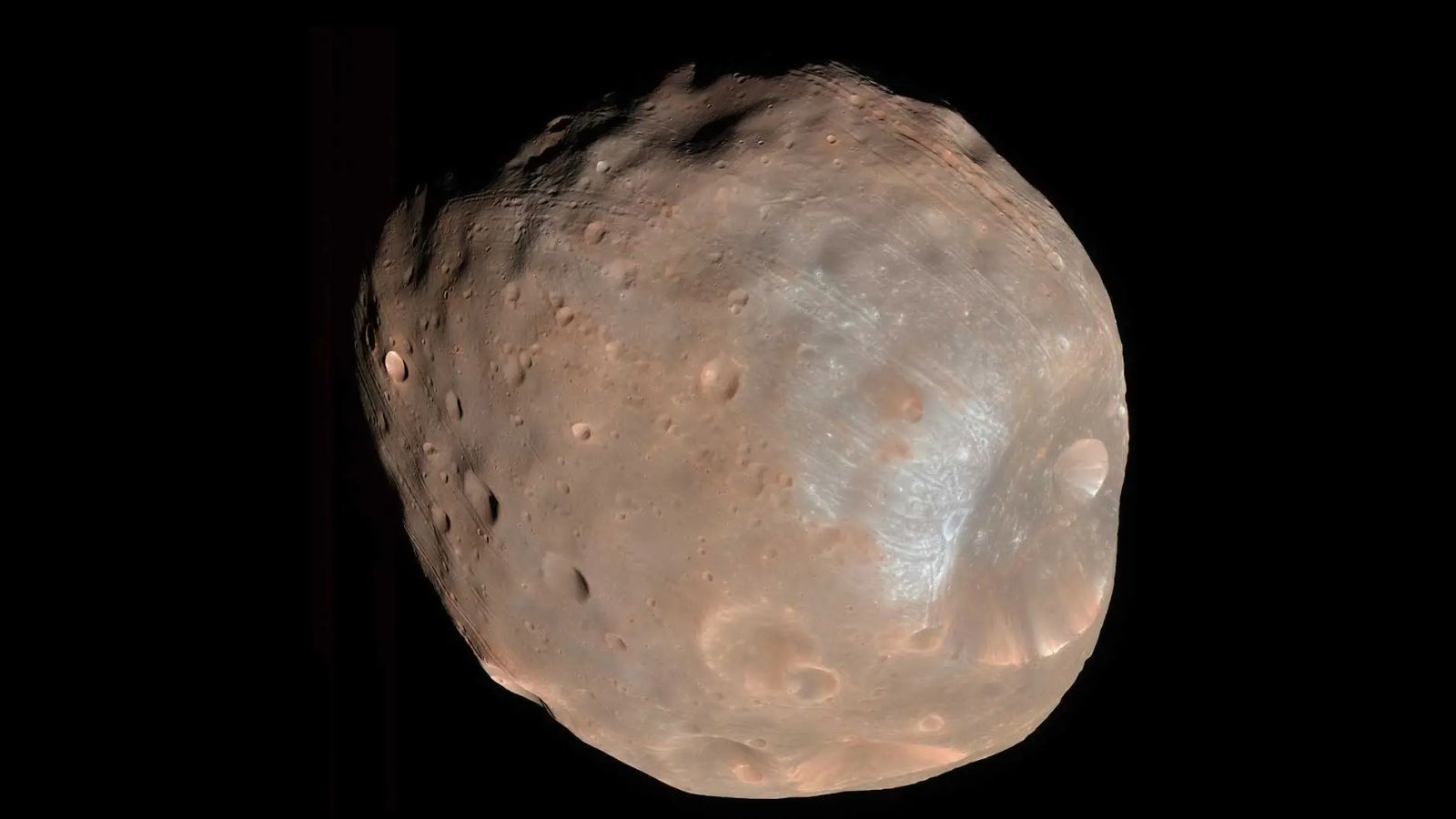


Humans have been studying space to investigate the origins of the universe and life. The latest addition to these efforts is Japan's Martian Moons eXploration (MMX) mission.
On 20 October, Japan launched a spacecraft towards Phobos, the potato-shaped moon of Mars, marking the first-ever attempt to bring back samples from the celestial body.
The mission aims to collect at least 10 grams of material from Phobos to investigate how the Martian moons formed and examine possible traces of past microbial life originating from Mars. It will also study both moons, Phobos and Deimos, to improve scientific understanding of Mars and assess whether they could serve as bases for future crewed missions.
However, astronomers have described Phobos as a doomed moon that is gradually moving towards its eventual destruction. That may be all the more reason to study it sooner rather than later.
A moon slowly falling towards Mars
Phobos and Deimos were discovered by Asaph Hall, who named them after the mythological sons of Ares, the Greek counterpart of the Roman god Mars.
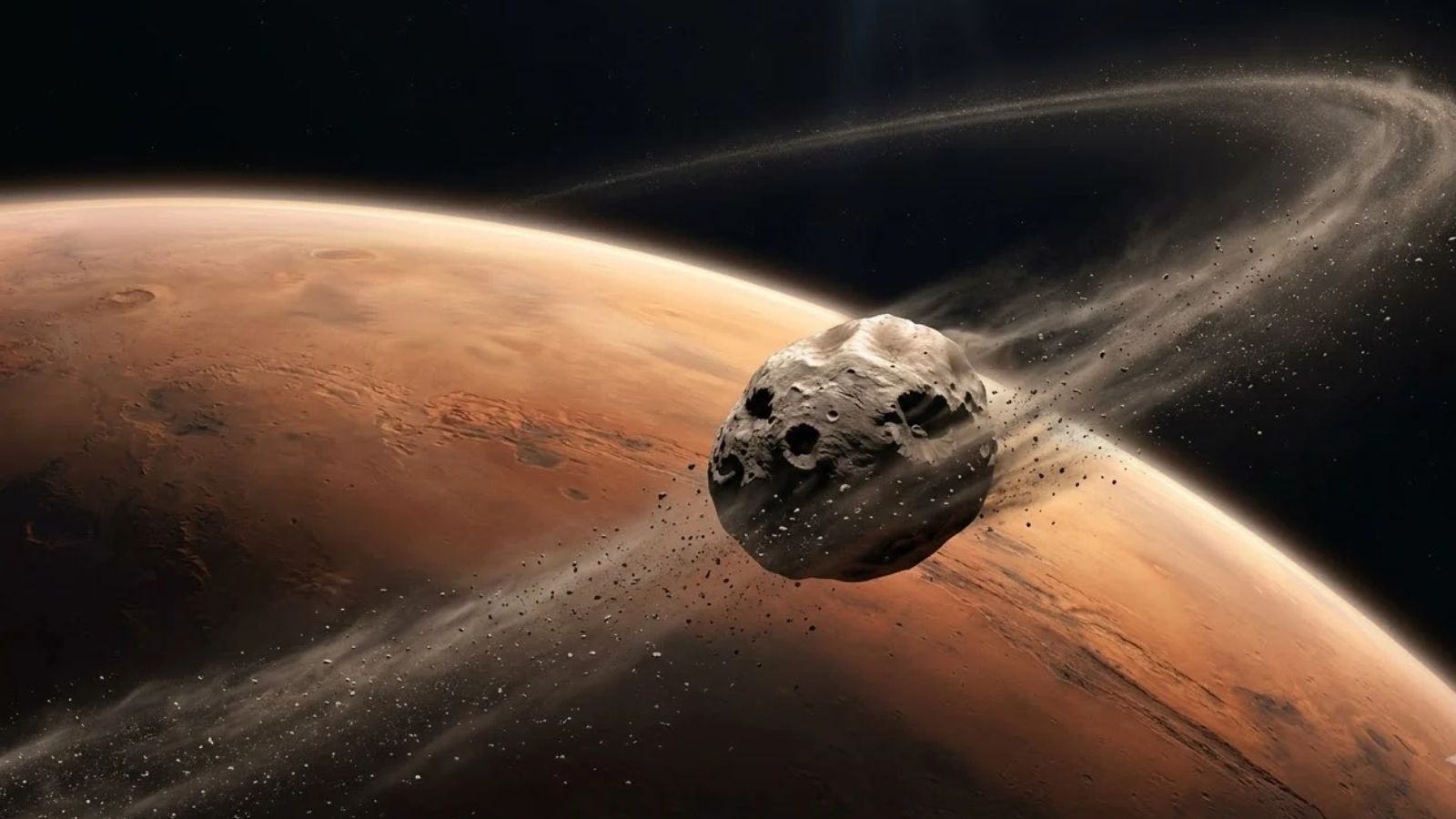
Phobos, the larger of Mars’s two moons, orbits the planet three times a day. According to NASA, Phobos orbits Mars at an average distance of 9,378 km from the planet's centre, making it the closest-orbiting moon to its host planet in the Solar System. But its proximity comes at a cost: Phobos is slowly spiralling towards Mars, drawing about six feet closer every 100 years.
The moon bears deep grooves caused by thousands of meteorite impacts and was nearly broken apart by a massive collision.
At its current rate of descent, Phobos is expected to either collide with Mars or break apart to form a ring around the planet in approximately 50 million years, according to NASA.
The origin of Phobos remains a mystery. Scientists believe it might be captured asteroids or remnants of a giant impact on Mars long ago.
Also Read:

What Phobos can tell us
The origin of Phobos is a central question driving scientific studies and missions to the moon.
Researchers believe samples collected by the MMX mission could help explain how the Martian moons formed and shed light on the origins of water and organic material on rocky planets. Samples collected directly from the surface could provide evidence that remote observations alone cannot offer.
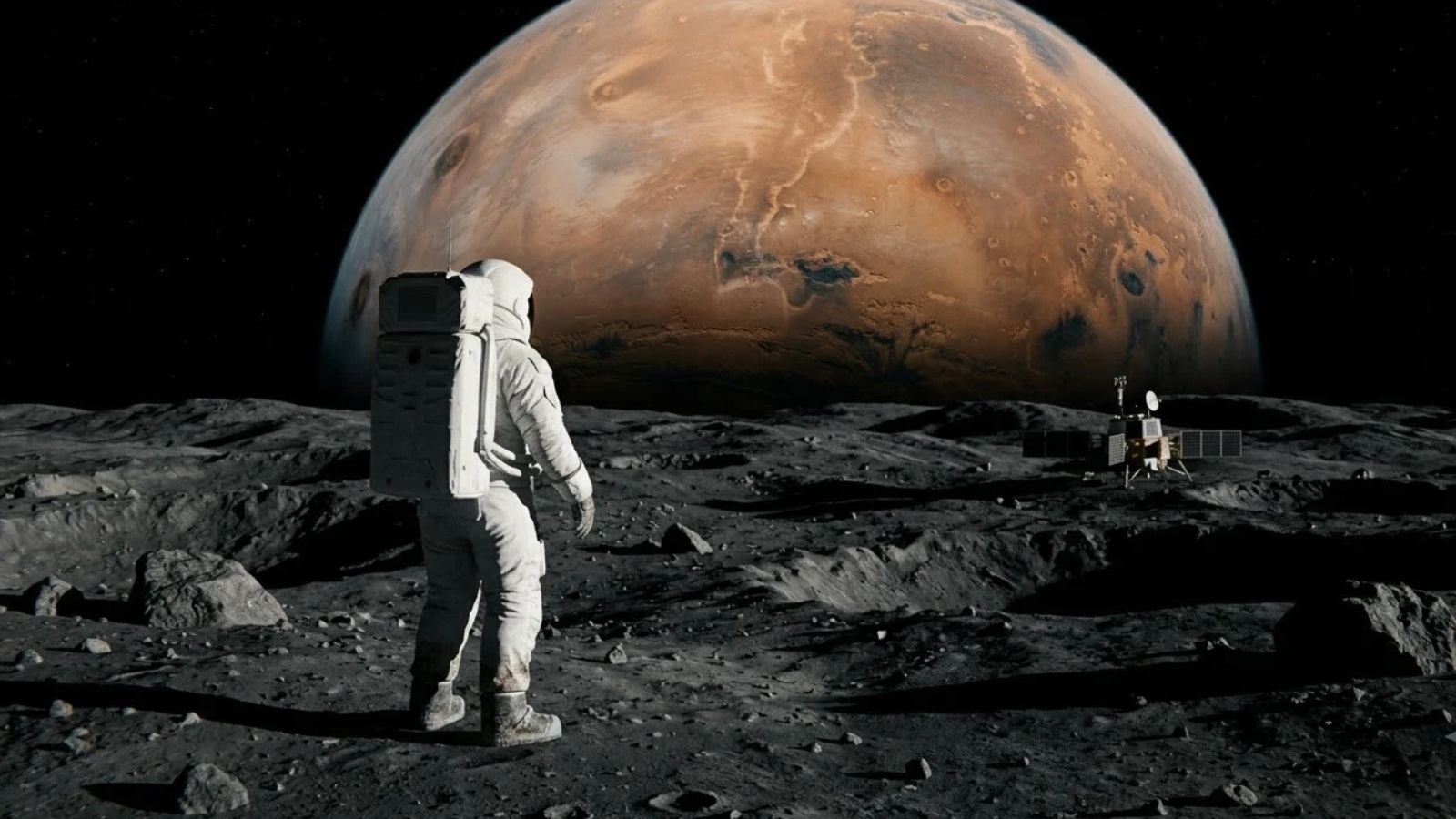
Some researchers have proposed Phobos as a possible stop for future crewed missions. Its extremely weak gravity means that landing and departing would require relatively little fuel, while its proximity to Mars could make it a useful observation point.
However, the idea remains a possibility rather than an established plan. Much will depend on what scientists discover about the moon's surface and composition. The MMX mission could help answer some of these questions.
Phobos's troubled history with visitors
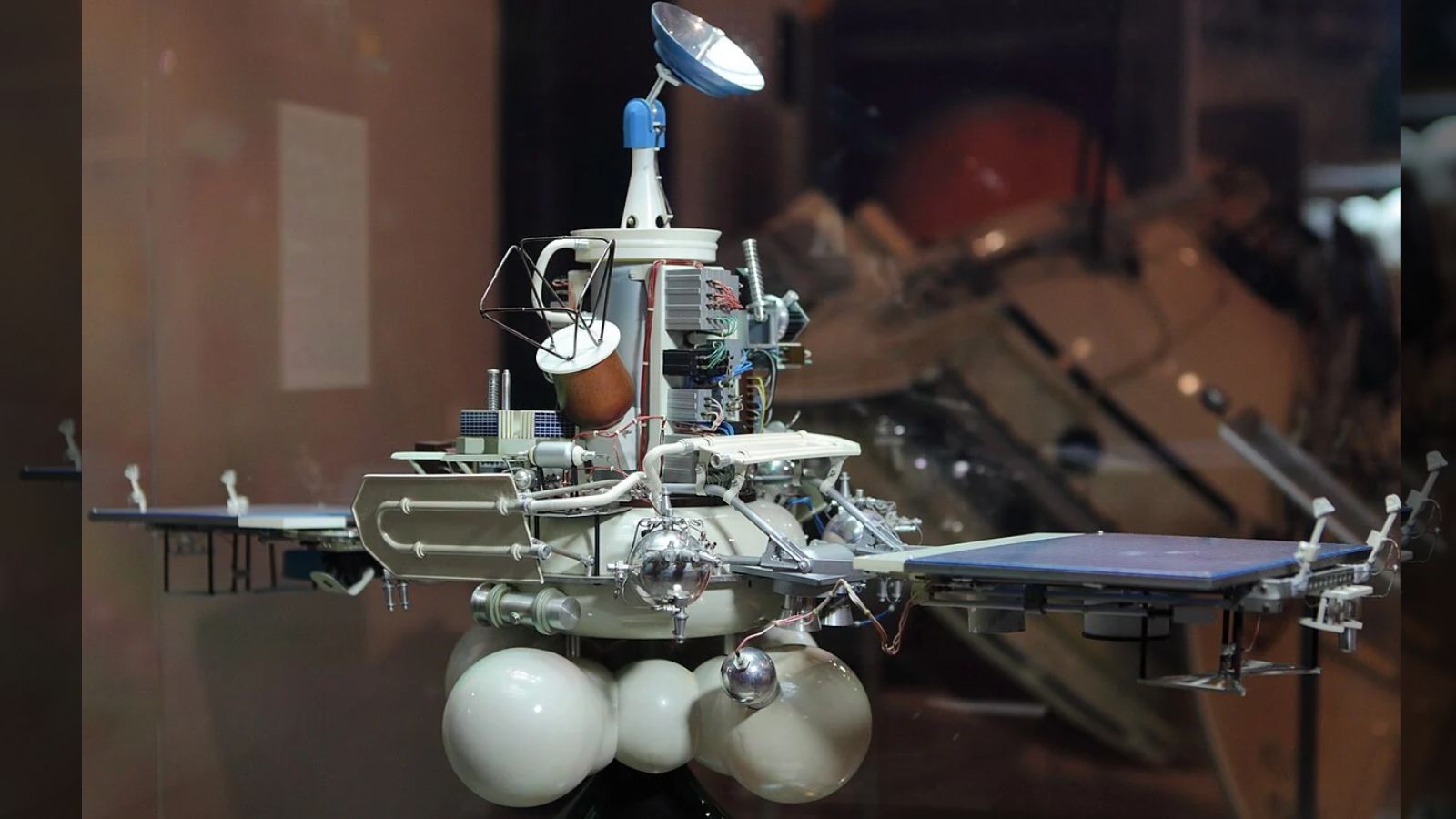
Although MMX is the first mission designed to return samples from Phobos, it is not humanity's first attempt to explore the Martian moon.
In 1988, the Soviet Union launched two uncrewed probes, Phobos 1 and Phobos 2, to investigate the moon.
Phobos 1 was lost while travelling to Mars in 1988 after a faulty command was sent from the ground. Its twin, Phobos 2, reached the Martian orbit in early 1989 and transmitted data, but contact was lost before it could deploy its landers.
Russia made another attempt in 2011 with Phobos-Grunt, a sample-return mission. The spacecraft became stranded in Earth orbit after its engines failed to fire and fell back to Earth in January 2012. To date, no spacecraft has landed on Phobos.
What comes next
Phobos has millions of years remaining before its expected destruction, but it will not last forever. Understanding its composition could reveal important clues about how Mars and its neighbouring celestial bodies formed.
For now, MMX is only beginning its journey, and previous missions have demonstrated the challenges of reaching Phobos.
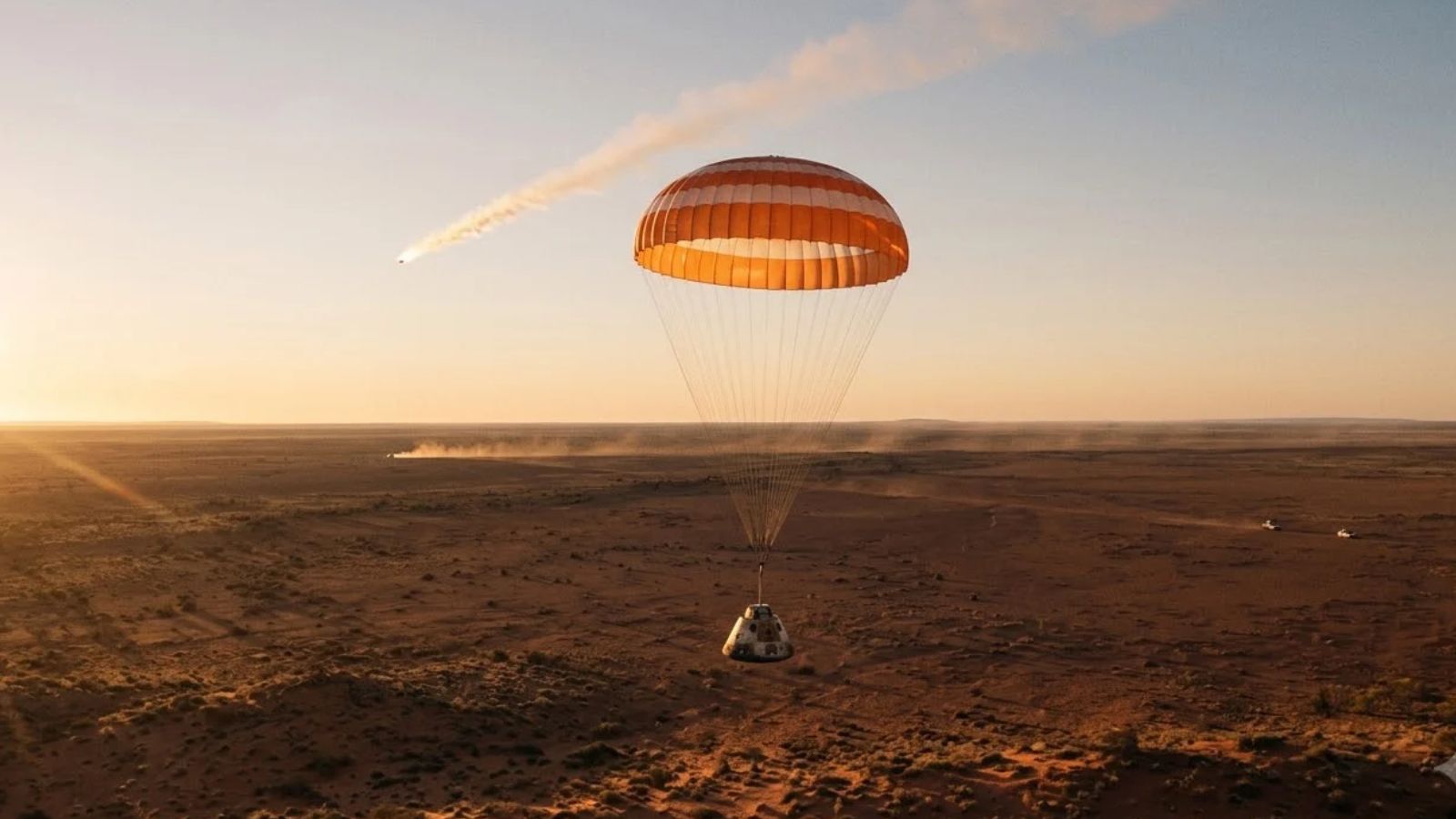
If the mission succeeds, its samples are expected to arrive on Earth in 2031. The findings could help explain the origins of Mars's moons and inform future decisions about whether Phobos is a suitable destination for human exploration.